wayground logo

Free Printable Worksheets

Font size

S
M
L
XL
Worksheets

Final Exam Review

Total questions: 70

Worksheet time: 38mins

Name
Class
Date
1.

What is a "normal" blood pressure

a)

120/110 mmHg

b)

120/80 mmHg

c)

100/80 mmHg

d)

140/80 mmHg

2.
Largest artery in the human body:
a)
Pulmonary artery
b)
femoral artery
c)
aorta
d)
carotid artery
3.
The lining of the chambers of the heart is called the
a)
myocardium
b)
epicardium
c)
endocardium
d)
pericardium
4.
The heart has ___ chambers.
a)
1
b)
2
c)
3
d)
4
5.
The aorta is the largest artery in the body. The blood leaving the aorta is full of?
a)
Oxygen 
b)
Carbon Dioxide 
c)
White blood Cells 
d)
Potassium 
6.
A flap of tissue that prevents blood from flowing backward
a)
Aorta
b)
Atrium
c)
Septum
d)
Valve
7.
What do Red-Blood cells do?
a)
Carry oxygen from the lungs to the body cells and  transport carbon dioxide from the cells back to the lungs
b)
keeps blood flowing in one direction to the heart and prevent blood from flowing backwards
c)
Collects  blood from the capillaries and drain it into the veins
d)
Bring nutriients to the cells and carries away waste materials.
8.
Which is NOT a formed element in blood?
a)
leukocyte
b)
thrombocyte
c)
plasma
d)
erythrocyte
9.
What part of blood is responsible for fighting infections?
a)
Red Blood Cells
b)
White Blood Cells
c)
Platelets
d)
Plasma
10.
How long do erythrocytes live?
a)
forever
b)
100-120 days
c)
2 weeks only
d)
a year
11.
This part of blood helps it clot, when you get cut.
a)
Red blood cells
b)
Plasma
c)
Platelets
d)
White blood cells
12.
Which is thicker:  left or right ventricle?
a)
left 
b)
right
13.

What part of the heart divides the ventricles into two sides?

a)

ventricular separator

b)

divider

c)

Septum

14.

Which of the following statements is true regarding pulmonary circulation?

a)

It carries oxygenated blood away from the heart.

b)

It carries deoxygenated blood to the body.

c)

It carries oxygenated blood away from the lungs.

d)

It carries deoxygenated blood toward the heart.
15.
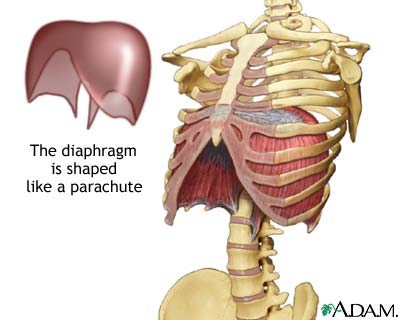
What is function of the dome-shaped diaphragm?
a)
This is where gas exchange happens.
b)
Air passes through the diaphragm on the way to the lungs.
c)
It attaches to the lungs to help in breathing.
d)
It is under the lungs and keeps them from falling down to your stomach.
16.
What is the main function of the respiratory system?
a)
to provide oxygen and remove carbon dioxide from the body
b)
to bring oxygen to the body
c)
to break down food and absorb nutrients
d)
to remove oxygen from the body and deliver carbon dioxide
17.
The air sacs that are covered with capillaries where gas exchange takes place
a)
bronchi
b)
lungs
c)
oxygen
d)
alveoli
18.
What is tube that is also known as your wind pipe?
a)
esophogus
b)
bronchi
c)
trachea
d)
alveoli
19.
Flap of skin that covers the opening to the windpipe during swallowing
a)
Stomach
b)
Trachea
c)
Pancreas
d)
Epiglottis
20.

_____________________ is the gas that moves from the lungs into the capillaries.

a)

carbon dioxide

b)

nitrogen

c)

oxygen

d)

none of the above

21.
Pathway of air
a)
Nose Pharynx Larynx Trachea Bronchi Alveoli Brochioles 
b)
Nose Pharynx Larynx Trachea Bronchi Brochioles Alveoli
22.
Volume of air that remains in the lungs after maximum expiration
a)
Residual Volume
b)
Expiratory capacity
23.

The voice box is also called the

a)

Larynx

b)

Pharynx

c)

Palate

d)

Thyroid gland

24.

Hemoglobin is...

a)

Protein in blood that carries nutrients

b)

Oxygen in blood that carries protein

c)

Protein in blood that carries oxygen

d)

Nutrients in blood that carries protien

25.
Internal respiration (gaseous exchange) happens between...
a)
alveoli and muscle cells
b)
blood and muscle cells
c)
Bronchus and alveoli
d)
Low pressure to high pressure
26.
Where do the intercostal muscles lie?
a)
Directly on the outside of the lungs 
b)
Between the ribs
c)
Underneath the lungs
d)
In the throat
27.

What is the purpose of the pleura?

a)

To facilitate gas exchange

b)

To keep the lungs moist

c)

Reduce friction on lungs

d)

Maintain surface tension

28.

Boyle's Law states that

a)

When temperature is changing, Volume and Pressure are inversely related.

b)

When temperature is changing, Volume and Pressure are directly related.

c)

When temperature is constant, Volume and Pressure are inversely related.

d)

When temperature is constant, Volume and Pressure are directly related.

29.

What is the immune system's first line of defense against infection?

a)

T cells

b)

intact skin

c)

respiratory system

d)

digestive system

30.

Natural or passive immunity is...

a)

obtained through vaccinations

b)

present at birth and passed down from mother

c)

the same as acquired immunity

d)

is learned through exposure to a disease

31.
What is the function of the memory cells
a)
to memorize the function of the DNA
b)
to memorize tactics that can be used to fight the antigens
c)
to remember the infection and prevent you from  getting it next time
d)
to produce antibodies
32.
Which is NOT considered FIRST line of defense?
a)
White Blood Cells
b)
Skin
c)
Hair
d)
Mucous Membranes
33.

If a cell becomes immunocompetent, that means that it_________.

a)

Has become "mature"

b)

Has been activated by a pathogen

c)

Has started to die

d)

Has been compromised by a virus

34.

What is happening if a lymph node is swollen and tender?

a)

The lymph node is overwhelmed with infection.

b)

The lymph node is cancerous

c)

The lymph node has ruptured

d)

Lymph nodes are always swollen and tender.

35.

Which of these is found in the small intestine?

a)

Peyer's Patches

b)

Appendix

c)

Spleen

d)

Thymus

36.

Which of these is found at the entrance to the large intestine?

a)

Peyer's Patches

b)

Appendix

c)

Spleen

d)

Thymus

37.

What does MALT stand for?

a)

Mucosa Associated Lymphatic Tissue

b)

Macrophage Appendix Lymph Nodes Thymus

c)

Macrophage Associated Lymphatic Tissue

d)

Mucosa Associated Lymph Nodes

38.

Effector B cells

a)

Produce Antibodies

b)

"remember" pathogens

c)

Kill infected cells

d)

Activate T cells

39.

Cytotoxic T cells

a)

Activate B cells

b)

Kill infected Cells

c)

"Remember" Pathogens

d)

Regulate the Immune System

40.

Helper T cells

a)

Activate B cells

b)

Kill infected Cells

c)

"Remember" Pathogens

d)

Regulate the Immune System

41.
The chewing and grinding of food into smaller pieces is an example of...
a)
Mechanical Digestion
b)
Chemical Digestion
42.
Nutrients from digested food are absorbed in which digestive organ?
a)
Small Intestine
b)
Stomach
c)
Large Intestine
d)
Gallbladder
43.
Which organ pushes food down to the stomach?
a)
Mouth
b)
Esophagus
c)
Rectum
d)
Large intestine
44.
As waste moves through the digestive system, the ______ absorbs water before storing waste in the rectum.
a)
Small intestine
b)
Stomach
c)
Esophagus
d)
Large intestine
45.
Bile is stored in which secondary digestive organ?
a)
Stomach
b)
Liver
c)
Gallbladder
d)
Pancreas
46.

What is the first part of digestion?

a)

Ingestion

b)

Digestion

c)

Absorption

47.
•Chronic disease where stomach acid or content flows back into your esophagus •Symptoms: Epigastric pain or burning – WORSE WHEN LAYING DOWN
a)
cholecystitis 
b)
gastroesophageal reflux disease
c)
gastroenteritis
d)
cirrhosis 
48.

What prevents food from entering the trachea?

a)

Subglottis

b)

Throat

c)

Glottis

d)

Epiglottis

49.

Mastication is also called _______________.

a)

Swallowing

b)

Chewing

c)

Pooping

d)

Digesting

50.

Green poop.

a)

Is healthy poop

b)

Could be a sign of Crohn's (inflamatory bowel) disease

c)

Is related to diarrhea as bile didn't break down.

d)

Your body is not produce enough bile.

e)

Excess fat in the poop due to malabsorption.

51.

Yellow poop.

a)

Is healthy poop

b)

Could be a sign of Crohn's (inflamatory bowel) disease

c)

Is related to diarrhea as bile didn't break down.

d)

Your body is not produce enough bile.

e)

Excess fat in the poop due to malabsorption.

52.

Celiac Disease

a)

Is made up so people can avoid gluten.

b)

Is a autoimmune disease

c)

Destroys the Villi in the small intestines

d)

Causes you to feel very sick

53.
Urine is transported from the urinary bladder to the outside of the body by the ________.
a)
urethra
b)
ureter
c)
trigone
d)
collecting duct
54.
How many kidneys do you have?
a)
1
b)
3
c)
5
d)
2
55.
Urine production takes place in the:
a)
nephrons
b)
bladder
c)
ureter
d)
renal pelvis
56.
Which stage of urine production involves the removal of substances from the bloodstream?
a)
reabsorption
b)
excretion
c)
filtration
d)
secretion
57.
Along with eliminating toxins, the urinary system also regulates the ____ & ____ in your blood.
a)
salt; water
b)
potassium; urea
c)
ammonia; water
d)
nitrogen; salt
58.
What is the outermost layer of the kidney?
a)
renal cortex
b)
renal medulla
c)
renal pelvis
d)
renal capsule
59.

Which of the following diseases is another word for a kidney infection?

a)

cystitis

b)

pyelonephritis

c)

glomerulonephritis

d)

nephrotic syndrome

60.
The hormone released by the posterior pituitary to prevent excessive water loss in the urine is ________.
a)
antidiuretic hormone (ADH)
b)
insulin
c)
cortisol
d)
aldosterone
61.
Produces & releases female eggs; produces female sex hormones
a)
Vagina
b)
Uterus
c)
Fallopian Tubes
d)
Ovaries
62.
Pear, shaped structure that hold the developing fetus; holds & nourishes the ovum.
a)
Vagina
b)
Uterus
c)
Fallopian Tubes
d)
Ovaries
63.
Structure that allows for the passage of urine & sperm out of the male body
a)
Seminal Vesicles
b)
Prostate
c)
Penis
d)
Glans
64.
Sac of skin that holds the 2 testes.
a)
Glans
b)
Scrotum
c)
Vas Deferens
d)
Penis
65.
Narrow opening to the uterus, which projects out to the vagina.
a)
Vulva
b)
Vagina
c)
Cervix
d)
Labia
66.
Tube that carries sperm from the testicles to the urethra
a)
Vas Deferens
b)
Glans
c)
Cowper's Gland
d)
Testes 
67.
Fluid filled sac that cushions and supports baby; water from “water break” in pregnancy.
a)
Amino
b)
Amniotic
c)
Amine
d)
Antibiotic
68.
Contains seminiferous tubules, the “sperm factory” makers. .
a)
Scrotum
b)
Testes
c)
Prostate
d)
Vas Deferens
69.
Storage center of male sperm
a)
Epididymis
b)
Scrotum
c)
Seminal Vesicles
d)
Vas Deferens
70.
The cervix will dilate to ______________ cm before a baby is born. 
a)
6
b)
8
c)
10
d)
12