
 Worksheets
CCP 162 U.S. History Final
Total questions: 101
Worksheet time: 2hrs 35mins
Which of the following does not represent a
group that participated significantly in westward
migration after 1870?
African American “exodusters” escaping
racism and seeking economic opportunities
former Southern slaveholders seeking land
and new financial opportunities
recent immigrants from Northern Europe
and Canada
recent Chinese immigrants seeking gold in
California
Which of the following represents an action
that the U.S. government took to help Americans
fulfill the goal of western expansion?
the passage of the Homestead Act
. the official creation of the philosophy of
Manifest Destiny
the development of stricter immigration
policies
the introduction of new irrigation
techniques
The American cowboy owes much of its model
to what other culture
Mexicans
Indians
Northern European immigrants
Chinese immigrants
Which of the following was not a primary
method by which the American government dealt
with American Indians during the period of
western settlement
relocation
appeasement
extermination
assimilation
The first major act of Congress to limit immigration on the basis of race and nationality was
the Chinese Exclusion Act of 1882.
the Homestead Act of 1862.
the Civil Rights Act of 1875.
the Dawes Severalty Act of 1887
What was the major advantage of
Westinghouse’s “alternating current” power
invention?
It was less prone to fire.
It cost less to produce.
It allowed machines to be farther from the
power source.
It was not under Edison’s control.
What was one of the key goals for which
striking workers fought in the late nineteenth
century?
health insurance
disability pay
an eight-hour workday
women’s right to hold factory jobs
Why did African Americans consider moving
from the rural South to the urban North following
the Civil War?
to be able to buy land
to avoid slavery
to find wage-earning work
to further their education
The Social Gospel Movement strove to
force the government to help the poor
improve conditions in the city using biblical ideals of charity and justice
keep immigrants from coming to the U.S.
give immigrants jobs
Which of the following contributed directly to
the plight of farmers?
machine politics
labor unions
overproduction
inadequate supply
Which of the following does not represent one
of the ways in which William Jennings Bryan
appealed to Populists?
He came from farm country.
He supported free silver.
He supported the subtreasury system.
He advocated for higher tariffs.
How did the Great Compromise of 1877
influence the election?
It allowed a bilateral government
agreement.
It gave new power to northern Republicans.
It encouraged southern states to support
Hayes.
It gave the federal government new
powers.
Mark Twain’s Gilded Age is a reference to
________.
conditions in the South in the pre-Civil War
era
the corrupt politics of the post-Civil War
era
the populist movement
the Republican Party
Journalist whose main goal was to expose and clean up corrupt business practices were called:
Yellow Journalists
Muckrakers
Anti-Progressives
Liberals
The Progressives fought for political reforms. One example of political reforms passed by the progressives was the 17th Amendment. What did this U.S. amendment state?
women were granted suffrage rights
blacks were granted suffrage rights
Senators were elected by the people by popular vote
House of Representatives were elected by popular vote

A "suffragette" is
A journalist who exposed living conditions in the tenements and factories
Someone who took bribes
someone who fought for women's rights
a gardener
A goal of the Progressive movement from 1890 to 1920 was to
promote free enterprise and capitalism.
address the problems caused by industrialization.
promote settlement of land west of the Mississippi River.
encourage immigration from southern and eastern Europe.
The growth of European imperialism from the late 1870's to 1914 was caused by the desire of
countries to become isolationist
political leaders to improve the conditions of poorer countries
nations to become culturally attractive to immigrants
countries to find sources of raw materials to help with growth
Which of the following was an obstacle to the construction of the Panama Canal?
tropical diseases
attacks by Panamanians
lack of food for workers
opposition to French rule
The Anti-Imperialist league stood against
Spanish colonial empires
the territorial expansion of the United States
self-government in Latin America
the independence of Puerto Rico and Guam
Which of the following was not a cause of the Spanish-American War?
sinking of the USS Maine
Yellow Journalism
Letter from Spanish minister
the assassination of William McKinley
Plan created by William H. Taft that attempted to influence Latin American governments with economic, not military measures.
Platt Amendment
Teller Amendment
Mexican revolution
dollar diplomacy
Imperialism is a ...
system where there is no private property
government run by the people
system of empire building by founding colonies or conquering other nations
method of ruling similar to communism
The Zimmer Telegram (Note) was?
A correspondence between Czar Nicholas II of Russia and Kaiser Wilhelm II of Germany
A telegram declaring war on America for its support of the Allied Powers
A popular song that encouraged Americans to support the war effort
An offer of alliance between Germany & Mexico if the U.S. decided to join the Allied Powers
The Committee on Public Information was formed to....
educate Americans about the war & create propaganda
keep tabs on German-Americans for treasonous activity
post daily updates on war casualties so Americans would know who died or were missing
A popular talk radio show on current issues
One of the main ways the United States raised money for WWI was?
Selling finished products to European colonies like India at inflated prices
Selling off valuable assets to European countries
borrowing money from the Allied Powers
Liberty Bonds
Germany restarts unrestricted submarine warfare because...
they want to blockade Britain and starve it of food and supplies
they want to stop the U.S. from entering the war
they believe the war on land is lost and want to win at sea
it will distract from their new offensive on the Western Front
The boom of the 1920s changed the lives of millions of Americans and helped create the modern ______________________ economy.
consumer
industrial
agricultural
Socialist
Carmaker ______________________ introduced a series of methods and ideas that revolutionized production, wages, working conditions, and daily life. In 1908, he introduced the ________________, a reliable car the average American could afford.
Henry Chevrolet; Mustang
Henry Toyota; Tacoma
Henry Ford; Model T
Henry Ford; Model A
Hoping to avoid another war by keeping the rest of the world at arm’s length, Republican presidents during the 1920s maintained a foreign policy of ___________________________
neutrality
isolationism
interventionism
none of the above
The growing trend to emphasize science and secular values over traditional beliefs about religion became known as ________________________.
fundamentalism
communism
republicanism
modernism
In 1925 at the ______________________________ in Dayton, Tennessee illustrated the urban-rural split in the 1920s by demonstrating the differences toward science and religion.
Scopes Trial
Stock Market Crash
Paris Peace Conference
Harlem Renaissance
Lasting roughly from the 1910s through the mid-1930s, the period is considered a golden age in African American culture, manifesting in literature, music, stage performance and art.
The Civil Rights Movement
The Great Migration
Manifest Destiny
The Harlem Renaissance
Which of the following events came to symbolize the end of the 1920s economic boom and era of prosperity?
The resurgence of the Ku Klux Klan
The Stock Market Crash of 1929
The Treaty of Versailles
The election of Warren G. Harding
s relief programs were unsuccessful.
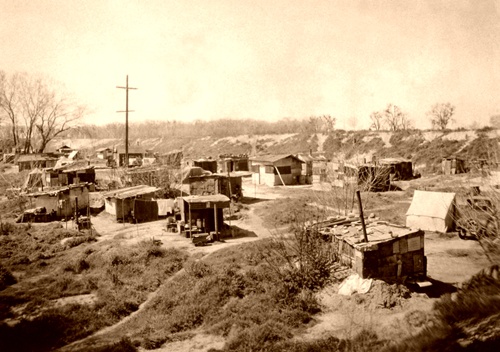
In 1932, during the last year of his presidential term, Pres. Hoover created the Reconstruction Finance Corporation to help faltering railroads, banks, life insurance companies, & other faltering financial institutions. Why did he support this idea?
Hoover was a big believer in federal government intrusion into the economy
Hoover had a self interest in support of the RFC because he owned several major railroads
Hoover thought his support of the RFC would help him beat Franklin Roosevelt in the upcoming presidential election
Hoover believed once these companies were stabilized, the benefits would “trickle down” to smaller businesses & bring recovery


What body was created for the nations near the end of World War II to try to prevent future global wars?
League of Nations
Allied Powers
Axis Powers
United Nations

Causes: Business converts from production of war materials to consumer goods, Americans buy on credit, Workers receive higher wages and better benefits - What was the EFFECT?
American economy grows rapidly after World War II
American economy undergoes another Great Depression
Businesses laid off large numbers of workers
Businesses switched back to old technologies

The state of tension between the United States and the Soviet Union without actual fighting that divided the world into two camps was the what?
Policy of containment
Warsaw Pact
Cuban Missile Crisis
Cold War
Which of the following were reasons for the Cold War?
The Soviet Union dominated over Eastern European countries.
The Soviet Union was dictatorial and communist and the United States was democratic and capitalist.
Soviet Union and U.S. fought on opposite sides during World War II.
America’s policy of containment to stop the spread of Communism.
North Atlantic Treaty Organization (NATO) versus Warsaw Pact

After World War II, who joined forces with the United States to resist Chinese and North Korean aggression which later ended in a stalemate?
Soviet Union
South Korea
Cuba
Vietnam

Extended educational, housing, and employment benefits to veterans; Which of the following is being described?
Civil Rights legislation
19th Amendment
G.I. Bill
Prohibition

How did the Baby Boom affect American society after World War II?
Child labor increased
Fewer schools were built
The economy slowed down
Led to changing demographics
What was the main goal of McCarthyism?
To remove potential communist from state positions
To witch hunt people McCarthyist did not like
To bring early attention to Ronald Reagan (Pre Political Career)
To divide the Republican Party


These "super" structures connected multiple states across the country. Built during the Cold War in case of a nuclear attack
Transcontinental Railroad
Amtrak Rail System
Federal Highway System
Old Town Road


When African Americans refused to ride the public busses as a sign of protest; this began when Rosa Parks was jailed for refusing to give up her seat to a black man.
Voting Rights Act of 1965
March on Washington
Montgomery Bus Boycott
15th Amendment
________ was Johnson’s program to provide
federal funding for healthcare for the poor.
Medicare
Social Security
Medicaid
AFDC
The new protest tactic against segregation used
by students in Greensboro, North Carolina, in
1960 was the ________.
boycott
guerilla theater
teach-in
sit-in
Which of the following was not a founding
goal of NOW?
to gain for women all the rights enjoyed by
men
to ensure passage of the Equal Rights
Amendment
to de-criminalize the use of birth control
to allow women to participate in all aspects
of American life

This law eliminated discrimination in all public places. It was passed in 1964. It was the
Economic Opportunity Act
Civil Rights Act
Voting Rights Act
Medical Care Act
The blue-collar workers who Nixon called “the
silent majority” ________.
fled to the suburbs to avoid integration
wanted to replace existing social
institutions with cooperatives
opposed the war in Vietnam
believed their opinions were overlooked in
the political process
The culture of the young people who rejected mainstream American society in the 1960's seeking to create an alternative society based on peace, love and individual freedom.
Counterculture
Feminism
Woodstock
United Hippie Movement
A free music festival that attracted more that 400,000 young people to a farm in upstate New York in August 1969.
Counterculture
Hippie Parade
Woodstock
La Raza Concerto

What was economically unique about "stagflation"?
Fewer people were working (higher unemployment) and consumer prices were falling (deflation) at the same time
Worker wages were steady (stagnation) and consumer prices were falling (deflation) at the same time
Consumer prices were rising (inflation) and worker wages stayed steady (stagnation) were happening at the same time
More people were working (higher employment) and consumer prices were falling (deflation) at the same time


What word best describes Ronald Reagan?
Liberal
Conservative
Progressive
Socialist
Proposed system to defend the United States against missile attacks
Deregulation
Strategic Defense Initiative
Supply-Side Economics
Raeganomics
The 1991 U. S. attack on Iraq to force the Iraqi's out of Kuwait
Operation Desert Storm
Title 9
Glasnot
Tiananmen Square
What drug will become an epidemic during Reagan's administration?
heroin
cocaine
meth
crack

Who plotted the terrorist attacks of September 11, 2001?
Iraq
Osama bin Laden
Saddam Hussein
Yassir Arafat
The anti-terrorism law passed after 9/11 was...
The Patriot Act
The Civili Rights Act
The Prohibition Act
The Terrorism and Security Act
Why did the US Government feel they could not allow these big banks to go bankrupt?
They were 'too big to fail'. The whole US economy depended on big banks being able to provide loans for businesses and citizens.
The banks provided lots of jobs for Americans.
The bank executives had donated millions to the campaigns of many congressmen and women.
They were a part of America's history from the 1800s and they felt they should continue to be America's banks.
The spread of political, cultural, and economic influences and connections among countries, businesses, and individuals around the world through trade, immigration, communication, and other means.
Globalization
Multiculturalism
Multinational Corporations
World Trade Organization (WTO)

Historians use primary sources and artifacts to help us understand the past. In the time allotted EXPLAIN which primary source or artifact you would pick to help a future historian understand YOUR circumstance during the COVID-19 lock down. (paragraph, 15 minutes allotted)

