wayground logo

Free Printable Worksheets

Font size

S
M
L
XL
Worksheets

7th Grade Science Review

Total questions: 73

Worksheet time: 1hrs 17mins

Name
Class
Date
1.
What unit do we measure Force in? 
a)
Newtons
b)
Joules
c)
Force
d)
Midi-chlorians
2.
Directs all cell activities through the DNA located there.
a)
Lysosomes
b)
Nucleus
c)
ribosomes
d)
Mitochondria
3.
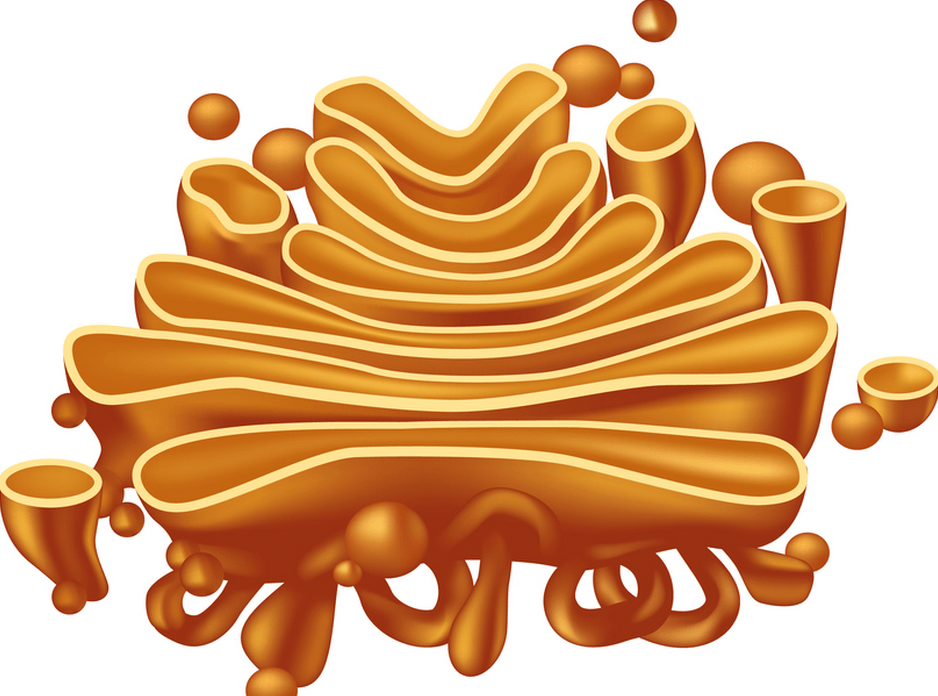
I am a protein packaging and shipping machine! Who am I?
a)
vacuole
b)
ribosome
c)
mitochondrion
d)
golgi apparatus
4.
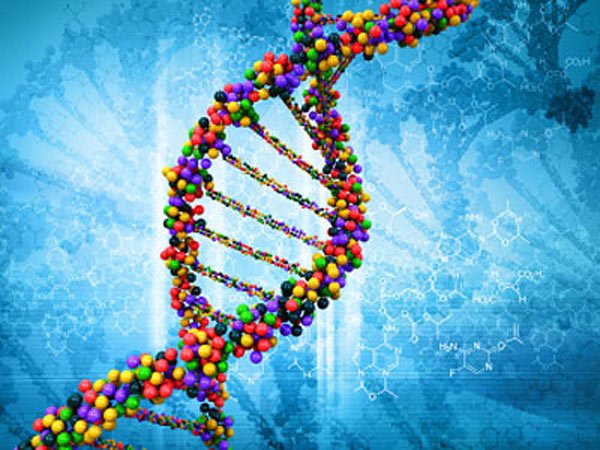
What is the name of the genetic material that is inside the nucleus?
a)
ER
b)
ATP
c)
YOLO
d)
DNA
5.
Where are proteins made?
a)
Golgi body
b)
Mitoichondria
c)
Chromosomes
d)
Ribosomes
6.
What organelle is called the "powerhouse" of a cell?

a)
Endoplasmic Reticulum
b)
Nucleus
c)
Mitochondria
d)
Nucleolus
7.
What is the gel-like substance inside of cells called?

a)
photoplasm
b)
photosynthesis
c)
cytoskeleton
d)
cytoplasm
8.
Energy due to motion is ____________ energy. 
a)
Potential 
b)
Energy
c)
Kinetic
d)
Friction
9.
The faster an object moves, the ________ kinetic energy it has. 
a)
more
b)
less
c)
none of the above
d)
all of the above 
10.
__________ is stored energy. 
a)
Potential
b)
Kinetic
c)
None of the above 
d)
All of the above 
11.
At which point is potential energy greatest?
a)
W
b)
X
c)
Y
d)
Z
12.
 Which level of organization is blood?
a)
cell
b)
tissue
c)
organ
d)
organ system
13.
This system's primary function is movement:  The movement of the body, movement of food through the digestive system, and the beating of the heart.  
a)
skeletal
b)
endocrine
c)
muscular
d)
respiratory
14.
Within the human body, the gases oxygen and carbon dioxide are exchanged.  What system's function is to exchange the gases carbon dioxide and oxygen?
a)
circulatory
b)
digestive
c)
respiratory
d)
immune
15.
Cells require materials such as nutrients, oxygen, and water to survive.  Cells also must remove wastes such as carbon dioxide.  What system serves as the transport system carrying needed materials to cells and transporting wastes away from cells?
a)
circulatory
b)
digestive
c)
integumentary
d)
nervous
16.
Breaking down food, absorbing nutrients, and removing solid wastes are functions of what system?
a)
digestive
b)
immune
c)
circulatory
d)
muscular
17.
What are the blood vessels that take the blood away from the heart?
a)
veins
b)
arteries
18.
What system is this?
a)
skeletal
b)
nervous
c)
circulatory
d)
digestive
19.
a group of organ systems working together form __________________________
a)
an organ
b)
an organism
c)
an organ system
d)
a cell
20.
Which of the following is NOT a part of your respiratory system?
a)
esophagus
b)
lungs
c)
bronchi
d)
trachea
21.
 These are the muscles which make up the heart
a)
smooth
b)
skeletal
c)
cardiac
d)
visceral
22.
What level of organization is this?
a)
cell
b)
tissue
c)
organ
d)
organ system
23.
A group of tissues makes___________
a)
a cell
b)
an organ system
c)
an organism
d)
an organ
24.
What system transports nutrients and oxygen to your cells?
a)
digestive
b)
nervous
c)
circulatory
d)
excretory
25.
Gas exchange in the body occurs in which system?
a)
respiratory
b)
nervous
c)
immune
d)
muscular
26.
What system is this?
a)
circulatory
b)
excretory
c)
digestive
d)
immune
27.
Victor is investigating sound waves.  He takes an alarm clock, places it in a jar, and uses a food vacuum to remove all of the air from the jar. When the alarm goes off, Victor cannot hear the sound. Why?
a)
There are no air particles, and sound waves need a medium in order to travel.
b)
The jar is absorbing all of the sound waves.
c)
The vacuum is absorbing all of the sound waves.
d)
The lid
 of the jar bounces the sound wave back into the jar.
28.
Which material would be able to transmit sound waves fastest?
a)
Hydrogen gas
b)
A steel beam
c)
Vegetable oil
d)
sea water
29.
Eric is in the middle of practicing with his guitar.  What happens to the pitch of the sound when Eric tightens his guitar string?
a)
The pitch decreases because the frequency of the wave is increased
b)
The pitch decreases because the frequency of the wave is decreased
c)
The pitch increases because the frequency of the wave is increased
d)
The pitch increases because the frequency of the wave is decreased
30.
When you hold a cup of hot chocolate, the heat energy transfers from the cup to your hands through...
a)
conduction
b)
convection
c)
radiation
d)
insulation
31.
Heat energy always transfers from ______ to _______ until _________
a)
hot; cold; no more heat energy remains
b)
cold; hot; no more heat remains
c)
hot; cold; they reach the same temperature
d)
cold; hot; they reach the same temperature
32.
The Law of Conservation of Energy states that: 
a)
Energy can be created and destroyed
b)
Energy has to change form to be usable
c)
Objects lose energy until they have none
d)
Energy cannot be created or destroyed, it can only change forms
33.

Which of the following is true of solids. (You may pick more than one answer.)

a)

Atoms in a solid are tightly packed together.

b)

Atoms in a solid move very quickly.

c)

Atoms in a solid have little energy.

d)

Atoms in a solid do not move at all.

34.

When gaseous water turns into liquid water, which of the following are true? (You may chose more than one answer.)

a)

The water molecules lose energy.

b)

The water molecules gain energy.

c)

The water condensed.

d)

The water evaporated.

35.

What is true of freezing? (You may chose more than one answer.)

a)

Liquid turns to gas.

b)

Solid turns to liquid.

c)

Liquid turns to solid.

d)

Thermal energy is lost.

e)

Thermal energy is gained.

36.

Select the true statement about the picture.

a)

They will push apart because opposite poles repel.

b)

They will pull together because opposite poles attract.

c)

They will push apart because like poles repel.

d)

They will pull together because like poles attract.

37.

Which of the following is true about gravity?

a)

Gravity attracts and repels.

b)

Gravity only attracts.

c)

Gravity only repels.

d)

Gravity always pulls everything down.

38.

Which of the following is true?

a)

Thermal energy always flows from hot to cold.

b)

Thermal energy always flows from cold to hot.

c)

Thermal energy sometimes flows from hot to cold.

d)

Thermal energy sometimes flows from cold to hot.

39.

Which of the following is true about kinetic energy? (You may chose more than one answer.)

a)

An object with less mass will have more kinetic energy.

b)

An object with more mass will have more kinetic energy.

c)

An object with a faster speed will have more kinetic energy.

d)

An object with a slower speed will have more kinetic energy.

40.

How does the distance between objects affect the strength of the force?

a)

Distance does not affect the strength of the force.

b)

When distance increases, the strength of the force increases.

c)

When distance decreases, the strength of the force increases.

d)

Distance only affects the strength of magnetic force.

41.

Which of the following are true about conduction?

a)

The thermal energy flows in a current.

b)

A conductor is a material that passes thermal energy quickly and easily.

c)

An insulator is a material that passes thermal energy quickly and easily.

d)

Thermal energy is transferred when particles bump into each other.

42.

Which of the following are examples of convection?

a)

Roasting marshmallows near a fire

b)

Floating ice cubes cooling down an entire glass of lemonade

c)

A pot of boiling water

d)

Heating vents installed near the floor

e)

Warming up your hands by holding a mug of hot cocoa

43.
The substances listed on the right side of a chemical equation are the
a)
Yields
b)
Reactants
c)
Products
d)
Precipitates
44.
The substances listed on the left side of a chemical equation are the
a)
Products
b)
Coefficients
c)
Precipitates
d)
Reactants
45.
In chemical reactions, what does the principle of conservation of mass mean?
a)
Matter is not created or destroyed.
b)
The total mass of the reactants is greater than the total mass of the products.
c)
The total mass of the reactants is less than the total mass of the products.
d)
Matter is not changed.
46.
Which is the Law of Conservation of Matter?
a)
matter cannot be created or destroyed, it only changes form
b)
matter can be created but it cannot be destroyed, it never changes form
c)
matter can be destroyed but it cannot be created, it usually just changes form
d)
matter is an unproven theory created by Hans Geiger
47.
A molecule is________
a)
a glob of gelatinous goo
b)
smaller than an atom
c)
filled with raisons
d)
more than one atom bonded together
48.

The powerhouse of the cell

a)

Nucleus

b)

Golgi Complex

c)

Endoplasmic Reticulum

d)

Mitochondria

49.

Found only in a plant cell, this organelle is where photosynthesis takes place

a)

Chlorophyll

b)

Cell Wall

c)

Chloroplast

d)

Nucleus

50.
The study of matter and how it changes is known as:
a)
biology
b)
forensics
c)
heredity
d)
chemistry
51.
What are the 3 States of Matter?
a)
solid, liquid, form
b)
solid, diploid, gas
c)
liquid, gas,energy 
d)
solid, liquid, gas
52.
A mixture where you can see all of the parts is known as a:
a)
chemical property
b)
physical property
c)
homogeneous mixture
d)
heterogeneous mixture
53.
Volume is the amount of ___________an object takes up.
a)
length
b)
width
c)
space
d)
molecules
54.
____________ refers to the amount of matter in an object.
a)
mass
b)
volume
c)
density
d)
Metric
55.
How can matter change from a liquid to a gas?
a)
by freezing 
b)
by heat
c)
by wetting it
56.
Which is an example of a solid?
a)
apples
b)
water
c)
oil
57.
Which is the formula for density?
a)
D = mxd
b)
D = m/v
c)
D = m/D
58.
Which is an example of a gas?
a)
iron
b)
mercury
c)
helium
d)
paint
59.
___________ is the measure of how much space an object occupies.
a)
mass
b)
volume
c)
density
60.
A ______________ has NO definite shape and no definite volume.
a)
solid
b)
liquid
c)
gas
61.
A _____________ has definite shape and definite volume.
a)
solid
b)
liquid
c)
gas
62.

Which of the following is NOT an SI/Metric Unit of Measurement?

a)

meter

b)

gram

c)

inch

d)

liter

63.

What is the SI Unit for distance?

a)

rise/run

b)

foot

c)

yard

d)

meter

64.

Surrounding the nucleus is a cloud-like region of moving _________________________.

a)

protons

b)

neutrons

c)

electrons

65.

______________ is a small particle in the nucleus of an atom, with no electrical charge

a)

proton

b)

neutron

c)

electron

66.

What is a tiny, negatively charged particle that moves around the outside of the nucleus of an atom?

a)

proton

b)

neutron

c)

electron

67.

______________is the number of protons in the nucleus of an atom, this defines the element:

a)

atomic mass

b)

atomic number

c)

energy level

68.

Together, the protons and _____________ make up almost all the mass of an atom

a)

neutrons

b)

electrons

c)

atoms

69.

Negatively charged particles in an atom are known as:

a)

protons

b)

neutrons

c)

electrons

70.

A particle with NO charge is a:

a)

proton

b)

neutron

c)

electron

d)

nucleus

71.

_________________ has:

Definite volume; definite shape. Molecules are closer together; move slowly

a)

Solid

b)

Liquid

c)

Gas

d)

All of the Above

72.

________________ has:

Definite volume; assumes shape of its container. Molecules are farther apart and faster in motion.

a)

Solid

b)

Liquid

c)

Gas

d)

All of the Above

73.

___________________ has:

No definite volume; No definite shape. Molecules are the farthest apart and move the fastest.

a)

Solid

b)

Liquid

c)

Gas

d)

All of the above