wayground logo

Free Printable Worksheets

NEW

Font size

S
M
L
XL
Worksheets

Chemistry Final Prep

Total questions: 48

Worksheet time: 38mins

Name
Class
Date
1.
Which of the following are NOT signs that a chemical reaction occured?
a)
the properties changed
b)
bubbles of gas formed
c)
color stays the same
d)
smells different
2.
Sandra was burning a vanilla candle. Was there a chemical reaction?
a)
no, because burning is never a chemical reaction.
b)
Yes, because the properties of the wick changed.
c)
yes, because heat was added.
d)
no, because the ash formed was a different substance.
3.

An electron is

a)

positively charged

b)

neutral

c)

negatively charged

4.

Conservation of mass means

a)

all the atoms present before a chemical reaction are not present after

b)

atoms present before chemical reactions are present after

c)

new substances and new elements are formed in a chemical reaction

5.

Characteristics of metals on the periodic table are

a)

they are not able to be oxidised

b)

they are poor conductors of heat and electricity

c)

have free electrons

6.

what is an atom

a)

smallest part of the universe

b)

smallest part of a substance

c)

smallest part of anything

d)

smallest part of water

7.

same number of protons, different number of neutrons

a)

atomic number

b)

mass number

c)

isotope

d)

ion

8.

a charged atom

a)

neutral

b)

isotope

c)

ion

d)

nucleus

9.
What are the 3 particles that make-up the atom?
a)
protons, neutrons, and isotopes
b)
neutrons, isotopes, and electrons
c)
positives, negatives, and electrons
d)
protons, neutrons, and electrons
10.

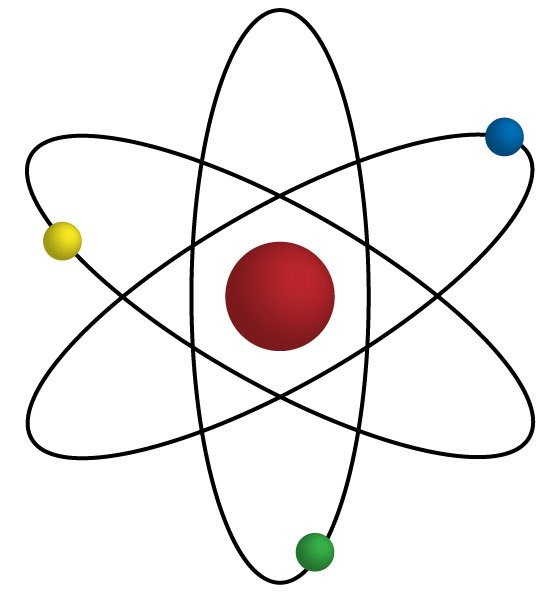
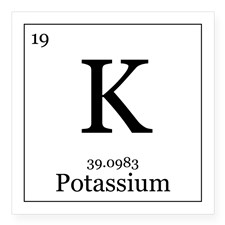
What is the number of protons that the element in this image contain?

a)

14

b)

7

c)

15

d)

18

11.

How many neutron are in the atom "K"?

a)

7

b)

2

c)

39

d)

20

12.
"C" is the element symbol for which element?
a)
calcium
b)
carbon
c)
chlorine
d)
cadmium
13.

The proper formula for magnesium hydroxide:

a)

MgOH

b)

Mg2OH

c)

Mg(OH)2

d)

Mg2OH2

14.

How do the following two elements bond together?

Al3+ O2-

a)

AlO

b)

Al2O3

c)

Al3O6

d)

Al3O2

15.
Which of the following is a compound?
a)
Co
b)
O2
c)
C
d)
CO2
16.
The characteristics or properties of metals include
a)
shiny and solid
b)
ductile and malleable
c)
lose electrons
d)
all of the above
17.
How many valence electrons do elements in group 17 have in their outer energy level?
a)
7
b)
17
c)
1
d)
0
18.
Most of the mass in an atom is made up of _____________________?
a)
protons and electrons
b)
protons and neutrons
c)
neutrons and electrons
d)
electrons and quarks
19.

What is the atomic mass of this element?

a)

20

b)

60

c)

40

d)

41

20.

What is the symbol of this element?

a)

Calcium

b)

P

c)

Ca

d)

C

21.
Gold is an example of a(n) 
a)
pure element
b)
pure compound
c)
pure mixture
22.
A mixture can be separated by ________ means. 
a)
physical
b)
chemical
23.

Which of the following indicate that a chemical reaction has occurred?

a)

The formation of gas bubbles

b)

An odor

c)

a change in color

d)

all of these indicate a chemical reaction

24.

Which mixture is a solution?

a)

Muddy water

b)

potting soil

c)

cranberry juice

d)

milk

25.

What it the process called when acids and bases react to form salt and water?

a)

Neutralization

b)

Naturalization

c)

Normalization

d)

Nationality

26.
What is a pure substance that cannot be broken down into any other substance by physical or chemical means. Ex: Gold, Silver, Oxygen, & Nitrogen
a)
element
b)
compound
c)
mixture
d)
salad
27.
What is a  pure substance made of two or more elements chemically combined in a set ratio. Ex: CO2 has a set ratio of 1:2, meaning for every one carbon atom there are two oxygen atoms.
a)
element
b)
compound
c)
mixture
d)
salad
28.
What is an atom which has gained or last electrons called?
a)
isotope
b)
atom
c)
ion
d)
balanced
29.
What type of mixture contains visible parts (like a salad or a pizza or granite)
a)
homogenous
b)
heterogenous
30.
Air is an example of a(n)
a)
element
b)
compound
c)
heterogenous mixture
d)
homogenous mixture
31.
who developed the modern day periodic table of elements?
a)
Darwin
b)
Shultz
c)
Hooke
d)
Mendeleev
32.
In a family or column, the elements have similar properties because they all have the same number of
a)
protons
b)
neutrons
c)
valence electrons
d)
electrons
33.
In what type of bond are electrons gained or lost?  This happens between a metal and a non-metal?
a)
ionic
b)
covalent
c)
subatomic
34.
When heat is added to matter, the molecules tend to 
a)
move faster and farther apart
b)
slow down
c)
nothing, heat has no impact on the state of matter
d)
freeze
35.
The compounds and elements that are present at the beginning of a reaction:
a)
reactants
b)
catalyst
c)
products
d)
energy 
36.
Which of the following is a decomposition reaction?
a)
MgCo3 --> MgO + CO2 
b)
SO3 + H2O --> H2SO4
c)
2 Mg + O2 --> 2MgO 
37.
Boiling point, Freezing point, creating a mixture, can be separated, change in state, are all what type of property?
a)
Chemical
b)
Physical
38.
The easiest way to tell if a change is physical or chemical is to ask yourself?
a)
Did it break?
b)
Did it change color?
c)
Did it create a new substance?
d)
Did it look cool?
39.
List the subscripts in the product only.
a)
2
b)
2,2,3
c)
2,3
d)
4,3,2,
40.
Balanced or Unbalanced?
a)
Balanced
b)
Unbalanced
41.
The charge of a chlorine ion.
a)
-1
b)
+1
c)
-2
d)
+2
42.
1s22s22p63s23p1
This electron configuration belongs to...
a)
Aluminum
b)
Boron
c)
Gallium
d)
Carbon
43.
Noble gases don't react with anything else because...
a)
they are too large
b)
they are gases
c)
they have 8 valence electrons
d)
they need to gain 1 valence electron
44.
The most reactive metals are the...
a)
Alkaline earth metals
b)
Transition metals
c)
Alkali metals
d)
Halogens
45.
Which is the correct molar mass for water (H2O)?
a)
44.009 g/mol
b)
18.015 g/mol
c)
24.54 g/mol
d)
109.23 g/mol
46.
Which of the following is Avogadro's number?
a)
5.6022 x 10
b)
6.022 x 10²³
c)
6.022 x 10⁻²³
d)
6.022 x 10
47.
What is the name for this compound?
MgCl2
a)
Magnesium dichloride
b)
Monomagnesium dichloride
c)
Magnesium chloride
d)
Chloride dimagnesium
48.
The compounds or elements present at the end of a reaction 
a)
reactants
b)
catalyst
c)
products
d)
energy