Wayground logo

Free Printable Worksheets

Font size

S
M
L
XL
Worksheets

Respiratory Recap

Total questions: 20

Worksheet time: 13mins

Name
Class
Date
1.
What carries O2 around the body?
a)
Red blood cells
b)
Haemoglobin
c)
White Blood cells 
d)
Co2
2.
Which is the correct definintion of caradic output?
a)
Cardiac output is the volume of blood ejected from the left ventricle per minute
b)
Cardiac output is the volume of blood ejected from the right ventricle per beat
c)
Cardiac output is the volume of blood ejected from the left ventricle per beat
d)
Cardiac output is the volume of blood ejected from the right ventricle per breath 
3.
What does VE stand for?
a)
Heart Rate 
b)
Cardiac 
c)
Stroke Volume 
d)
Minute Ventilation
4.
What is the definition of minute ventilation?
a)
Volume of air inspired/expired per minute
b)
Volume of blood pumped from the left ventricle during exercise
c)
Volume of air inspired/expired per breath
d)
Volume of blood pumped around the pulmonary circuit
5.
What does the pulmonary circuit do?
a)
Carries oxygenated blood the muscles 
b)
Carries deoxygenated blood to the lungs and oxygenated blood back to the heart
c)
Carries deoxygenated blood to the lungs.
d)
Carries oxygenated blood to the body and deoxygenated blood back to the heart
6.
What does the systemic circuit do?
a)
Carries oxygenated blood to the body and deoxygenated blood back to the heart
b)
Carries oxygenated blood to the muscles 
c)
Carries deoxygenated blood to the lungs and oxygenated blood back to the heart
d)
Transports Co2 around the body
7.
What is venous return?
a)
The volume of o2 being carried to the lung
b)
The process in which the muscle receive o2
c)
The volume of blood leaving the heart
d)
The volume of blood returning to the heart
8.
Stroke Volume is...
a)
The volume of blood ejected from the left ventricle per minute
b)
The volume of blood ejected from the left ventricle per beat
c)
The volume of blood ejected from the left ventricle per breath
d)
The volume of blood the heart receieves at rest
9.
What is responsible for HR regulation?
a)
Sympathetic nervous system
b)
Parasympathic nevrous system
c)
Cardiac Control Center
d)
Medulla Oblongata
10.
What is the job of the veins and venules?
a)
They transport o2 from the muscles and organs back to the heart
b)
They transport oxygenated blood to the muscles and organs 
c)
They transport deoxygenated blood from the muscles and organs back to the heart
d)
They transport deoxygenated blood to the muscles and organs back to the heart
11.
Tidal Volume (TV) is...
a)
The volume of air inspired or expired in one breath
b)
The volume of  o2 inspired or expired in one breath
c)
The total capacity of o2 in the lungs at rest
d)
The total capacity of air in the lungs at rest
12.

These apply to inhalation

a)

Diaphragm moves up

b)

Ribs move in

c)

Ribs move out

d)

Diaphragm contracts

e)

Creates larger pressure in thoracic cavity

13.

These apply to exhilation

a)

Diaphragm relaxes

b)

Pressure increases in thoracic cavity

c)

Pressure is less outside the body

d)

Diaphragm moves down

14.

Pressure moves from high to low

a)

False

b)

True

15.
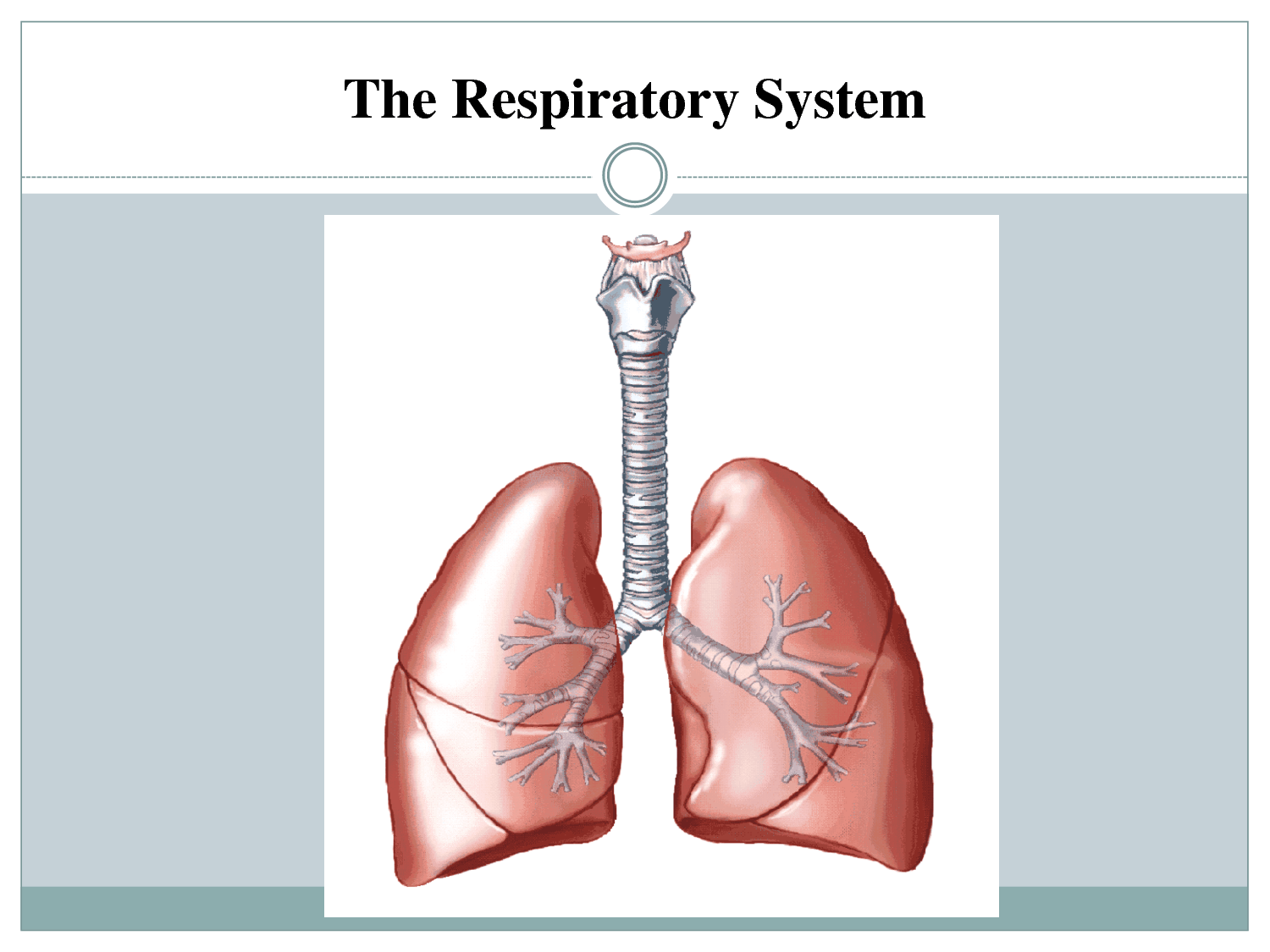
What is the main function of the respiratory system?
a)
to provide oxygen and remove carbon dioxide from the body
b)
to bring oxygen to the body
c)
to break down food and absorb nutrients
d)
to remove oxygen from the body and deliver carbon dioxide
16.

What are the tiny air sacs that allow for diffusion between oxygen and carbon dioxide

a)

Bronchi

b)

Bronchioles

c)

Trachea

d)

Alveoli

17.
When you inspire the ribs move....
a)
Up and out
b)
Up and in
c)
Down and out
d)
Down and in
18.
When you expire the ribs move....
a)
Up and out
b)
Up and in
c)
Down and out
d)
Down and in
19.

Which sequence correctly indicates the branching pattern of the human respiratory system?

a)

trachea -> bronchi -> bronchioles -> alveoli

b)

trachea -> bronchioles -> bronchi -> alveoli

c)

alveoli -> trachea -> bronchioles -> bronchi

d)

alveoli -> bronchioles -> trachea -> bronchi

20.

What is the main function of gas exchange

a)

To remove carbon dioxide and supply oxygen to the body

b)

To remove oxygen from the body

c)

To supply carbon dioxide and remove oxygen from the body

d)

To supply water to the body cells