
Font size
 Worksheets
Chemistry FINAL REVIEW - Covid-19
Total questions: 86
Worksheet time: 2hrs 13mins
What is the first thing you must do to solve a stoichiometry problem?
Write a Balanced Equation
Panic
cry
Ask for help
How many moles of water can be produced if 8 moles H2 are used?
How many grams of hydrogen are produced if 120 g of Na are available?
A student measures the pressure and volume of an empty water bottle to be 1.4 atm and 2.3 L. She then decreases the pressure to 0.65 atm. What is the new volume?
2.1 L
5.0 L
8.2 L
3.9 L
A sample of hydrogen at 1.5 atm had its pressure decreased to 0.50 atm producing a new volume of 750 mL. What was its original volume?
245 ml
345 ml
123 ml
250.mL
(Charles Law) There are 65 liters of helium in a balloon at 35 K. If the temperature of the balloon is increased to 40 K, what will the new volume of the balloon be?
40 L
70 L
74.3 L
75.9 L
A scientist records 8 moles of gas. The scientist does not check the pressure of this gas. At t later time the scientist measures the volume of gas to be 150 ml and the new number of moles of gas to be 48 what was the orginal volume of the gas
25 ml
0.39 ml
2.56 ml
2.5 ml
Describe COHESION.
Water molecules attracted to other substances.
Water molecules climbing upwards against the force of gravity.
Water molecules dissolving many substances because of its polarity.
Water molecules attracted to other water molecules.
Describe ADHESION.
Water molecules attracted to other substances.
Water molecules climbing upwards against the force of gravity.
Water molecules dissolving many substances because of its polarity.
Water molecules attracted to other water molecules.
Describe CAPILLARY ACTION.
Measure of how difficult it is to break the surface of a liquid.
Water molecules climbing up against the force of gravity.
Water molecules attracted to other substances.
Water molecules dissolving many substances because of its polarity.
A water droplet sticking to a glass is an example of...
Cohesion
Adhesion
Surfactant
Meniscus
You are given a small beaker of solution at room temp. You add a bit of solute to the solution and it dissolves. The solution was:
saturated
unsaturated
concentrated
warm
How do you know when you have a saturated solution?
You don't see anymore material in the solution. It has dissolved.
The material dissolves and no more will dissolve because you see it collect at the bottom.
The solution is bubbling and cloudy.
The solution is clear and there is nothing at the bottom.
If 0.775 L of 1.00 M NaOH is diluted to 1.00 L, the resulting solution contains
0.225 mol NaOH
0.775 mol NaOH
1.25 mol NaOH
2.45 mol NaOH
If I dilute 250 mL of 0.10 M lithium acetate solution to a volume of 750 mL, what will the concentration of this solution be?
2 M
0.02 M
0.03 M
0.08 M
Zn(OH)2 + HNO3 ---> H2O + Zn(NO3)2
Complete the following reaction:
HCl + Mg(OH)2 -->
MgCl2 + H2O
Mg +H2O
MgCl2 + H2
MgCl2 + H2O + CO2
350.540
0.0005
0.00400


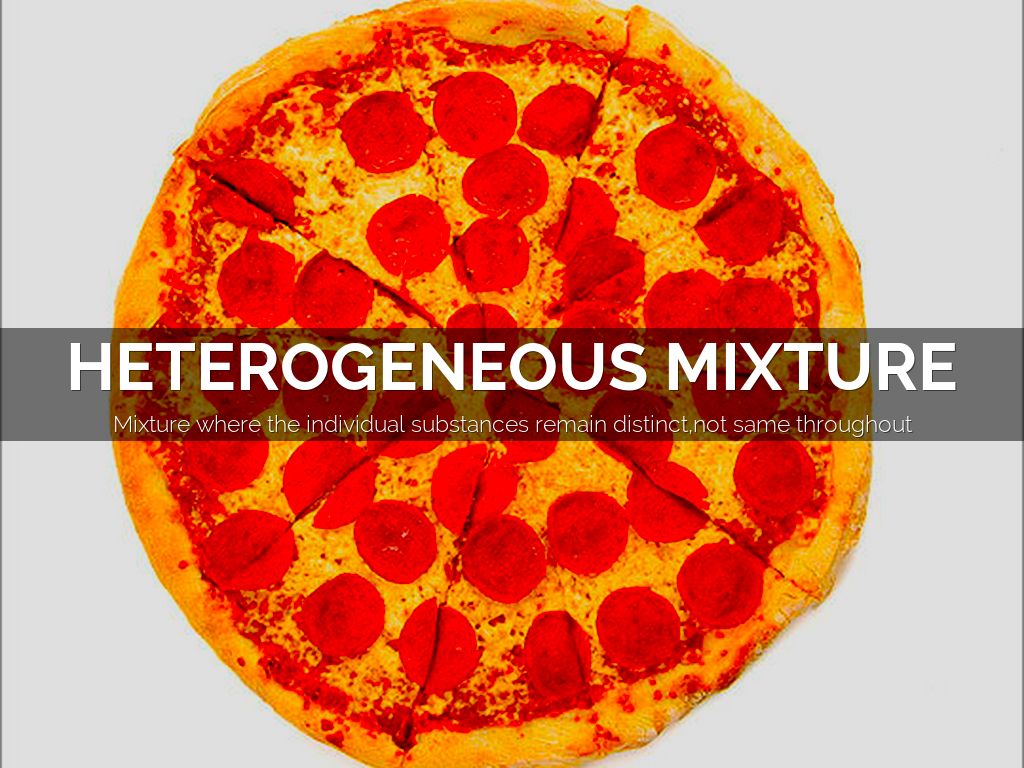
Properties that DO depend on the amount of matter present.
Mass
Hardness
Extensive
Intensive
Properties that depend on the identity of substance.
Mass
Hardness
Extensive
Intensive
Which of the following is an extensive property?
Hardness
Boiling Point
Density
Weight
Which of the following is an intensive property?
Color
Mass
Volume
Weight
Blue color
Physical Property
Chemical Property
Density
Physical Property
Chemical Property
Melting point
Intensive Property
Extensive Property
Color
Intensive Property
Extensive Property

Record the following in cm
1.0
1.2
1.25
1.250
1.30


12.5-mL + 20.05-mL + 2.69-mL
98.7°C - 97.25°C
1200 light years - 5 light years = ?
1195 light years
2000 light years
1000 light years
1200 light years
67 seconds + 10.1 seconds = ?
77.1
77
70
80
KF
The name of Cu3N2 is
copper (III) nitride
copper (II) nitride
copper nitride
tricopper dinitride

