wayground logo

Free Printable Worksheets

Font size

S
M
L
XL
Worksheets

Cells Test

Total questions: 63

Worksheet time: 1hrs 5mins

Name
Class
Date
1.
The _____ ______ states that the cell is the basic unit of all living things.
a)
Cell Theory
b)
Atomic Theory
c)
Relativity Theory
d)
Cell Phone
2.
Which macromolecule is made from amino acids?
a)
Nucleic Acids
b)
Carbohydrates
c)
Lipids
d)
Proteins
3.
Genetic information is stored in which macromolecule?
a)
Proteins
b)
DNA
c)
Lipids
d)
Sugars
4.
What is the main ingredient in every cell?
a)
DNA
b)
Sugar
c)
Water
d)
Cellulose
5.

The function of a lipid in a cell is to to provide energy ________ and cell communication.

a)

storage

b)

destruction

c)

usage

6.
Why is water such an important molecule?  In addition to making up a large part of the cell, it also __________ the cell.
a)
dries out
b)
charges
c)
surrounds
d)
drains
7.
control the cell's activities; contains the cell's DNA
a)
mitochondria
b)
cell membrane
c)
nucleus
d)
golgi body
8.
breaks down food to release energy
a)
nucleus
b)
lysosomes
c)
mitochondria
d)
vacuole
9.
cells that contain a true nucleus
a)
prokaryotes
b)
eukaryotes
c)
carbohydrate
d)
plant cells
10.
a rigid supporting layer that surrounds the cells of plants and some other organisms
a)
cell membrane
b)
cell wall
c)
 nucleus
d)
cytoplasm
11.
the thick fluid region of a cell located inside the cell membrane or between the cell membrane and nucleus
a)
cytoplasm
b)
cell wall
c)
organelle
d)
golgi apparatus
12.
a sac like organelle that stores water, food, and other matter
a)
vacuole
b)
lysosome
c)
cytoplasm
d)
cell wall
13.

a small grain shaped organelle found in the cytoplasm of a cell or on the Rough ER that produced proteins

a)

cytoplasm

b)

ribosome

c)

cell membrane

d)

mitochondria

14.
an organelle in the cells of plants and some other organisms that captures energy from sunlight and changes it to an energy from that cells can use in making food
a)
vacuole
b)
chloroplasts
c)
cytoplasm
d)
mitochondria
15.
Which organelle is only found in a plant cell? 
a)
nucleus
b)
chloroplast
c)
mitochondria
d)
cell membrane
16.
Where are proteins made?
a)
Golgi body
b)
Mitoichondrion
c)
Chromosomes
d)
Ribosomes
17.
What makes the endoplasmic reticulum rough?
a)
Vessicles
b)
Vacuoles
c)
Ribosomes
d)
Chromosomes
18.
What is the name of the genetic material that is inside the nucleus?
a)
ER
b)
ATP
c)
YOLO
d)
DNA
19.
Microscopic single-cells that do not have a nucleus or other membrane-bound organelles. 
a)
DNA
b)
RNA
c)
Eukaryotes
d)
Prokaryotes
20.
In mitosis, the two resulting cells are
a)
different from the starting cell and identical to each other.
b)
different from the starting cell and different from each other.
c)
identical to the starting cell and different from each other.
d)
identical to the starting cell and identical to each other.
21.
Which of these lists presents the stages of the cell cycle in the correct order?
a)
interphase, mitosis, cytokinesis
b)
cytokinesis, mitosis, interphase
c)
mitosis, interphase, cytokinesis
d)
interphase, cytokinesis, mitosis
22.
Which of these organisms relies on mitosis for reproduction?
a)
grumpy cat
b)
angry bird
c)
unicellular paramecium
d)
squishy jellyfish
23.

Cells of organism must replicate for ?

a)

growth

b)

repair of damaged tissue

c)

replacement of dying cells.

d)

All of the above

24.

The division of the nucleus is known as:

a)

Synthesis

b)

Mitosis

c)

Interphase

d)

cytokinesis

25.
A repeating sequence of growth and division...
a)
Mitosis
b)
Interphase
c)

Cell Cycle

d)
Somatic
26.
Which part of the Cell Cycle takes the longest?
a)
Interphase
b)
Mitosis
c)
Prophase
d)
Cytokinesis
27.
What happens in the first part of Interphase?
a)
Mitosis
b)
Cell Growth
c)
DNA Replication
d)
Anaphase
28.

In which stage of the cell cycle does the cell finally split into two?

a)

Mitosis

b)

Interphase

c)

Cytokinesis

29.

Why do cells go through mitosis?

a)

to make food from sunlight

b)

to create proteins

c)

to get air into the cells

d)

to reproduce, grow and repair/replace

30.

What is diffusion?

a)

when molecules move

b)

when molecules move from a high concentration to a low concentration.

c)

no movement

d)

molecules move everywhere

31.
Osmosis is the movement of _____ across a membrane.
a)
food
b)
energy
c)
oxygen
d)
water
32.
During osmosis
a)
water moves from high to low concentration
b)
large or oddly shaped molecules move across a cell membrane
c)
water moves when energy is used
d)
proteins are built
33.
What a cell needs to transport particles by active transport?
a)
Sun
b)
Wind
c)
Energy
d)
Channels
34.
Passive transport requires no
a)
concentration gradients
b)
osmosis
c)
motion
d)
energy
35.
When both inside and outside of a cell have the same amount of water it is said that the cell has reached a state of
a)
Osmosis
b)
Diffusion
c)
Equilibrium
36.

The picture is an example of _________________.

a)

meiosis

b)

diffusion

c)

osmosis

37.
_______ regulates what enters and leaves a cell.  
a)
Cell Membrane
b)
Nucleus
c)
Mitochondria
38.

Which of the following are made of cells? (select all that apply)

a)

Dogs

b)

Concrete

c)

Rocks

d)

Humans

e)

Flowers

39.
What is the difference between active and passive transport?
a)
Active does not need energy and passive uses ATP (energy)
b)
Active uses ATP (energy) and passive does not need energy
c)
Active stores transport proteins and passive releases 
d)
Active uses hormones and passive does not 
40.
A cell uses protein channels to move large sugar molecules from an area of high concentration to an area of low concentration. This is an example of _____.
a)
active transport
b)
facilitated diffusion
c)
osmosis
41.
The basic unit of structure and function for the body.
a)
cell
b)
atom
c)
organelle
d)
nucleus
42.

A structure made up of different types of tissue and performs a specific job.

a)

cells

b)

tissue

c)

organ

d)

organ system

43.
A group of similar cells that perform the same function.
a)
tissue
b)
organelle
c)
mass
d)
tendon
44.
A group of organs that work together to perform a major function is an organ
a)
system
b)
column
c)
bank
d)
stack
45.
The smallest level of organization of life in an organism
a)
tissue
b)
cell
c)
organ
d)
organ system
46.
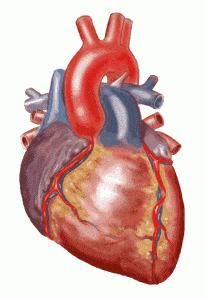
This is a example of ........
a)
cell
b)
organ system
c)
organ
d)
tissue
47.
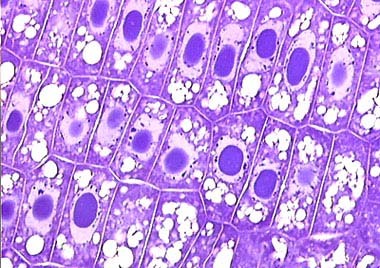
This is a example of ........
a)
cell
b)
tissue
c)
organ 
d)
organ system
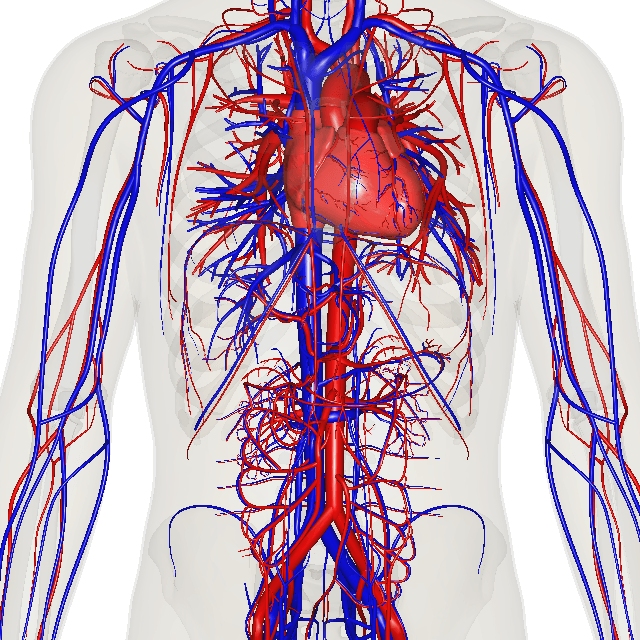
48.
This is a example of ........
a)
organ
b)
organ system
c)
tissue
d)
cell
49.
What is the correct order of organization
a)
tissues-cells-organs-organ systems-organism
b)
cell-tissue-organs-organ systems-organism
c)
organism-cells-tissues-organ systems-organism
d)
tissues-cells-organs-organ sytems-organism
50.

Which of the following cell types is formed by meiosis?

a)

muscles cells

b)

sperm cells

c)

skin cells

d)

blood cells

51.

what process is necessary for the inherited traits of an organism to be passes along by sexual reproduction?

a)

mitosis

b)

meiosis

c)

mutation

d)

fission

52.

which of the following statements correctly describes meiosis?

a)

Cell divide only once during meiosis

b)

Meiosis does not occur in reproductive cells

c)

The cells produced at the end of meiosis are genetically identical to the parent cell.

d)

The cells produced at the end of meiosis contain half the number of chromosomes as the parent cell.

53.

Which of the following best describes meiosis?

a)

It is carried in all tissues that require cell replacement.

b)

It occurs only in cells in the reproductive structure of the organism.

c)

It happens n all tissues except that brain and spinal cord.

d)

It is the first stage of mitosis

54.

What is one advantage of sexual reproduction?

a)

The offspring are identical to the parents.

b)

The offspring are resistant to viruses.

c)

The offspring are born live, rather than from eggs.

d)

The offspring inherit a wider variety of genetic information.

55.

A male shark has 40 chromosomes in each of its sex cells. How many chromosomes would be present in a normal body cell of s shark?

a)

20

b)

40

c)

80

d)

160

56.

All offspring of asexual reproduction are identical

a)

True

b)

False

57.

If the environment changes for an Asexual offspring it will most likely?

a)

Explode

b)

Create another new offspring with different genetics

c)

Fall in love

d)

Die

58.

How many parent(s)are needed for asexual reproduction?

a)

4

b)

1

c)

9

d)

100

59.
Which process is considered to be faster? 
a)
Asexual
b)
Sexual 
60.
How are genetic traits passed down from generation to generation?
a)
Chromosomes
b)
Reproduction
c)
DNA
d)
Genes
61.
True or False: Fission is a way to reproduce asexually.
a)
True
b)
False
62.

True or False: Budding is a way to reproduce asexually

a)

True

b)

False

63.

Which process below is NOT a type of asexual reproduction

a)

regeneration

b)

meiosis

c)

budding

d)

cloning