wayground logo

Free Printable Worksheets

NEW

Font size

S
M
L
XL
Worksheets

Muscular and Skeletal System

Total questions: 63

Worksheet time: 40mins

Name
Class
Date
1.
Which type of muscle is found in your heart?
a)
Skeletal
b)
Smooth
c)
Cardiac
d)
Straight
2.
Which muscles are involuntary?
a)
skeletal
b)
cardiac
c)
smooth
d)
smooth and cardiac
3.
When a muscle contracts, it _______
a)
gets longer
b)
gets shorter
c)
gets thinner
d)
grows hair
4.
Skeletal muscles are attached to the _________.
a)
Stomach
b)
Lungs
c)
Bones
d)
Involuntary Muscles
5.
Cardiac muscles are ONLY located in the heart
a)
TRUE
b)
FALSE
6.
Muscles always work in _____
a)
pairs
b)
groups of 3
c)
bones
d)
joints
7.

How many bones are in the adult human body?

a)

206

b)

600

c)

50

d)

800

8.
Skeletal muscles are responsible for which of the following?
a)
Movement of the body
b)
Movement of the heart
c)
Movement of the ligaments 
d)
Movement of the extremities
9.

a place where two or more bones meet

a)

joint

b)

cartilage

c)

marrow

d)

tendon

10.

a disease in which bones become breakable and thin

a)

calcium deficiency

b)

osteoporosis

c)

periosteum

d)

muscular atrophy

11.

Strong band of tough tissue that attach muscle to bone

a)

Cartilage

b)

Ligaments

c)

Tendons

d)

Involuntary muscle

12.

The joint that moves in one direction, like a door

a)

ball and socket joint

b)

hinge joint

c)

pivot joint

d)

gliding joint

13.

The joint in which bones slip over other bones, allowing free movement.

a)

ball and socket joint

b)

hinge joint

c)

pivot joint

d)

gliding joint

14.

The joint that consists of a bone resting atop another bone, permitting free movement.

a)

ball and socket joint

b)

hinge joint

c)

pivot joint

d)

gliding joint

15.

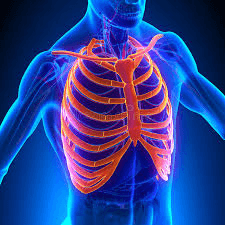
What bone is highlighted?

a)

Ribs

b)

Cranium

c)

Clavicle

d)

Femur

16.

What bone is highlighted?

a)

Femur

b)

Cranium

c)

Ribs

d)

Skull

17.

What is the largest and strongest bone in the body?

a)

skull

b)

vertebrae

c)

femur

d)

ribs

18.

Your bones are alive.

a)

true

b)

false

19.
Muscles are responsible for?
a)
Movement of the body
b)
Framework of the body
c)
Elimination of body waste
d)
Circulation of blood
20.
What region of the skeleton is made up of; cranium, rib cage, sternum and the vertebral column?
a)
Axial Skeleton
b)
Appendicular Skeleton
c)
Axal Skeleton
d)
Apendicular Skeleton
21.
Carpals can be located in the feet. True or False?
a)
True
b)
False
22.
Which classification of joint has the most movement available at them?
a)
Cartilaginous 
b)
Synovial
c)
Fibrous
23.
Adduction is...
a)
Moving a joint away from the central line of the body
b)
Bringing a joint towards the central line of the body
c)
Rotation
d)
Extension of a joint
24.

Which best describes the purpose of the muscular system?

a)

The muscular system carries messages from the brain to the bones to move the body.

b)

The muscular system keeps the bones strong and protects them from being broken.

c)

The muscular system produces red blood cells

d)

The muscular system allows movement of bones and helps maintain posture.

25.

Which best describes the purpose of the skeletal system?

a)

It connects bones and muscles together?

b)

It connects the organs of the body to the brain.

c)

It provides support for the body and protects organs.

d)

It provides energy to the bones and muscles so they can move.

26.
Identify the joint action being performed.
a)
Extension
b)
Flexion
c)
Abduction
d)
Adduction
27.
The knee joint is
a)
Hinge
b)
Gliding
c)
Ball and socket
d)
Pivot
28.
Hip and shoulder have examples of this type of joint
a)
ball and socket
b)
condyloid
c)
hinge
d)
gliding
29.
Fibrous joints are?
a)
freely moveable
b)
partially moveable
c)
immovable
30.
Turning the hand so that the palm is upward or facing anteriorly (in anatomical position).
a)
supination
b)
pronation
c)
flexion
d)
dorsiflexion
31.
Movement away from the mid-line is called _____________.
a)
abduction
b)
adduction
c)
internal rotation
d)
external rotation
32.
Pointing your toe
a)
dorsiflexion
b)
plantar flexion
c)
flexion
d)
extension
33.
Name the bone
a)
Patella
b)
Femur
c)
Radius
d)
Tibia
34.
Name the bones
a)
phalanges
b)
carpals
c)
fingers
d)
sternum
35.
Name the bone
a)
clavicle
b)
sternum
c)
humerus
d)
scapula
36.
Name the bone
a)
sternum
b)
scapula
c)
radius
d)
clavicle
37.

Which of the following is apart of the Appendicular Skeleton?

a)

Skull

b)

Sternum

c)

Humerus

d)

Sacrum

38.

When a muscle shortens under tension, it is called_______

a)

Isotonic eccentric contraction

b)

Isotonic concentric contraction

c)

Isometric concentric contraction

d)

Isometric eccentric contraction

39.

What muscle is the arrow pointing toward?

a)

biceps

b)

traps

c)

pecs

d)

triceps

40.
a)
Quadriceps
b)
Satorius
c)
Hamstring
d)
Gastronecmius
41.
a)
Latissmius Dorise
b)
Erectors
c)
Deltoids
d)
Abdominal
42.
a)
Trapezius
b)
Gluteals
c)
Deltoid
d)
Hamstring
43.
a)
Hamstrin
b)
Quadricep
c)
Tibialis Anterior
d)
Gastrocenmius
44.
a)
Latissimius Dorsi
b)
Trapezius
c)
Triceps
d)
Erectors
45.
Which of the following exercises would best strengthen the pectoral muscles
a)
Lunges
b)
Bicep curls
c)
Crunches
d)
Chest press
46.
What is the opposing muscle group for the biceps? 
a)
Quadriceps
b)
Abdominals
c)
Trapezius
d)
Triceps
47.

What muscle is highlighted?

a)

Hamstrings

b)

Quads

c)

Calves

d)

Gluteus

48.
What is the primary function of the muscular system?
a)
Protection
b)
Movement
c)
Circulation
d)
Storage
49.
When muscles contract, the length of the muscle
a)
lengthens
b)
extends
c)
shortens
d)
stretches
50.

The bones in your back make up what?

a)

fingers

b)

phalanges

c)

vertebral column

d)

toes

51.

Examples: Most bones of the skull, Ribs, Sternum, Scapula

a)

Long Bone

b)

Short Bone

c)

Irregular Bone

d)

Flat Bone

52.

Examples: Carpals (wrist bones) Tarsals (ankle bones), Patella

a)

Long Bone

b)

Short Bone

c)

Irregular Bone

d)

Flat Bone

53.
The humerus is a ....
a)
Long Bone
b)
Short Bone
c)
Flat Bone 
d)
Irregular Bone
54.
a)
Sacrum
b)
Coccyx
c)
Lumbar Vertebrae
d)
Pelvis
55.
What is the term used for ‘bone growth’?
a)
Ossification
b)
Osteoclasts
c)
Osteoblasts
d)
Osteopoprosis
56.

What bone is highlighted?

a)

Skull (Cranium)

b)

Mandible

c)

Clavicle

d)

Scapula

57.

What bone is highlighted?

a)

Radius

b)

Ulna

c)

Humerus

d)

Carpals

58.
a)
Mandible
b)
Parietal
c)
Temporal
d)
Sphenoid
59.

How many vertebrae are there in the Lumbar spine?

a)

7

b)

5

c)

12

d)

4

60.

How many vertebrae do we have in the thoracic spine?

a)

7

b)

5

c)

4

d)

12

61.
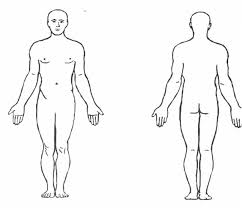
Body is standing straight, facing forward, upper limbs at side and palms facing forward. 
*right and left refer to "right" and "left" of the body in position.

a)
Sagittal
b)
Anatomical Position
c)
Anterior Position
d)
Anatomical Plane
62.
Your tibia is in your...
a)
Arms
b)
Chest
c)
Leg
63.
What another word for clavicle?
a)
Skull
b)
collar bone
c)
Chest
d)
Legs