wayground logo

Free Printable Worksheets

Font size

S
M
L
XL
Worksheets

Science

Total questions: 60

Worksheet time: 3hrs 44mins

Name
Class
Date
1.
Snow, sleet, hail, and rain are all examples of  ________________. 
a)
evaporation
b)
condensation
c)
accumulation
d)
precipitation
2.
The water cycle has...
a)
a beginning and an end. 
b)
no beginning and no end. 
c)
only a beginning. 
d)
only an end. 
3.
What is condensation?
a)
the change of water from a gas to a liquid. 
b)
the change of water from a liquid to a gas. 
c)
the change of water from a solid to a gas. 
d)
the change of water from gas to a solid. 
4.
What are the three states of water found on Earth?
a)
solid, liquid & gas
b)
oceans, lakes & streams
c)
evaporation, transpiration
d)
rain, sleet & hail
5.
Evaporation occurs when water changes into ________.
a)
transpiration
b)
snow
c)
solid
d)
vapor
6.
Which of the following is the reason why ice can float?
a)
The air bubbles in the frozen water make it rise.
b)
The water molecules in ice are closer together and more dense than liquid water.
c)
When water molecules expand, they take up more space and are less dense.
d)
All frozen things will float in liquid water.
7.
Water is made up of these two colorless, odorless gases.
a)
Helium and Oxygen
b)
Oxygen and Carbon Dioxide
c)
Hydrogen and Helium
d)
Hydrogen and Oxygen
8.
Which of these is a method for conserving fresh water?
a)
Taking long showers and baths
b)
Taking short showers and baths
c)
Leaving the water running while brushing your teeth
d)
Washing your car with a running hose
9.
What is this body of water?
a)
Lake
b)
River
c)
Ocean
d)
Pond
10.
Is this FRESH water or SALT water?
a)
fresh
b)
salt
11.
What body of water do you see?
a)
pond
b)
lake
c)
ocean
d)
river
12.
This is a picture of which?
a)
River
b)
Lake
c)
Pond
d)
Stream
13.
Which of these is a moving source of water?
a)
River
b)
Lake
c)
Pond
d)
Swamp
14.
What is the largest body of water found on earth?
a)
Lake
b)
Ocean
c)
River
d)
Bathtub
15.
What part of the water cycle does this picture show?
a)
condensation
b)
precipitation
c)
evaporation
16.
Which of these is an example of precipitation?
a)
snow
b)
air
c)
clouds
d)
vapor
17.
Which is the opposite of condensation?
a)
runoff
b)
evaporation
c)
precipitation
d)
transpiration
18.
Snow, sleet, hail, and rain are all examples of  ________________. 
a)
evaporation
b)
condensation
c)
accumulation
d)
precipitation
19.
What comes after evaporation during the water cycle?
How does this occur?
a)
Water evaporates into water vapor
b)
Water vapor condenses and forms a  cloud
c)
Water precipitates to the ground
d)
Water runs down into the hydrosphere
20.
What is it called when plants give off water vapor as a waste product?
a)
condensation
b)
evaporation
c)
sublimation
d)
transpiration
21.
When water _________, dew forms.
a)
Melts
b)
Evaporates
c)
Condenses
d)
Precipitates
22.
Does warm water evaporate quicker than cold water?
a)
Yes
b)
No
23.
What causes water vapor to move?
a)
wind 
b)
snow
c)
water
d)
lava
24.
Water that is stored in layers of rock and soil beneath the Earth's surface is called ________
a)
groundwater
b)
sewage
c)
a reservoir
d)
an underground stream
25.
How is air pressure measured?
a)
Thermometer
b)
Barometer
c)
Psychrometer
d)
Wind vane
26.

_______ living things need water .

a)

All

b)

Some

27.

Plants needs water to __________

a)

get clean

b)

grow

28.

Most part of the human body is water.

a)

Fact

b)

Fake

29.

How many states does the water have?

a)

One

b)

Two

c)

Three

d)

Four

30.

The name of states of water are:

a)

Solid, liquid and gas

b)

Solid and gas

c)

Liquid and gas

d)

Liquid

31.

Indicate an example of solid:

a)

Icebergs

b)

Oceans

c)

Lakes

d)

Water vapour

32.

What happens when the sun heats the water?

a)

Precipitation

b)

Condensation

c)

Evaporation

d)

Collection

33.

Where is water collected?

a)

Mountains and lakes

b)

Forests and rivers

c)

Rivers, oceans and lakes.

d)

Rivers, oceand and mountains

34.
Which temperature is the boiling point of water?
a)
0 degrees Celsius
b)
32 degrees Celsius
c)
100 degrees Celsius
d)
212 degrees Celsius
35.
What is the freezing point of water?
a)
0 degrees Celsius
b)
32 degrees Celsius
c)
100 degrees Celsius
d)
212 degrees Celsius
36.

wood is a............... material

a)

manufactured

b)

natural

c)

both

d)

fragile

37.

Iron is used to make.........

a)

fabric

b)

bottles

c)

both

d)

pots and pans

38.

Feathers come from plants.

a)

true

b)

false

c)

I don't know

d)

That's right

39.

An umbrella is ....

a)

absorbent

b)

rigid

c)

waterproof

d)

fragile

40.

Anything we can see, touch or smell is.....

a)

material

b)

mixture

c)

matter

d)

both

41.

What is matter?

a)

Everything that has mass and volume

b)

The things that have mass

c)

The things that have volume

d)

Heat and light

42.

Choose the correct sentence:

a)

A book is made of rubber.

b)

A fork is made of steel.

c)

A window is made of silver.

d)

A rubber band is made of aluminium.

43.

What is this chair made of?

(a)  

44.

Which one has more mass?

a)
b)
c)
d)
45.

This duck is going to (a)   on water. Write FLOAT or SINK.
46.

What is this material?

a)

Plastic.

b)

Metal.

c)

Glass.

d)

Cardboard.

47.

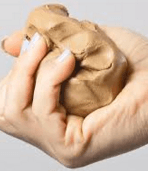
Which picture is showing us clay?

a)
b)
c)
d)
48.

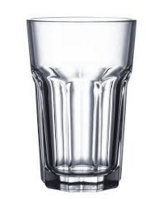
Which object is made of glass?

a)
b)
c)
d)
49.

What is the window made of?

a)

It is made of wood and wool.

b)

It is made of wool and glass.

c)

It is made of paper and fabric.

d)

It is made of wood and glass.

50.

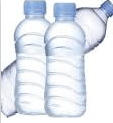
What is this object made of?

a)

It is made of rubber.

b)

It is made of cotton.

c)

It is made of leather.

d)

It is made of glass.

51.

Choose the material you can stretch.

a)
b)
c)
d)
52.

Our sense organs are

a)

eyes, nose, ears, hands, tongue

b)

eyes, nose, ears, skin, tongue

c)

eyes, nose, ears, hands, mouth

d)

eyes, nose, ears, skin, mouth

53.

Name for no. 1, 2 and 3 are?

a)

cornea, iris, pupil

b)

iris, pupil, lens

c)

pupil, lens, retina

d)

lens, retina, cornea

54.

What is the name for the condition when we cannot see every things?

a)

deaf people

b)

speech impaired people

c)

blind people

d)

illiterate people

55.

Where can we find the taste buds for the animals in the picture?

a)

around their body

b)

on their feet

c)

on top of their antenna

d)

around their wings

56.

What is the name for the condition when we cannot hear every things?

a)

deaf people

b)

speech impaired people

c)

blind people

d)

illiterate people

57.

What parts in human body have function to send messages from the sense organs to our brain?

a)

paths

b)

blood

c)

head

d)

nerves

58.

It is like a clear window and it covers the front of the eye.

a)

Iris

b)

lens

c)

cornea

d)

retina

59.

Is a circular hole. Light enters the eye through the....

a)

pupil

b)

iris

c)

cornea

d)

retina

60.

When you hear loud and unpleasant sounds,you block your ______________

a)

nose

b)

ears

c)

eyes

d)

hands