wayground logo

Free Printable Worksheets

NEW

Font size

S
M
L
XL
Worksheets

Origins

Total questions: 64

Worksheet time: 48mins

Name
Class
Date
1.
Galaxies that are redshifted are:
a)
actually blue.
b)
really far away.
c)
invisible.
d)
moving away from us.
2.
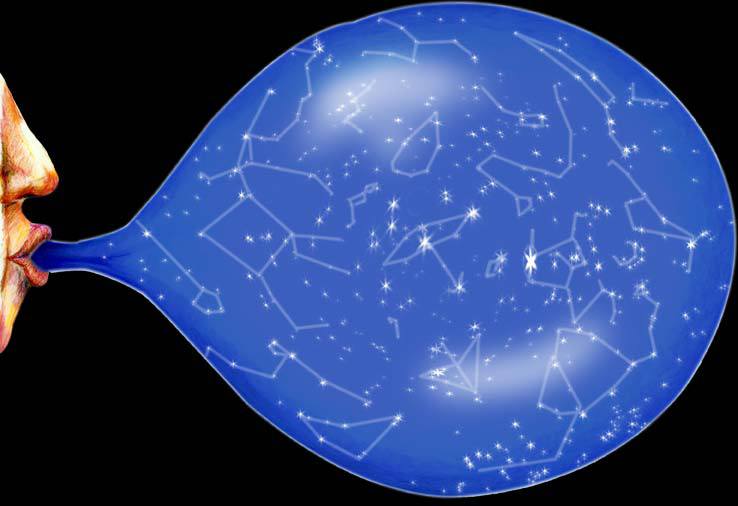
The universe is expanding!  This means that:
a)
all of the galaxies are spreading out.
b)
the universe must have started from a single point.
c)
the universe is cooling down.
d)
all of the above.
3.
The CMB is:
a)
the remaining energy from the big bang.
b)
incredibly hot.
c)
visible to the human eye.
d)
only located in certain places in the universe.
4.
The only elements in the universe were hydrogen and helium until:
a)
the big bang.
b)
humans came along.
c)
stars began doing fusion.
d)
the redshift was discovered.
5.
Our theory of the universe was confirmed by the discovery of:
a)
fusion.
b)
cosmic microwave background radiation.
c)
the Andromeda galaxy.
d)
the Doppler effect.
6.
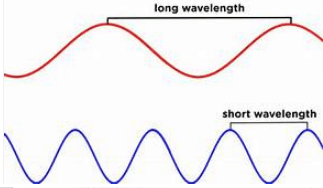
Light waves that are stretched out by objects moving apart:
a)
have a shorter wavelength.
b)
travel faster than the speed of light.
c)
are invisible.
d)
appear more red.
7.
The universe is ____________ years old.
a)
8.13 billion
b)
13.8 billion
c)
1.83 billion
d)
381 million
8.
The Big Bang:
a)
is NOT an explosion in space.
b)
is an expansion OF space.
c)
is our best explanation for the beginning of the universe.
d)
All of the above.
9.
The most abundant element in the universe today is:
a)
water
b)
hydrogen
c)
oxygen
d)
carbon
10.
The greater the redshift:
a)
the faster the galaxy is moving.
b)
the shorter the light waves.
c)
the bigger the galaxy.
d)
the closer the galaxy.
11.

This image describes:

a)

The redshift.

b)

The CMB.

c)

The distribution of each element in the universe.

d)

The amount of time the universe has existed.

12.
The universe is expanding.  This means that:
a)
Galaxies are getting bigger.
b)
Atoms are getting bigger.
c)
The universe is creating more matter.
d)
The amount of space between galaxies is increasing.
13.

Visible light emitted from a star or galaxy can be separated into a band of colors, called a ________.

a)

Spectrum (or spectral lines)

b)

Microwave

c)

Radiation

14.

Cosmic Microwave Background Radiation is a form of _________.

a)

Matter

b)

Energy

c)

Visible Light

d)

Water

15.
What does the Big Bang theory suggest?
a)
The universe was just there
b)
The Milky Way is the only solar system
c)
The universe is continually expanding
d)
The universe is collapsing in toward a single point
16.

How is the "Big Bang" described?

a)

an explosion

b)

an expansion

c)

a contraction

17.
The change in wavelength of light or sound that is due to the relative motion of the source towards or away from an observer.
a)
Radar Effect
b)
Doppler Effect
c)
Light Effect
d)
Reflection
18.

What happens to the wavelengths of energy if they are moving AWAY from a source?

a)

The waves stretch out and get longer.

b)

The waves compress and get shorter.

19.

According to the Big Bang Theory, which graph represents the relationship between time and the size of the universe from the beginning of the universe to the present?

a)

The first one: Size and time both increasing

b)

The second one: Size decreasing as time increases

c)

The third one: Size does not change as time increases

d)

The fourth one: Size increases, then decreases as time increases

20.

What is the Cosmic Background Radiation?

a)

The shape of the universe

b)

The first primordial elements

c)

Red shifted galaxies

d)

Leftover heat from the Big Bang

21.
Which of the following statements best summarizes the presence of matter in the universe?
a)
There are more metal elements in the universe than nonmetals.
b)
All elements exist in an equal amount throughout the universe.
c)
There are more heavy elements than light elements.
d)
There are more light elements than heavy elements.
22.
What can we conclude from the observation that nearly all galaxies are moving away from us?
a)
Massive black holes are drawing galaxies away from Earth.
b)
The Sun and Earth are located at the center of the universe.
c)
Everything in the universe is moving the same direction.
d)
The once-smaller universe is expanding in all directions.
23.
The Nebular Theory is:
a)
A theory on how the Milky Way galaxy was formed
b)
A theory on how the universe was formed
c)
A theory on how the solar system will be destroyed
d)
A theory on how the solar system was formed
24.
A nebula is:
a)
A cloud of ice
b)
A cloud of dust and gas
c)
A cloud of just gas
d)
A cloud of just dust
25.
The most abundant gases in a nebula are:
a)
Hydrogen & Oxygen
b)
Nitrogen & Oxygen
c)
Hydrogen & Helium
d)
Oxygen & Helium
26.
A nebula starts to collapse because of:
a)
A nearby star shining it's light
b)
A passing spaceship
c)
A passing comet
d)
Gravity
27.

What forms in the very center of the accretion disk?

a)

A protosun

b)

A planet

c)

A protoplanet

d)

A planetesimal

28.

Planets form in the disk around a protostar when planetesimals

a)

Collide and break apart

b)

Collide and stick together

c)

Collide and bounce around

d)

Break down into smaller pieces

29.
The group of inner planets are known as:
a)
The Terrestrial Planets
b)
The Gas Giants
c)
The Outer Planets
d)
The Hallow Planets
30.
The group of outer planets are known as:
a)
The Terrestrial Planets
b)
The Gas Giants
c)
The Inner Planets
d)
The Rocky Planets
31.

How long ago did our solar system and planets form?

a)

4.6 years ago

b)

4.6 million years ago

c)

5.6 billion years ago

d)

4.6 billion years ago

32.
Intense pressure in the protosun (protostar) caused:
a)
Fire in the Sun to start
b)
Helium to break down into Hydrogen
c)
Nuclear Fusion to start
d)
Nuclear Fusion to end
33.
What two objects do scientists study to learn about the formation of the solar system?
a)
Comets & Asteroids
b)
Comets & Exoplanets
c)
Exoplanets & Asteroids
d)
Asteroids & Distant Stars
34.
A massive explosion of a star is called . . .
a)
supernova
b)
nebula
c)
pulsar
d)
black hole
35.
What solar system models places the Sun at the center? 
a)
Geocentric Model
b)
Heliocentric Model
c)
Ptolemy Model
d)
Artistotle Model
36.
Where did the materials used to create planets in our solar system come from? 
a)
clumps of rocky material between the stars
b)
the same cloud of gas as our sun
c)
they flung out of our young sun
d)
gas cloud in the orion nebula
37.

According to Kepler's laws, which best describes planetary motion?

a)

Planets move at constant speed in circular orbits

b)

Planets move in elliptical orbits faster at perihelion (closest point to the sun)

c)

Planets move in elliptical orbits slower at perihelion (closest point to the sun)

d)

Planets move at constant speed in elliptical orbits

38.
What happens to orbital speed as a planet is farther from the sun? 
a)
slower
b)
faster
c)
constant
d)
variable
39.

Why is Pluto no longer classified as a planet?

a)

It is made of ice & rock

b)

It is too small

c)

It has not cleared its orbit

d)

It is not a sphere

40.
Which of the following are the closest to the sun?
a)
terrestrial planets
b)
gas giant planets
41.

The main force at play during making of our solar system

a)

strong force

b)

weak force

c)

gravity

d)

electrostatic force

42.

Where are asteroids found?

a)

between earth and venus

b)

between Jupiter and Saturn

c)

between Saturn and Uranus

d)

between Mars and Jupiter

43.

What do the outer planets have in common?

a)

They are much larger than Earth and are made mainly of Hydrogen and Helium

b)

The are about the same size as Earth and are mostly made of Hydrogen and Helium

c)

They are must larger than Earth and are mainly made of iron

d)

They are the same size as Earth and are mainly made of iron

44.
What is the closest planet to the Sun?
a)
Mercury
b)
Mars
c)
Venus
d)
Earth 
45.
The first four outer planets from the sun out are:
a)
Jupiter, Saturn, Pluto, Neptune
b)
Pluto, Neptune, Uranus, Saturn, Jupiter
c)
Jupiter, Saturn, Uranus, Neptune
d)
Neptune, Uranus, Saturn, Jupiter
46.
Astronomers would see planets moving in one direction across the sky and then they would start to move backwards and then forward again.  What was this observation called?
a)
ellispse
b)
retrograde motion
c)
eccentricity
d)
perihelion
47.
What are left over pieces of our Solar Systems early formation called?
a)
Asteroids
b)
Planetesimals
c)
Comets
d)
Nuclei
48.
What is the main theory for the formation of the solar system?
a)
Nebular Hypothesis
b)
Close Encounter Hypothesis 
c)
Supernova Hypothesis
d)
Asteroid Formation Hypothesis
49.
What Shape did the solar nebula flatten into?
a)
Square
b)
Disk
c)
Triangle 
d)
Rectangle
50.
What is the process in which planet seeds grew into planets?
a)
Planetary Acceleration
b)
Compation And Sedimentation
c)
Planetary Deposition
d)
Accretion
51.

What is differentiation?

a)

The separation of materials by density

b)

The condensing of materials by density.

c)

The creation of materials by density

d)

The destruction of materials by density

52.
Which two forces keep the planets in orbit around the sun?
a)
inertia & momentum
b)
gravity & inertia
c)
inertia & velocity
d)
gravity & velocity
53.
What is the shape of a planet's orbit?
a)
circular
b)
elliptical
c)
spherical
d)
round
54.
Planets move in elliptical orbits is Kepler's _____ Law.
a)
1st
b)
2nd
c)
3rd
d)
4th
55.
Line drawn from the sun to planet sweeps out equal areas in equal time is Kepler's _____ Law.
a)
1st
b)
2nd
c)
3rd
d)
4th
56.
If a planet is closer to the sun, its orbit will be _____ than one farther away. 
a)
longer
b)
slower
c)
bigger
d)
shorter
57.
The average distance between the Earth and the sun is a(n) ____.
a)
light year
b)
light minute
c)
astronomical year
d)
astronomical unit
58.

This is a statement of which scientific law?


Object attract other objects with a force that is directly proportional to the product of their masses, and inversely proportional to the square of the distance between them.

a)

Newton's First Law

b)

Newton's Second Law

c)

Newton's Third Law

d)

Newton's Law of Universal Gravitation

59.
An ellipse is drawn around two points called
a)
aphelion
b)
perihelion
c)
foci
d)
axis
60.
When a planet orbits the Sun, one of the foci of the elliptical orbit is 
a)
the axis
b)
the perihelion
c)
the center
d)
the Sun
61.
A planet moves __________ when it is farthest from the sun.
a)
faster
b)
slower
62.
The farther away a planet is from the sun, the _______ it takes it to orbit the sun once. 
a)
longer
b)
shorter
63.

Where does nuclear fusion occur with the sun?

a)

Space

b)

Radiation Zone

c)

Photosphere

d)

The Core

64.
What protects life on Earth from gamma rays, X rays, and particles emitted by the Sun?
a)
The ozone layer in the stratosphere
b)
The ionosphere
c)
The magnetosphere (Earth's magnetic field)
d)
Clouds