Wayground logo

Free Printable Worksheets

Font size

S
M
L
XL
Worksheets

Properties of Matter Review

Total questions: 40

Worksheet time: 20mins

Name
Class
Date
1.
As a substance heats up, its molecules ___________________.
a)
slow down and get closer together
b)
slow down
c)
speed up and get farther apart
d)
stop
2.
If a solid block of wood has a volume of 10 cm3 and a mass of 40 grams, what is its density?
a)
40 grams
b)
4 cm3
c)
4 g/cm3
d)
40 g/cm3
3.
What are some things that are true of ALL metals?
a)
they are magnetic
b)
they are soluble in water
c)
they are all good conductors of electricity
d)
they all have the same melting point
4.
If a magnet broke into a thousand tiny pieces, would all the individual pieces be magnetic?
a)
yes
b)
no
5.
If you have a block of ice that has a mass of 500 grams, how many grams of water will you have when the ice melts?
a)
400 grams
b)
500 grams
c)
200 grams
d)
600 grams
6.
Which one is not a chemical change?
a)
a wick burning
b)

a nail rusting

c)
metal corroding
d)
wax melting
7.
Which one is not a physical change?
a)
paper ripping
b)
chopping wood
c)
gold melting into a liquid
d)
a match burning
8.
If you completely dissolve a powder into water, this is an example of a ___________change.
a)
chemical
b)
physical
9.
Observation or Inference?  The box had a volume of 400 cm3.
a)
Observation
b)
Inference
10.
You are testing to see which brand of marker would last the longest.  What is your test (independent) variable?
a)
how long it would last
b)
the brand of marker
c)
the number of markers
d)
the paper
11.
You are testing to see which brand of marker would last the longest.  What is your outcome (dependent) variable?
a)
how long it would last
b)
the brand of marker
c)
the number of markers
d)
the paper
12.
Which of the following units provides the best measure for the amount of space that matter occupies?
a)
mL
b)
grams
c)
cm3
d)
Both mL and cm3
13.
The amount of matter in an object is a measure of the object's ________________.
a)
volume
b)
density
c)
mass
d)
solubility
14.
What is the volume of the rock? The water level is displaced from 20 mL to 23 mL with the rock.
a)
3 mL
b)
23 mL
c)
20 mL
d)
43 mL
15.
What is the formula for calculating density?
a)
Mass ∗ Volume
b)
Volume ∗ Mass
c)
Mass ÷ Volume
d)
Volume ÷ Mass
16.
Which statement is true?
a)
Oil is the most dense substance.
b)
Corn syrup is less dense than water.
c)
Oil is less dense than water.
d)
Oil and corn syrup have the same density but different masses.
17.
An object has a density of 3 g/cm3. When submerged in water, the object will ___________.
a)
float
b)
sink
c)
float halfway in the water
d)
float then sink
18.
In which state does matter completely fill its closed container?
a)
Gas
b)
Liquid
c)
Solid
d)
Ice
19.
The volume of water in a beaker was 215 mL. After 5 days, the volume of the water was 200 mL. What best explains the change in volume?
a)
Some of the water absorbed the air. 
b)
Some of the water evaporated and escaped into the air as water vapor.
c)
Some of the water disappeared.
d)
Some of the water was released due to condensation.
20.
5 grams of salt was mixed with 50 mL of water to form a solution. In the solution, the water was which of the following?
a)
Solvent
b)
Saturate
c)
Solute
d)
Transparent
21.

The temperature at which a liquid turns to a gas is called the _____ point.

a)

boiling

b)

freezing

c)

amorphous

d)

crystalline

22.

A puddle dries up by the process of _____.

a)

evaporation

b)

melting

c)

freezing

d)

condensation

23.

Freezing occurs when the particles in liquid slow down and take fixed positions.

a)

True

b)

False

24.

Boiling is the reverse of freezing.

a)

True

b)

False

25.
When a gas forms directly from a solid, skipping the liquid phase. it is called
a)
deposition
b)
sublimation
c)
evaporation
d)
condensation
26.
The change from a gas to a liquid is called 
a)
condensation
b)
evaporation
c)
sublimation
d)
deposition
27.
In which state of matter are particles moving the slowest?
a)
solid
b)
liquid
c)
gas
d)
gummy bears
28.
The state that matter exists in depends on its 
a)
volume 
b)
weight
c)
temperature 
d)
mass
29.
What is it called when the state of matter changes from a liquid to a solid?
a)
Vaporization
b)
Freezing
c)
Condensation
d)
Melting
30.

On a hot, humid summer day drops of water form on a can of cold soda. What process caused this to happen?

a)

condensation

b)

freezing

c)

vaporization

d)

deposition

31.
How do gases behave in a container?
a)
Cluster together
b)
form a solid
c)
They take the shape of their container
d)
leak out 
32.
How do materials change from one state of matter to another?
a)
They gain or lose energy
b)
They break appart
c)
The particles get stickyer
d)
They are magnetised to themselves
33.
What sorts of things are made of particles?
a)
Everything in the universe
b)
Anything solid
c)
Water 
d)
Most solids, liquids and gases. 
34.
Which of the following is a property of a liquid
a)
Can't be compressed
b)
Can be compressed
c)
Particles are far appart
d)
Particles hold the object's shape 
35.

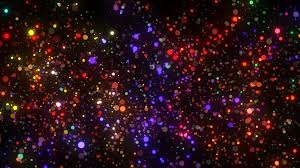
_________ particles are shown in this image

a)

Solid

b)

Liquid

c)

Gas

d)

Plasma

36.

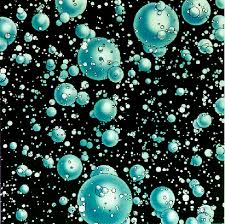
__________ particles are shown in this image

a)

Solid

b)

Liquid

c)

Gas

d)

Plasma

37.

1 of the 5 main ideas of the particle model is

a)

There are no forces between between any particles

b)

Weaker force= particles are closer together

c)

Weaker force= particles are further apart

d)

Gases are the only state of matter that doesn't have a force

38.

1 of the 5 main ideas of the particle model is

a)

The particles never move in any state of matter

b)

The particles only move in a liquid and gas

c)

The particles in all states of matter are always moving

d)

Only the particles in water move

39.

What state of matter is this image showing?

a)

Solid

b)

Liquid

c)

Gas

40.

Melting ice

a)

physical change

b)

chemical change