
Font size
 Worksheets
Hydrological Cycle (IB ESS Topic 4.1)
Total questions: 35
Worksheet time: 24mins


The continuous circulation of water through the atmosphere, the land and the ocean is called
hydrologic cycle
carbon cycle
accumulation
percolation
Eutrophication is caused by
excess nutrients building up in the water.
industrial point-source pollution.
unlined landfills and septic tanks.
wastewater from homes mixing with drinking water.
How does eutrophication cause the death of aquatic organisms
the build up of carbon dioxide in the water
the lack of nitrogen in the water
the lack of carbon dioxide in the water
the lack of oxygen in the water
The two critical nutrients in eutrophication are... (select two)
nitrates
phosphates
carbon dioxide
dissolved oxygen

What is the hydrological cycle?
the transformation of water from liquid to solid, solid to liquid, gas to liquid and liquid to gas
the movement of water between atmosphere, lithosphere, biosphere and pedosphere
the movement of water through the soil as infiltration, into surface water as run-off and into the atmosphere as it evaporates and back as precipitation after condensing
precipitation, run-off, evapotranspiration and oceans

Where is most water found on the Earth?
In Glaciers
In Lakes
In Rivers
In the Ocean

What is an underground store of water in permeable rock?
sewage system
aquifer
precipitation
irrigation

Where is most of the freshwater found on Earth?
lakes / rivers
ice caps / glaciers
oceans / seas
rivers / streams

Approximately what percentage of the water on Earth is freshwater?
0.1%
2.6%
50%
97%

What is infiltration?
How you get into clubs with fake ID
Groundwater flow through permeable rocks into bodies of water
The movement of water into the vegetation and into cells of living organisms
water soaking into or being absorbed by the soil

The warmer water currents are surface currents, this is because...
The warmer water holds less carbon dioxide
The warmer water is less dense
The warmer water holds more carbon dioxide
The warmer water is more dense

The diagram shows currents distributing the temperature around the Earth but what is it called?
The Great Ocean Roadway
The thermocurrents redistribution
The Great ocean conveyor belt
The big temperature exchange

Humans can affect the hydrological cycle by speeding up the flow of water, which of these activities has this effect?{Choose all that apply!}
Building cities
Straightening rivers into canals or pipes
Making reservoirs by building dams
Using water for irrigation
Deforesting areas

Increased flash flooding occurs because less water can infiltrate the soil after precipitation, which of these human activities makes this problem worse? {Choose all that apply!}
Overgrazing and trampling soils
Deforestation
Burning fossil fuels
Building roads and buildings of concrete
Releasing pollutants into rivers

What is advection?
when water soaks into soils
when water soaks through soil or rock into aquifers
wind-blown movement of water in the atmosphere
water which flows over the Earth's surface
What is percolation?
when water soaks into soils
when water soaks through soil or rock into aquifers
wind-blown movement of water in the atmosphere
water which flows over the Earth's surface
Which of these is an example of precipitation?
snow
run-off
clouds
vapor
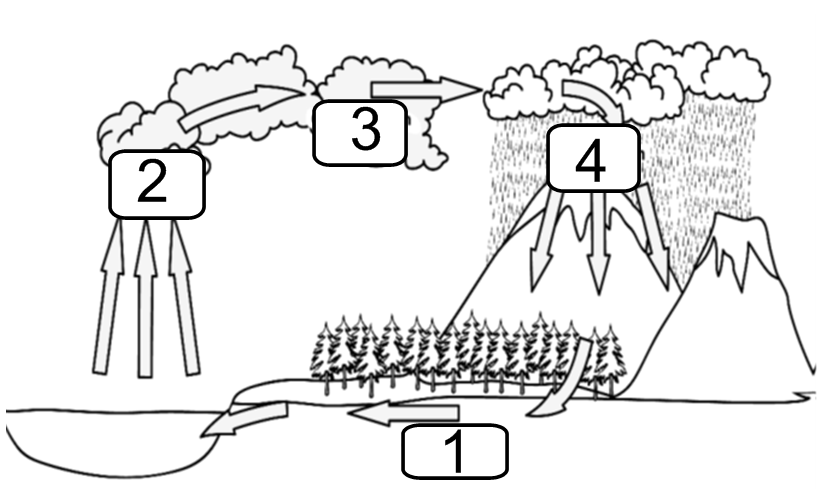
Which of the following causes all of the water on the planet to change its state (solid, liquid, gas) and move through the water cycle?
changes in coverage and type of plants
geographic location of ice caps and ocean currents
directional spinning of the Earth and wind currents
changes in the amount of heat from the sun and gravity
All rivers flow to oceans or lakes because water
can evaporate
is pulled by gravity
is clear
can freeze

The picture shows a glass of water. There are drops of water on the outside of the glass. Where did the water come from?
It leaked through the glass
It was sweat from a person
The glass is tipped over by someone
It condensed from the warmer air meeting the cold glass
When water evaporates, it changes into a
solid
liquid
gas
How do plants affect the water cycle?
They need water to grow, so they store it inside their bodies.
They keep water from evaporating.
They allow the water to percolate and also run off.
They draw water up from the ground and release it into the air.
During evaporation water goes from a _____ to a _____
liquid, gas
liquid, solid
solid, gas
liquid, plasma

