
 Worksheets
First Aid
Total questions: 25
Worksheet time: 25mins

What are the 3 main aims in first aid?
Me, the patient, the doctor
Assess situation, rescue, get help
Preserve Life, Prevent worsening, Promote recovery
There are 4!
What is no symptom of a heart attack
Shortness of breath
Irregular pulse
Chest pain
Hyperventilation
What is no symptom of a fracture?
A sprain or a strain.
Shock
Swelling
Pain
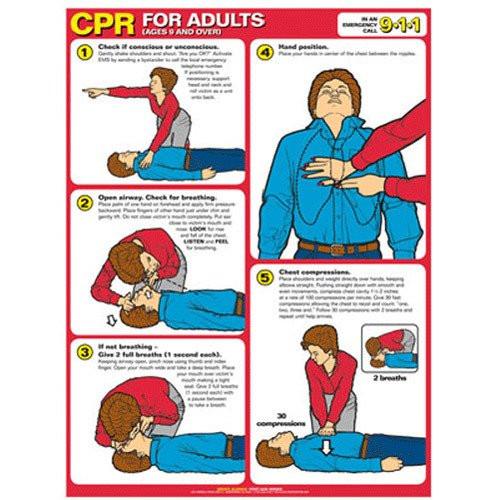
What can you infer from the fact that you shouldn't perform CPR unless you have completed a course?
CPR is easy to learn
CPR should only be performed by doctors
It takes years to learn how to perform CPR properly
Performing CPR incorrectly can harm someone
The first thing that you have to do during a nose bleed is to Tilt your head back; this will help you to stop bleed.
true
false
sometimes it works
In case of an emergency, if you don´t know what to do you´d better stay away because you can
help to heal
harm rather than help
be ready to tell someone what is the emergency
be the second casualty
Chest compressions are more important than...
mouth to mouth resucitation
place the victim in a recovery position
reasure the vicitm
circulation
_________ Increases blood flow and leads to more swelling
ice
cold
heat
water
Forcing a fainted person to back up is the best thing you can do to reasure the casualty.
true
false
If you try to remove debri from the skin you can
increase the risk of infection
relief pain
clean the wound
acelerate the process of regeneration
What's the point of performing first aid on someone with a broken leg?
To fuse the two halves of the bone back together.
To make sure the injured person doesn't feel pain.
To keep the injury from getting worse before help arrives.
To help the injured person walk to the nearest hospital.
Which of these is a basic first aid procedure?
Cleaning and bandaging a cut.
Putting a cast on a broken arm.
Getting an x-ray of a swollen finger.
Popping a dislocated shoulder back into place.
Which word best describes how you should act while administering first aid?
Dispassionate
Emotional
Rushed
Indecisive
Which of the following is an opinion about first aid?
People should attend first aid classes as often as possible.
Knowing proper first aid procedures might help you save someone's life.
First aid certification courses are offered by the Red Cross.
First aid can be administered by all kids as well as adults.
Why is it important to apply antiseptic ointment to a cut?
So the person doesn't feel pain while you treat the wound.
So the cut doesn't get infected by bacteria or viruses.
So the person stops bleeding quickly.
So a scar doesn't form at the site of the cut.

This maneuver to open an airway is called...
Head drop lift tuck
Head tilt chin lift
Jaw thrust chin push
FALCON PUUNCH
Which of the following are ways you should check for breathing? Select all that apply.
Listen for breaths over the casualty's mouth
Watch for the rise and fall of the casualty's chest
Pour water in the casualty's mouth and look for air bubbles
Feel for air flow on the side of your face from the casualty's mouth
The following are ways you should check for breathing. Which one does not apply?
Listen for breaths over the casualty's mouth
Watch for the rise and fall of the casualty's chest
Pour water in the casualty's mouth and look for air bubbles
Feel for air flow on the side of your face from the casualty's mouth

