
Font size
 Worksheets
Grade 5 End of Year Science
Total questions: 50
Worksheet time: 51mins
Students conduct an investigation to determine which substances are soluble in water. All of the following have the property of solubility in water EXCEPT -
sugar cubes
salt crystals
cooking oil
food coloring

Based on the Beetle Classification Key, which beetle is shown in the picture?
Red Poplar Beetle
Colorado Beetle
Timberman Beetle
LadyBird Beetle

What should the student do next?
Tell her friends that investigations at school work better than at home?
Repeat her investigation to see if her results are the same.
Change her results to match her original hypothesis.
Conclude that investigations can only be performed on water.
Which metric measure are used to measure mass? Choose all that apply
liters
grams
centimeters
kilograms
meters
Which statement about vertebrates is true?
Vertebrates have skeletons
Vertebrates live only on land
Most animals are vertebrates
Vertebrates do not have backbones

How are dandelion seeds usually dispersed? See the image.
By water
By wind
By bursting
By animals

A student designs and builds the circuit shown in the picture above. Which part of the circuit converts electrical energy into another form of energy?
wire
switch
battery
lightbulb
Why are most electrical cords covered with plastic?
Because plastic is cheap
Because plastic is flexible
Because plastic allows the flow of electric current
Because plastic blocks the flow of electric current

A student develops a model for grouping animals that she observes in a park. Which are MOST LIKELY the names of the 2 animal groups?
fish and reptiles
reptiles and birds
fish and mammals
reptiles and amphibians
A rabbit has two ears, brown fur, a swollen foot, and large front teeth. Which characteristic is MOST LIKELY an acquired physical trait?
two ears
brown fur
swollen foot
large front teeth
A student finds the following animals in his garden: a frog, snake, snail, and lizard. He classifies the snail into one group and the other animals into a second group. What are the student's 2 groups?
amphibians and reptiles
invertebrates, reptiles
invertebrates and vertebrates
animals with gills, animals with lungs

The school globe shows the correct tilt of Earth. Which of these would happen when Earth completes a rotation around its axis?
one month on Earth would have passed
there would be less sunlight on earth
one day on Earth would have passed
one year on Earth would have passed

Which of the following best explains why this girl's hair is sticking to the balloons?
The balloon surfaces act as magnets and attract the girl's hair.
The balloon surfaces are charged and attract the girl's hair.
The pressure in the balloons attracts the girl's hair.
The gravity of the balloons attracts the girl's hair.
One cup of cool water, one cup of warm water, one cup of hot water, and one cup of ice water are each set outside on a sunny day to evaporate. Which will MOST likely evaporate first.
cool water
warm water
hot water
ice water

Mushrooms grow on a rotting log as shown. What do these organisms do in the environment that is different than MOST plants and animals?
consume other living organisms
produce their own food from sunlight
produce food for other organisms
break down dead organisms into nutrients
Students are investigating how the environment affects the amount of apples that grow on apple trees. Which of the following would be possible experimental variables for their investigation? Select all that apply.
soil types
tree types
temperature
amount of rainfall
Inherited traits that help an organism survive in its environment are known as...
Skills
Adaptations
Learned Behaviors
Instincts

The act of concealing the identity of something by modifying its appearance is called...
Undercover
Blending
Disappearing
Camouflage
What is absorbed from the air by plants during photosynthesis?
Energy
Carbon Dioxide
Water
Oxygen
When a switch is in an on position and electrical current can travel through the circuit.
Open circuit
Series circuit
Parallel circuit
Closed circuit
An object that allows electricity and heat to travel through it
Conductor
Biofuel
Insulator
Resistor
The death of an entire species is known as...
Prehistoric
Deposition
Extinction
Eradication

Pushes and pulls are examples of...
Energy
Force
Gravity
Buoyancy
The remains of an organism from the past.
Dinosaurs
Fossil Fuels
Sedimentary Rocks
Fossils
State of matter when particles are packed loosely and move freely...
Liquid
Solid
Mass
Gas

The force that attracts objects to the earth
Gravity
Hydroelectricity
Magnetism
Electro-magnetism

The place where an organism lives
Jungle
Geography
Habitat
Home

Consumer that eats only plants
Omnivores
Carnivore
Producers
Herbivore
a renewable energy source that is generated by the force of falling water
Solar Energy
Geothermal Energy
Hydroelectric
Evaporation
Characteristics of an organism that are passed down through genes from parents to offspring
Life Skills
Inherited Traits
Qualities
Talent
Actions taught to offspring by the parents or the environment
Life lessons
Learned Behaviors
Inherited Traits
Education

Does not allow any light to pass through it
Translucent
Refraction
Opaque
Transparent

The process by which plants make their own food is called...
Absorbtion
Photosynthesis
Energy synthesis
Cooking

An animal that lives by killing and eating other animals is best described as a...
Prey
Scavenger
Predator
Herbivore
When light bounces off a material...
Reflection
Elastic
Refraction
Zapping
A material that allows light to pass through it...
Opaque
See-through
Transparent
Translucent
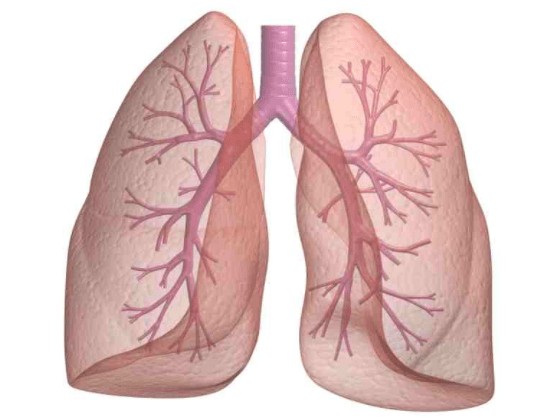
Which system are the lungs in?
respiratory
digestive
excretory
muscular

Which systems main function is to allow movement of the body?
muscular
digestive
skeletal
circulatory

What are the names of the blood vessels within the human body? (Select all that apply)
Veins
Tendons
Capillaries
Arteries
Ligaments

