wayground logo

Free Printable Worksheets

Font size

S
M
L
XL
Worksheets

SUMMER CHEMISTRY PRACTICE

Total questions: 100

Worksheet time: 3hrs 20mins

Name
Class
Date
1.

What is empirical formula?

a)

True formula

b)

Smallest whole-number ratio of atoms present in a molecule

c)

Total number of atoms present in one molecule

d)

All of the above

2.

What is empirical formula?

a)

True formula

b)

Smallest whole-number ratio of atoms present in a molecule

c)

Total number of atoms present in one molecule

d)

All of the above

3.

what is an atom

a)

smallest part of the universe

b)

smallest part of a substance

c)

smallest part of anything

d)

smallest part of water

4.

protons

a)

negative charge, nucleus

b)

positive charge, shells

c)

positive charge , nucleus

d)

neutral charge, nucleus

5.

neutrons

a)

no charge, shells

b)

positive charge, nucleus

c)

neutral, no charge, nucleus

d)

negative charge, shells

6.

electrons

a)

no charge, nucleus

b)

positive charge, nucleus

c)

negative charge, shells

d)

negative charge, nucleus

7.

mass number

a)

number of protons

b)

number of electrons

c)

number of protons and electrons

d)

number of protons and neutrons

8.

atomic symbol

a)

capital letter

b)

lowercase letter

c)

2 capital letters

d)

2 lowercase leters

9.

lst shell holds

a)

2

b)

8

c)

18

d)

32

10.

3rd shell holds

a)

2

b)

8

c)

18

d)

32

11.

4th shell holds

a)

2

b)

8

c)

18

d)

32

12.

same number of protons, different number of neutrons

a)

atomic number

b)

mass number

c)

isotope

d)

ion

13.

a charged atom

a)

neutral

b)

isotope

c)

ion

d)

nucleus

14.
What are the 3 particles that make-up the atom?
a)
protons, neutrons, and isotopes
b)
neutrons, isotopes, and electrons
c)
positives, negatives, and electrons
d)
protons, neutrons, and electrons
15.

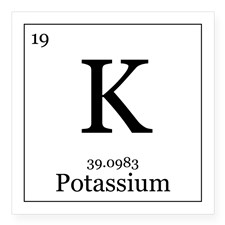
What is the number of protons that the element in this image contain?

a)

14

b)

7

c)

15

d)

18

16.

How many neutron are in the atom "K"?

a)

7

b)

2

c)

39

d)

12

17.
Most of the mass in an atom is concentrated in the...
a)
electrons
b)
nucleus
c)
protons
d)
empty space
18.
"C" is the element symbol for which element?
a)
calcium
b)
carbon
c)
chlorine
d)
cadmium
19.

True or False? Neutrons have a negative charge

a)

True

b)

False

20.
If I gain electrons I become
a)
Positive because I've added to my atom
b)
negative because I've added electrons
c)
same because i'm balanced
d)
equal because now I have electrons
21.

The proper formula for magnesium hydroxide:

a)

MgOH

b)

Mg2OH

c)

Mg(OH)2

d)

Mg2OH2

22.

The proper formula for magnesium hydroxide:

a)

MgOH

b)

Mg2OH

c)

Mg(OH)2

d)

Mg2OH2

23.

How do the following two elements bond together?

Al3+ O2-

a)

AlO

b)

Al2O3

c)

Al3O6

d)

Al3O2

24.
An isotope of an element has the same number of _________, but a different number of _________.
a)
Protons, electrons
b)
Protons, neutrons
c)
Electrons, neutrons
25.
How many elements are in C6H12O6?
a)
1
b)
2
c)
3
d)
4
26.
Which of the following is a compound?
a)
Co
b)
O2
c)
C
d)
CO2
27.
You know you a chemical reaction has occurred if 
a)
there is a precipitate.
b)
there is a color change.
c)
there is a temperature change.
d)
All of these answers are evidence.
28.
Which scientific law states that an atom cannot be created or destroyed:
a)
Law of Conservation of Matter
b)
Law of Gravity
c)
Law of Conservation of Mass
d)
Law of Motion
29.

Which best describes a chemical reaction?

a)

Products --> Reactants

b)

Reactants --> Products

30.
What type of bond forms when 2 or more electrons are SHARED?
a)
Covalent bond
b)
Incomplete bond
c)
Ionic bond
d)
Metallic bond
31.
What type of bond forms between two or more atoms that are charged (+/-)?
a)
Covalent bond
b)
Incomplete bond
c)
Ionic bond
d)
Metallic bond
32.
Which of the following is an example of an IONIC COMPOUND?
a)
NaCl
b)
H2O
c)
CO2
d)
NO
33.
Which of the following is an example of a COVALENT COMPOUND?
a)
H2S
b)
KI
c)
CaCl2
d)
MgO
34.
What charge does a bromine (Br) ion have?
a)
-1
b)
-2
c)
-3
d)
-4
35.
What charge does a potassium (K) ion have?
a)
+1
b)
-1
c)
+2 
d)
-2
36.
Name that Ion
Li+
a)
copper (III)
b)
lithium
c)
ladmium
d)
iodine
37.
Electrons that are free to move in a metal are referred to as...
a)
localized electrons
b)
delocalized electrons
c)
electrostatic electrons
d)
cations
38.
Which term means "can be shaped?"
a)
malleable 
b)
ductile 
c)
hard 
d)
soft
39.
Alloys include a "sea" of free moving _______. 
a)
electrons
b)
atoms 
c)
molecules 
d)
protons 
40.
Ionic bonds are between _______ and ________. 
a)
nonmetals and nonmetals 
b)
metals and metals 
c)
metals and nonmetals
d)
none
41.
How does a positively charged ion form?
a)
An atom loses an electron
b)
An atom gains an electron
c)
An atom gains a proton
d)
An ionic compound dissolves
42.
In covalent bonding, electrons are
a)
shared
b)
transferred
c)
wiped out
43.
Covalent bonds tend to happen between two
a)
metals
b)
nonmetals
c)
metal and nonmetal
44.
The compound formed between lithium and chlorine is _________.
a)
ionic
b)
covalent
45.
What do metals conduct?
a)
heat
b)
electricity
c)
both
d)
neither
46.

A displacement reaction involves...

a)

a solution turning brown or yellow.

b)

a less reactive element taking the place of a more reactive element.

c)

a dislocated hip.

d)

a more reactive element taking the place of a less reactive element.

47.

Would a displacement reaction occur for Bromine + Potassium Iodide?

a)

Yes

b)

No

c)

Maybe

48.

Would a displacement reaction occur for Iodine + Potassium Bromide?

a)

Yes

b)

No

c)

Maybe

49.

As you go down the group, how does the boiling point of the halogen elements change?

a)

Increases

b)

Decreases

c)

They're all about the same

50.

Are the Halogens toxic?

a)

Yes

b)

No

51.

What is the mean of the "halogens"?

a)

acid former

b)

salt former

c)

alkali former

d)

non metal former

52.

What is the word equation for the reaction between sodium reacts with bromine?

a)

Sodium + bromine -> Sodium bromine

b)

Sodium + bromine -> Sodium bromide

53.

Which of the "Halogens" is found in liquid state at room temperature?

a)

Flourine

b)

Astatine

c)

Iodine

d)

Bromine

54.

Which of the followings is not a use of Chlorine?

a)

Swimming pool cleaner

b)

Drinking water disinfectant agent

c)

Sterilizer for surgeries and medical tools

d)

Beaching fabrics and papers

55.

Which of the following Halogen Acids is strongest one?

a)

HF

b)

HCl

c)

HBr

d)

HI

56.

Which "Halogen" can able to replace Chlorine in Sodium Chloride?

a)

Flourine

b)

Bromine

c)

Iodine

d)

Astatine

57.
As you go down the group, the melting points
a)
increase
b)
decrease
58.

In terms of electrons, what do group 1 elements have in common?

a)

1 electron in the outer shell

b)

1 electron in total

c)

1 electron on the first shell

d)

They all have the same number of electrons

59.

What is meant by a trend in science?

a)

The latest ideas

b)

A pattern in properties

c)

What something looks like

d)

The properties an object has

60.

What is more reactive, lithium or sodium?


a)

Lithium

b)

Sodium

61.
Which pair has the same empirical formula?
a)
NaCrO4 and Na2Cr2O7
b)
C2H4O2 and C6H12O6
c)
C3H6Oand C2H6O2
d)
CH4 and C2H6
62.

What is the molecular formula for a compound with the empirical formula: K2SO4 and a molecular mass of 696g.


K=39 S=32 O=16

a)

K2SO4

b)

K8SO16

c)

K8S4O8

d)

K8S4O16

e)

K4S2O8

63.

What is the empirical formula if you have 36g carbon and 8g hydrogen?


C=12 H=1

a)

C3H8

b)

CH4

c)

C2H2

d)

C4H10

e)

C2H8

64.

What is the empirical formula for C2H4

a)

CH

b)

CH2

c)

C4H2

d)

C2H4

65.

What is the empirical formula for P3O4

a)

PO

b)

P3O4

c)

P4O3

66.

Find the empirical formula for a compound which contains 104g chromium and 210g chlorine.


Cr= 52 Cl = 35

a)

CrCl

b)

CrCl3

c)

Cr3Cl

d)

Cr2Cl6

e)

CrCl6

67.

A compound contains 3.6 g of C and 42 g of Cl. What is the empirical formula for this compound?


C =12 Cl=35

a)

CCl3

b)

CCl4

c)

C4Cl

d)

CCl

e)

CCl2

68.

What is the correct empirical formula for a compound containing this ratio:

3 x Na

1 x P

4 x O

a)

3NaPO4

b)

Na3P4O

c)

Na3PO4

d)

NaPO

e)

Na3P1O4

69.

The empirical formula: It is a symbolic chemical formula which represents

a)

the type and the real number

b)

the type

c)

simplest whole number ratio

d)

the real number

70.

What is the molecular formula for a compound with the empirical formula: Na2SO4 and a molecular mass of 426g.


Na=23 S=32 O=16

a)

Na2SO4

b)

Na6S3O12

c)

Na3S3O3

d)

Na8S4O16

e)

Na4S2O8

71.
Acid + Metal --> ?
a)
Salt + Water
b)
Salt + Hydrogen
c)
Salt
d)
Hydrogen
72.
What is an ore?
a)
a solid metal
b)
a rock cantaining a metal combined with other elements
c)
an element
d)
an object used to row a boat
73.

What gas is always produced when a metal reacts with water?

a)

Oxygen

b)

Carbon Dioxide

c)

Hydrogen

d)

Carbon Monoxide

74.

Magnesium chloride + Sodium → ?

a)

Sodium chloride + Magnesium

b)

Magnesium chloride + Sodium (No change)

c)

Sodium magnesium + Chlorine

d)

Magnesium sodium chloride

75.

What two things cause Iron to rust ?

a)

Water and Oxygen

b)

Air and HCl

c)

Carbon Monoxide and Air

d)

Water and Carbon Dioxide

76.

What prevents rusting?

a)

Painting

b)

Washing

c)

Dusting

d)

Sanding

77.

Which of the followings is NOT a protection method of rusting?

a)

Galvanizing

b)

Painting

c)

Covering in plastic

d)

Heating with carbon

78.
Which series is used to predict the reactions of metals with carbon and other elements?
a)
reactionary series
b)
reaction series
c)
redox series
d)
reactivity series
79.
Zinc Oxide + Carbon goes to 
a)
zinc oxide + carbon
b)
Zinc + Carbon dioxide
c)
Zinc + Carbon monoxide
80.

Which of the following statements refers to an oxidation process?

a)

Hydrogen is added to ethene

b)

Oxygen is removed from carbon dioxide

c)

Chlorine accepts electrons

d)

Increase in the oxidation number of magnesium metal

81.
In the reaction
2Ca(s) + O2(g) --> 2CaO(s), calcium is __________

a)
Reduced
b)
Synthesized
c)
Oxidized
d)
None of the above
82.
How is a molecule reduced?
a)
electrons are given to the molecule
b)
electrons are taken from the molecule
c)
money is taken from the molecule
d)
protons are given to the molecule
83.
When an object changes shape when struck by a hammer.
a)
luster
b)
malleable
c)
brittleness
d)
ductile
84.
Unlike non-metals, most metals tend to —
a)
conduct electricity and heat well.
b)
be gases at room temperature.
c)
break easily when hammered.
d)
have less luster and shine.
85.
Which elements are found on the left to middle of The Periodic Table? 
a)
Metals
b)
Nonmetals
c)
Metalloids
d)
Candles
86.
If an acid is combined with a base of equal strength, the result will most likely be
a)
a neutral solution.
b)
a stronger acid.
c)
impossible to tell without testing the pH.
d)
a stronger base
87.
 Which of the following is an acid?
a)
shampoo
b)
baking soda
c)
orange juice
d)
water
88.
Which type of ion does a base produce when it is dissolved in water?
a)
oxide
b)
oxygen
c)
hydrogen
d)
hydroxide
89.
Which of the following is true about acids and bases?
a)
The lower the pH, the stronger the acid
b)
the higher the pH, the stronger the acid
c)
The lower the pH, the more neutral the acid
d)
The higher the pH, the weaker the base
90.
Explain what happens when a strong acid and a strong base are poured into the same container.
a)
they form separate layers
b)
they mix physically but not chemically
c)
they break apart into separate elements
d)
they react chemically to form a salt
91.
The pH scale measures...
a)
...the strength of an acid.
b)
...the strength of hydrogen ions.
c)
...the concentration of hydrogen ions.
d)
...the concentration of an acid
92.

Which of the following word pairs correctly completes the sentence below?

_______ are corrosive substances characterized as having a oily feel, a bitter taste, and a _______.

a)

Acids; pH less than 7

b)

Acids; pH greater than 7

c)

Bases; pH greater than 7

d)

Bases; pH less than 7

93.

When an equal strength acid and base are mixed, what kind of chemical reaction occurs?

a)

Neutralization

b)

Combustion

c)

Oxdation

d)

Decomposition

94.

How many protons does this isotope of titanium have?

a)

22

b)

26

c)

48

d)

70

95.

How many electrons are in an atom that has an atomic number of 34, an atomic mass of 74 and a charge of -2?

a)

2

b)

34

c)

36

d)

40

96.

An element has three isotopes. Given the abundances and relative masses, calculate the average atomic mass and determine (from the periodic table) which element it is.


Abundances | Relative masses

0.005% | 234.04 amu

0.720% | 235.04 amu

99.275% | 238.05 amu

a)

Uranium (#92, Atomic Mass: 238.03 amu)

b)

Fluorine (#9, Atomic Mass: 19.00 amu)

c)

Mercury (#89, Atomic Mass: 200.59 amu)

d)

Polonium (#84 209 amu)

97.
What is the name of the pictured isotope?
a)
Carbon-12
b)
Carbon-13
c)
Carbon-14
d)
Carbon-15
98.
Between which two temperatures is pure water in its liquid form
a)
32 degrees Celsius and 212 degrees Farenheit
b)
0 degrees Celsius and 32 degrees Celsius
c)
0 degrees Celsius and 100 degrees Celcius
d)
0 degrees Farenheit and 100 degrees Farenheit
99.
The six most abundant elements of of life are...
a)
Carbon, Helium, Nitrogen, Oxygen, Phosphorous, Sulfur
b)
Carbon, Hydrogen, Nitrogen, Oxygen, Polonium, Sulfur
c)
Carbon, Hydrogen, Nitrogen, Oxygen, Phosphorous, Sulfur
d)
Carbon, Hydrogen, Nitrogen, Oxygen, Phosphorous, Silicon
100.
_________ is a type of physical change that one can separate mixture.
a)
Combustion
b)
Decomposition
c)
Evaporation