
 Worksheets
NGSS Chemistry Unit 4 Review
Total questions: 58
Worksheet time: 1hrs 26mins
The Law of Conservation of Matter
tells how many atoms of an element are contained in one molecule or formula unit.
the starting materials in a chemical reaction
the new substances that are formed in a chemical reaction
A law stating that atoms are not created or destroyed during a chemical reaction.
Is the equation balanced?: 2H2O + O2 --> 4MgO + 3Fe
yes
no
Balance this equation
_Al +_HCl --> _H2 +_AlCl3
2,6,3,2
it's already balanced
4,12,3,4
2,1,4,5
The coefficient in 3H2O is
6
5
2
3
What coefficients are needed to balance the reaction?
What coefficient would go in front of the O2?
What coefficient goes in front of H2?
How many grams of potassium chloride can be produced from 356 g of chlorine and 356 g of potassium bromide?
How many moles of carbon dioxide are produced from the combustion of 110 g of CH4?
What is the total number of moles of NH3 produced when 10 moles of H2 reacts completely with N2?
How many moles of N2 is needed to react with 6 moles of H2?
What is the total number of moles of S that reacts when 4.0 moles of Na were completely consumed?
What is the total number of moles of Na2S produced when 8.0 moles of Na were completely consumed?
What is the total number of moles of HCl produced when 3 moles of H2 is completely consumed?
How many moles of Cl2 is needed to react with 3 moles of H2?
What is the total number of moles of NO produced when 1 mole of O2 is completely consumed?
What is the total number of moles of H2O produced when 12 mole of NH3 is completely consumed?
What is the total number of moles of water needed to make 2.5 moles of C6H12O6?
What is the total number of moles of CO2 needed to make 2 moles of C6H12O6?
What is a mole ratio?
An animal that burrows underground.
How many moles of reactant are used up in a chemical reaction.
The ratio of a reactant / product to a different one - compared by the number of particles.
The process by which we multiply fractions by using numbers from a chemistry problem.
Where are the numbers for a mole ratio found?
They are part of the chemical formulas for the reactants / products.
They are given in the problem.
They are found on the periodic table for those elements.
They are found as coefficients in the reaction's balanced chemical equation.
2 C2H6 + 7 O2 → 4 CO2 + 6 H2O
Ethane (C2H6) combusts in the above reaction. What is the mole ratio of carbon dioxide to water?


2 C2H6 + 7 O2 → 4 CO2 + 6 H2O
Ethane (C2H6) combusts in the above reaction. What is the mole ratio of ethane to oxygen gas?


2 C2H6 + 7 O2 → 4 CO2 + 6 H2O
A problem asks how many moles of oxygen gas are needed to react completely with 6 moles of ethane (C2H6). What is the first step in setting up the problem?


2 C2H6 + 7 O2 → 4 CO2 + 6 H2O
A problem asks how many moles of oxygen gas are needed to react completely with 6 moles of ethane (C2H6). What is the second step in setting up the problem?


2 C2H6 + 7 O2 → 4 CO2 + 6 H2O
A problem asks how many moles of oxygen gas are needed to react completely with 6 moles of ethane (C2H6). What is the final answer for this problem?
13 mol C2H6
3 mol O2
21 mol O2
42 mol O2
2 C2H6 + 7 O2 → 4 CO2 + 6 H2O
New problem: If 16 moles of carbon dioxide are formed by this reaction, how many moles of water were also produced?
4 mol H2O
6 mol H2O
24 mol H2O
96 mol H2O
384 mol H2O
2 C2H6 + 7 O2 → 4 CO2 + 6 H2O
New problem: If 3.5 moles of oxygen gas are used up as ethane combusts completely, how many moles of carbon dioxide are produced?
0.5 mol CO2
0.57 mol CO2
2.0 mol CO2
3.0 mol CO2
3.5 mol CO2
2 C2H6 + 7 O2 → 4 CO2 + 6 H2O
New problem: How many moles of ethane (C2H6) are required to produce 13.5 moles of water from the above reaction?
4.5 mol C2H6
27 mol C2H6
40.5 mol C2H6
81 mol C2H6
162 mol C2H6
1 mole of Ca and 1 mole of Na have the same number of atoms.
True
False
1 mole is equivalent to 6.02 x 10²³
False
True

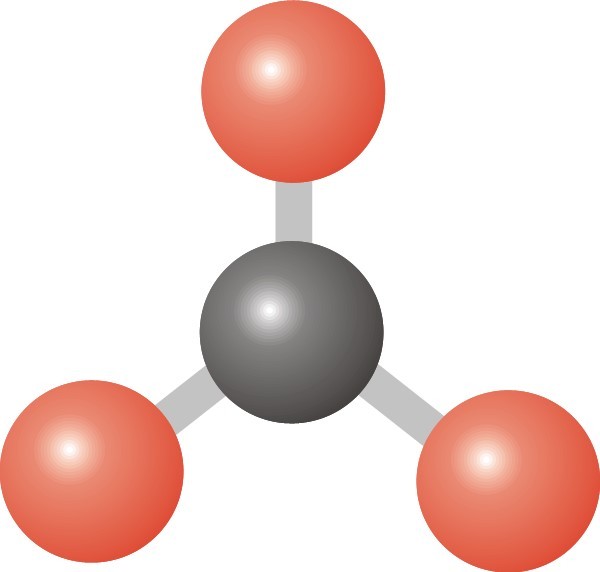
The electrons in an ionic molecule are shared...
Evenly
Unevenly
Electrons are not shared
None of the Above
In a polar covalent bond, the electrons gather around...
The atom with the Greatest Electronegativity
The atom with the Lowest Electronegativity
Each atom Equally
None of the Above
A diatomic molecule like O2 is always _____ because electrons are shared _____
nonpolar; unequally
polar; equally
nonpolar; equally
polar; unequally

Na+ and Cl- create...
Na2Cl
NaCl2
Na2Cl2
NaCl
Potassium and Sulfur create...
KS
KS2
K2S
K2S2
The formula of calcium and phosphate is
CaPO4
Ca2(PO4)3
Ca3PO4
Ca3(PO4)2
The chemical formula of Iron (III) and bromine is
FeBr
Fe(III)Br
FeBr₃
Fe₂Br₃

