
 Worksheets
Nature of Science. and Introduction to Cells Review
Total questions: 47
Worksheet time: 47mins
Using one or more of your senses to gather information is called...
Infering
Predicting
Observing
Hypothesizing
A testable prediction is a...
Theory
Hypothesis
Law
Conclusion
The Skittles are yellow, red and green is an example of _____________.
Qualitative observations
Hypothesis
Quantitative observations
The part of an experiment that does not change is a __________.
Control
Conclusion
Constant
The variable that is changed by the scientist to test a hypothesis is called the ________________.
Dependent variable
Control
Independent variable
Catherine is testing which soil will help grow grass the tallest. The height of the grown grass is the ____________ variable.
Constant (stays the same)
Independent (it's what you change)
Dependent (it's what you measure)
The plant has grown 4 cm since yesterday.
This is an example of what kind of data?
Qualitative
Quantitative
Both
Neither
Ms. Umholtz performs an experiment by comparing the number of drops of tap water that can fit on a penny to the number of drops of soapy water that can fit on a penny. She performs three trials. What is the independent variable?
Number of drops of tap water
Number of drops of soapy water
Type of water used
Amount of drops that can fit on the penny


Which organelle will keep harmful things out of a plant or animal cell?
Ribosome
Mitochondria
Cytoplasm
Cell Membrane
Which organelle holds DNA and controls the cell?
Ribosome
Mitochondria
Nucleus
Cell Membrane
Which organelle does a plant cell have to make its own food using the sun (photosynthesis)?
Chloroplast
Ribosome
Mitochondria
Golgi Apparatus
Which of the following does NOT belong to a prokaryotic cell?
Cell Wall
Ribosomes
Cell Membrane
Membrane-bound organelles
Which of the following is the smallest unit of life?
cell
tissue
organ
atom
Which part of the cell produces proteins? Hint: it can be found in the cytoplasm or with endoplasmic reticulum.
golgi apparatus
nucleus
ribosome
chloroplast
which cell is more complex
Eukaryotic
Prokaryotic
Tough outer layer of plant cells. Provides support and stability.
cell membrane
cytoplasm
cell wall
chloroplasts
The theory of Endosymbiosis explains
The origin of eukaryotes
How bacteria live
How species develop
Why cells rely on one another
What are evidence to support endosymbiotic theory?
Mitochondria is found outside the cells
Mitochondria and chloroplast can divide independently
Mitochondria and chloroplast have their own cell membrane
Mitochondria and chloroplast have their own genetic material
Why type of cell does not contain membrane bound organelles?
Animal Cells
Prokaryotic Cells
Eukaryotic Cells
Plant Cells
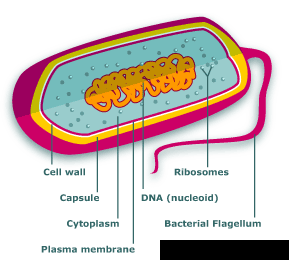
Which of the following is evidence to support the endosymbiotic theory?
Prokaryotes have the same number and types of enzymes as eukaryotes.
Mitochondria and chloroplasts have their own DNA, which is similar to prokaryotic DNA.
All eukaryotic cells have a double-layered membran composed of phosplipids and proteins.
Fossil evidence shows that the first forms of life were prokaryotic cells.
___________a molecule that is present in all living cells and that contains the information that determines the traits a living thing inherits and needs to live.
Cell
Stimulus
Homeostasis
DNA

The person in the picture is a man
Observation
Inference
The person hit his head doing a chin up.
Observation
Inference


What conclusions can you draw from this graph?
The deer population went down over time.
The deer population went up over time.
The deer population went up quickly, then down, but then stayed the same.
There are less deer because of hunters
The heart rate is the ________________ variable.
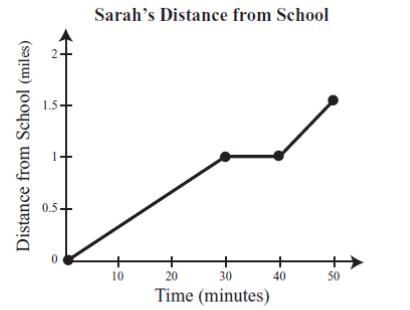
What is the independent variable?
Distance from School
Time (minutes)
Sarah
There is no independent variable
Which of these is the dependent variable?
x-axis
y-axis
On a graph, which axis shows the independent variable?
x-axis
y-axis
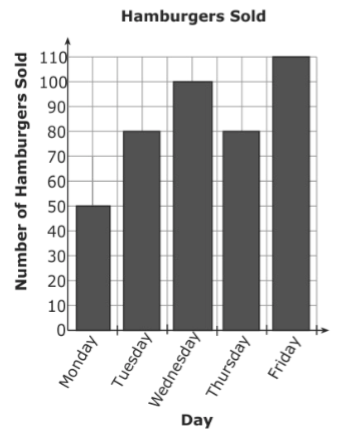
What is the dependent variable?
Number of Hamburgers Sold
Day of the Week
Location of the Hamburgers
There is no dependent variable

What is the independent variable?
Months
Temperature
Highs
Lows

