
 Worksheets
Protein Synthesis and Mutations Formative Check-Up
Total questions: 63
Worksheet time: 43mins
Which of the following are differences in the structure between RNA and DNA
DNA uses deoxyribose sugar, RNA uses sugar ribose
DNA pairs Adenine with Uracil, RNA pairs Adenine with Thymine
DNA is a double helix, RNA is a single helix
DNA pairs Adenine with Thymine, RNA pairs Adenine with Uracil
Which organelle is the location where protein is made?
Ribosome
Nucleus
Cytoplasm
Nucleotide
Insertion, deletion, and substitution are all examples of a change in a genetic sequence which is also referred to as (a)
Gene
Amino Acid
Ribose
Mutation
During transcription, this type of ribonucleic acid is responsible for copying the DNA and brining it out of the nucleus.
tRNA
mRNA
rRNA
dRNA
When these bond together, they form a protein
Amino Acids
Peptide Bonds
Ribose
Nucleotides
A string of nucleotides that contain the information to make a specific protein
Ribose
Amino Acids
tRNA
Gene
During translation, this type of ribonucleic acid is responsible for delivering amino acids to help make a protein.
mRNA
rRNA
tRNA
dRNA
mRNA occurs during this process
Translation
Transcription
Replication
Delivery
How many amino acids are found on one tRNA?
20
4
1
3
Which of the following is the complementary mRNA sequence to this DNA strand: AACTGAA
UUGACUU
TTGACTT
AACTGAA
AACUGAA
Which of the following is the tRNA that will be used to decode to this DNA strand: AACTGA
AAC and TGA
TTG and ACT
UUG and ACU
AAC and UGA
The signal that marks the end of a gene and causes transcription to stop is
polymerase
ligase
a terminator
methionine
Which of the following enzymes catalyzes the linkage together of RNA nucleotides to form RNA?
polymerase
ligase
ribozyme
reverse transcriptase
The RNA codon AUG means
add amino acid methionine
start the protein here
add the amino acid tyrosine
end the polypeptide chain here
The transfer of genetic info from DNA to RNA is called
translation
transcription
initiation
elongation
Which of the following sequences best describes the flow of information that takes place when a gene directs the synthesis of a cellular component?
RNA-DNA-RNA-PROTEIN
DNA-RNA-PROTEIN
PROTEIN-RNA-DNA
DNA-AMINO ACID-RNA-PROTEIN
Translation consists of which of the following?
conversion of genetic info from the language of nucleic acids to the language of proteins
conversion of genetic info from DNA to RNA
addition of nucleotides to a DNA template
DNA replication
Which of the following is required for translation to occur?
energy
ribosomes
tRNA
all of these
The info carried by DNA is in
an amino acid sequence
the sugars and phosphates that form the backbone
the order of bases in the molecule
the total number of nucleotides
During the process of translation, ____ matches a nucleic acid codon with the proper amino acid.
a ribosome
ATP
polymerase
mRNA
When RNA is being made, the RNA base ____ always pairs with the base ___ in DNA.
U-T
T-G
U-A
A-U
A mutagen is
a gene that has an altered mutation
something that causes a mutation
any change in a nucleotide sequence of DNA
the portion of the chromosome altered by the mutation
tRNA plays a role in which of the following ?
picking up the amino acid specified by the anticodon
recognizing the appropriate codons in mRNA
translating codons into amino acids
all of these are correct
Any change in the nucleotide sequence of a gene is called
a mutation
a codon
a translation
an anticodon
GTAGTCA
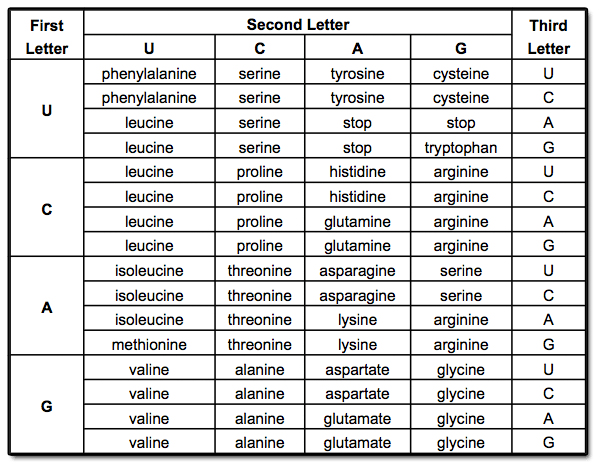
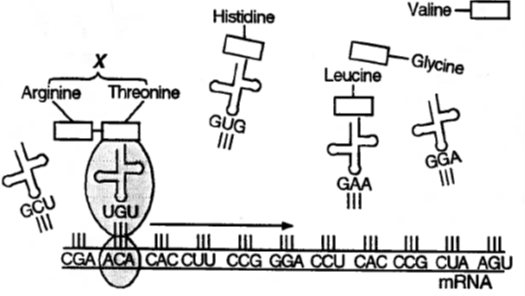
What is the location in the cell for translation?
nucleus
mitochondria
cytoplasm
chloroplast
What is the three base sequence of mRNA that codes for a single amino acid?
Anticodon
Codon
Protein
DNA
Where in a eukaryotic cell does transcription occur?
nucleus
cytoplasm
ribosome
mitochondria
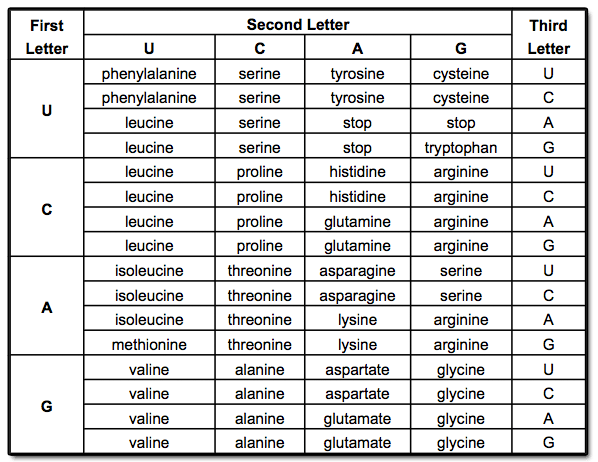
ATG GGA ACT CCA


What mutation has occurred here?
T-G-A-C-C-A
T-G-A-G-C-A
Substitution
Deletion
Insertion
Frameshift

DNA molecule segment is : TTACGCAAG
The mutated DNA segment is TTACGCAAC. This is an example of ___ mutation.
Substitution
Insertion
Inversion
Translocation

ATT-TGA-GCC- Original
ATT-GAG-CC - Mutated
The example above is an example of a
Insertion- Frameshift
Deletion- Substitution
Deletion -Frameshift
All of the above

Original DNA: CAT GAT CCA
New DNA: CAT TGA TCC A
What mutation occurred?
deletion
substitution
tranverse
insertion
Mutation: ATC GCAT
What mutation occurred?

What type of gene mutation has occurred here? Normal-
AGA-TTC-ATA-GCG
Mutant-
AGA-TTC-AAT-AGC-G
deletion frameshift
insertion frameshift
substitution
nonsense

Why are insertion and deletion mutations so harmful?
They change all of the codons from the mutation on down the line, which changes the amino acid sequence
They insert things that an organism doesn't need.
They often delete things that organisms need.
Insertion and deletions are not any more harmful than substitution mutations.
A mutation in which only one nucleotide is altered is called a:
Frameshift Mutation
Deletion Mutation
Point Mutation
Insertion Mutation
Where in a prokaryotic cell does transcription occur?
nucleus
cytoplasm
ribosome
mitochondria
An exon in an mRNA is a _____ region that is _____ the mature mRNA.
coding ... kept in
coding ... removed from
noncoding ... kept in
noncoding ... removed from


The cap and tail of a mature mRNA help by...
indicating the introns & exons.
protecting the mRNA from degrading.
indicating where translation should start and end.
indicating where transcription should start and end.

