
 Worksheets
structure of atom
Total questions: 50
Worksheet time: 37mins
Name
Class
Date
1.
Which particle has a positive charge?
a)
electron
b)
orbital
c)
proton
d)
neutron
2.
Choose the particle that has no charge.
a)
nucleus
b)
neutron
c)
proton
d)
electron
3.
This particle determines what element you have - the elements identity.
a)
electron
b)
proton
c)
neutron
d)
valence shell
4.
An electron has a _____ charge.
a)
negative
b)
positive
c)
neutral
5.
Describe an Electron Cloud?
a)
the mist outside of an atom
b)
home of the protons
c)
where electrons are located
d)
nucleus
6.
What are the maximum number of electrons that go on the first 3 energy levels?
a)
2,4,16
b)
2,8,18
c)
4,8,12
d)
3,4,6
7.
What are valence electrons?
a)
electrons on the first orbital always
b)
nucleus
c)
the outermost shell
d)
the number of electrons on the outermost orbital
8.
Which particles make up the nucleus of an atom?
a)
protons and neutrons
b)
electrons and protons
c)
electrons, protons, and neutrons
d)
electrons and neutrons
9.
The subatomic particle that determines the identity of an element.
a)
neutron
b)
proton
c)
electron
d)
outer shell
10.
What is the mass number and name of an element with 8 protons and 8 neutrons?
a)
16 - Carbon
b)
16 - Oxygen
c)
24 - Oxygen
d)
8 - Neon
11.
An element with a mass number of 10 and an atomic number of 6 has how many protons?
a)
5
b)
8
c)
6
d)
10
12.

What is the atomic mass of the atom pictured?
a)
11
b)
12
c)
22
d)
23
13.
What is the atomic number of the atom pictured?
a)
11
b)
12
c)
22
d)
23
14.

How many electrons are in the atom pictured?
a)
1
b)
2
c)
3
d)
0
15.
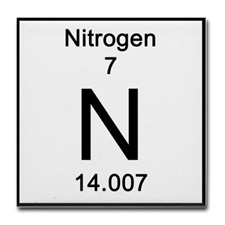
What is the number of protons that the element in this image contain?
a)
14
b)
7
c)
15
d)
18
16.

What does the nucleus of an atom contain?
a)
Electrons and neutrons
b)
Protons and neutrons
c)
Neutrinos and positrons
d)
Electrons and megatrons
17.
How many protons, electrons and neutrons does an neutral atom of Calcium have? Its atomic number is 20 and the mass number is 40.
a)
20 protons, 18 electrons and 40 neutrons
b)
20 protons, 20 electrons and 20 neutrons
c)
40 protons, 40 electrons and 20 neutrons
d)
20 protons, 18 electrons and 20 neutrons
18.
Which of the following people said the atom was a solid sphere?
a)
Dalton
b)
Thompson
c)
Rutherford
d)
Bohr
19.
Which of the following is a substance that can not be broken down into a simpler substance?
a)
Isotope
b)
Element
c)
Compound
d)
Atomic Number
20.
Ag--110 and Ag--112 are two forms of silver with different mass # so they are
a)
compounds
b)
isotopes
c)
orbitals
d)
neutrons
21.
What is the atomic number?
a)
number of protons
b)
number of neutrons
22.
Which element has 31 protons ?
a)
Gallium
b)
Germanium
c)
Gadolinium
d)
Polonium
23.

What number indicates the nucleus?
a)
1
b)
2
c)
3
d)
4
24.

Oxygen’s atomic number is 8. This means that an oxygen atom must have
a)
8 electrons
b)
8 protons
c)
8 neutrons
d)
a mass number of 8
25.

What number indicates an electron?
a)
1
b)
2
c)
3
d)
4
26.
Which statement best describes an electron?
a)
Smaller mass than a proton and a negative charge
b)
Smaller mass than a proton and a positive charge
c)
Greater mass than a proton and a negative charge
d)
Greater mass than a proton and a positive charge
27.

What number indicates the nucleus?
a)
1
b)
2
c)
3
d)
4
28.
What is at the center of every atom?
a)
An electron
b)
A compound
c)
A molecule
d)
A nucleus
29.
Which two particles make up the nucleus of an atom?
a)
Protons and Electrons
b)
Protons and Neutrons
c)
Molecules and Compounds
d)
Neutrons and Electrons
30.
What is the role of an electron in an atom?
a)
Electrons live inside the nucleus and carry a neutral charge.
b)
Electrons circle the nucleus and have a positive charge.
c)
Electrons circle the nucleus and have a negative charge.
d)
Electrons live inside the nucleus and have a negative charge.
31.
In an atom, what is the number of protons equal to?
a)
The number of electrons.
b)
The number of neutrons.
c)
The number of molecules.
d)
The number of nuclei.
32.

The particles with no charge in an atom are the _______.
a)
electrons
b)
neutrons
c)
protons
d)
protons and neutrons
33.

The negatively charged particles of an atom are the ______.
a)
electrons
b)
protons
c)
neutrons
d)
protons & neutrons
34.
An electron has this charge
a)
positive
b)
negative
c)
neutral
35.
A neutron has this charge
a)
negative
b)
positive
c)
neutral
36.
A proton has this charge
a)
negative
b)
positive
c)
neutral
37.
Most of the atom is filled with
a)
electrons
b)
empty space
c)
the nucleus
d)
protons
38.
An atom with atomic number 6 would have how many protons?
a)
6
b)
12
c)
3
d)
cannot be determined
39.
How many electrons are in the element, Oxygen, with the atomic number of 8?
a)
7
b)
10
c)
8
d)
9
40.

a)
Nucleus, positive
b)
Nucleus, negative
c)
Nucleus, neutral
d)
Electron Cloud, positive
41.

a)
Nucleus, positive
b)
Nucleus, negative
c)
Nucleus, neutral
d)
Electron Cloud, positive
42.

a)
Protons and Electrons
b)
Protons and Neutrons
c)
Neutrons and Electrons
d)
Protons only
43.

a)
Protons
b)
Neutrons
c)
Electrons
44.

a)
Protons and Neutrons
b)
Neutrons and Electrons
c)
Protons and Electrons
45.

a)
Protons
b)
Neutrons
c)
Electrons
46.

a)
Number of Protons
b)
Number of Electrons
c)
Number of Neutons
d)
Number of Protons and Neutrons
47.

a)
Number of Protons
b)
Number of Electrons
c)
Number of Neutons
d)
Number of Protons and Neutrons
48.

a)
Electrons in the outer energy level
b)
Electrons in the first energy level
c)
Electrons in an atom
49.

a)
number of valence electrons
b)
number of protons
c)
number of electrons
d)
number of neutrons
50.

Hint: Group 18 is most stable
a)
8 Valence Electrons
b)
1 Valence Electrons
c)
7 Valence Electrons
d)
4 Valence Electrons
100 %

