wayground logo

Free Printable Worksheets

Font size

S
M
L
XL
Worksheets

Semester 1 8th Grade Science Test

Total questions: 85

Worksheet time: 43mins

Name
Class
Date
1.
What is the elevation of point B? (Contour interval is 100m)
a)
800 ft
b)
850 ft
c)
900 ft
d)
1000 ft
2.
What is the elevation at sea level?
a)
0
b)
100m
c)
20m
d)
3000m
3.
What feature is formed at B?
a)
river
b)
rift valley
c)
sink hole
d)
mountain
4.
What is the elevation of Y?
a)
Between 120-140 meters
b)
Between 100-120 meters
c)
Between 140-160 meters
d)
Between 80-100 meters
5.
What do close contour lines represent on a map?
a)
waterfall
b)
steep area
c)
gradual area
d)
river
6.
What do contour lines that are farther apart represent?
a)
waterfall
b)
steep area
c)
gentle slope
d)
river
7.
How many mountain tops does this map have?
a)
one
b)
two
c)
three
d)
four
8.
Which type of plate boundary would cause folded mountains to form? 
a)
transform
b)
convergent
c)
divergent
d)
subduction
9.
Primary unit used to measure latitude and longitude.
a)
nanosecond
b)
feet
c)
liters
d)
degrees
10.
"Starting point" for latitude; halfway between the North and South poles
a)
equinox
b)
equine
c)
equator
d)
equality
11.
A sphere that represents Earth's surface
a)
circle
b)
globe
c)
mercator
d)
map
12.
Distance in degrees north or south of the equator
a)
latitude
b)
longitude
13.
"Starting point" for longitude; passes through Greenwich, England
a)
Prime Tangent
b)
Prime Meridian
c)
Prime Line
d)
Prime Rib
14.
The difference in elevation from one contour line to the next
a)
Contour interval
b)
Contour spacing
c)
Contour distance
d)
Contour grading
15.

Feature used to compare distance on a map or globe to the actual distance on Earth's surface

a)

Key

b)

Legend

c)

Scale

d)

Identity

16.
Pictures used by map makers (cartographers) to stand for features on Earth's surface
a)
Runes
b)
ID Tags
c)
Symbols
d)
Benchmarks
17.
Height above sea level
a)
Elevation
b)
Relief
c)
Vertical leap
d)
Atmosphere
18.
Earth's solid rock layer - one of 4 spheres into which scientists divide Earth
a)
Atmosphere
b)
Biosphere
c)
Hydrosphere
d)
Lithosphere
19.

What are natural resources?

a)

Resources that are made by nature.

b)

Resources that are made by humans.

c)

Resources that exist that can be all used up and not replaced.

d)

Resources that make lots of money.

20.

What are non-renewable resources?

a)

Resources that can't be replaced fast enough to meet peoples demands.

b)

Resources that can be used over and over again.

c)

Oil

d)

Resources that are too far away to get.

21.

What are renewable resources?

a)

Resources that can be used over and over again without a limit. Usually good for the environment.

b)

Resources that exist in nature.

c)

Resources that can be used anywhere in the world.

d)

Resources that are bad for the environment.

22.
The Great Rift Valley in Africa and the Mid-Atlantic Ridge were both created by this type of plate boundary. 
a)
divergent
b)
convergent
c)
transform
d)
subduction
23.
What drives tectonic plate movement? 
a)
gravity
b)
coriolis effect
c)
convection currents
d)
the earth's magnetic core
24.
Transform boundaries are most likely to produce what phenomenon?
a)
volcanoes
b)
deep sea trenches
c)
underwater mountain ranges
d)
earthquakes
25.
When an oceanic plate and a continental plate collide, which one will subduct? 
a)
oceanic
b)
continental
c)
neither
d)
both
26.
The process by which the ocean floor sinks beneath a deep ocean trench and back into the mantle is known as
a)
convection
b)
continental drift
c)
subduction
d)
conduction
27.
If we compare the temperature and pressure of the Earth’s mantle to the core, what differences can we expect as we move downward into the Earth?
a)
Both the temperature and pressure increase.
b)
Both the temperature and pressure decrease.
c)
The temperature increases and the pressure decrease.
d)
The temperature decreases and the pressure increases.
28.
What does the theory of continental drift state?
a)
The continents were once joined in a super-continent and have moved over time
b)
Continents are stationary and do not move
c)
The Earth is broken into lithospheric plates that move due to convection currents
d)
none of the above
29.
The theory of plate tectonics is a result of
a)
similar fossils found on all continents
b)
Pangaea being a super continent
c)
why oceans and continents have always been in the same place
d)
finding older rocks near the continents and younger near the ocean center because of sea floor spreading
30.
True or False : Sea-floor Spreading adds new material to the ocean floor?
a)
True
b)
False
31.

7. The Asthenosphere is the_________part of the mantle.

a)

Solid

b)

Soft, plastic like

c)

Gaseous

32.
How does fossil evidence support Wegener's hypothesis of continental drift?
a)
Similar fossils are found along continental margins that appear to join together.
b)
Fossils are found in areas where the present-day climate could not have supported the organisms that made the fossils.
c)
Similar fossils of giant, land-dwelling dinosaurs are found on continents separated by oceans.
d)
all of the above
33.
A mountaineer is planning an expedition. He wants to follow the easiest possible path, which means he needs to find the most gentle slope up the mountain. Which route should the mountaineer choose?
a)
Route A
b)
Route B
c)
 Route C
d)
Route D
34.
What is the violent shaking of Earth's crust as built-up energy is released.
a)
earthquake
b)
epicenter
c)
fault
d)
focus
35.
What do you call the crack in Earth's surface along which movement takes place?
a)
earthquake
b)
epicenter
c)
fault
d)
focus
36.
What do you call melted rock below the Earth's surface?
a)
lava
b)
fault
c)
focus
d)
magma
37.
What do you call waves of energy sent through Earth's crust when parts of the crust move suddenly?
a)
thermal waves
b)
energy waves
c)
seismic waves
d)
 magma
38.
Where do many earthquakes and volcanoes occur along the Pacific Ocean?
a)
along the Mid-Atlantic Ridge
b)
along the Nazca Plate
c)
along the Ring of Fire
d)
near India
39.
What do you call melted rock once it hardens on the Earth's surface?
a)
focus
b)
magma
c)
lava
d)
seismic waves
40.
Which earthquake wave is the most destructive?
a)
P waves
b)
S waves
c)
surface waves
d)
tsunami waves
41.
Which boundary presses together?
a)
sliding boundary
b)
converging boundary
c)
diverging boundary
d)
transform boundary
42.
What is the name of the instrument used to measure the waves of an earthquake?
a)
Richter Scale
b)
Octograph
c)
Seismograph
d)
Fault detecor
43.
When two plates are moving away from each other they are called (often forming rifts or valleys)?
a)
Divergent Plates
b)
Convergent Plates
c)
Transform Boundaries
d)
Mountain ranges
44.
Earthquakes occur along these.
a)
bedrock
b)
sandstone piles
c)
plate boundaries
d)
equatorial lines
45.
A subduction zone is formed...
a)
when one tectonic plate sinks below another
b)
at every type of convergent plate boundary
c)
at every type of divergent plate boundary
d)
at transform boundaries
46.
Plates slide past one another at ____________ boundaries.
a)
divergent
b)
convergent
c)
transform
d)
submergent
47.

The point where the earthquake first occurs?

a)

Epicenter

b)

Focus

c)

Fault

d)

Plate

48.
Where is the point on the Earth’s surface directly above the focus of an earthquake?
a)
Epicenter
b)
Fault
c)
Hypocenter
d)
Tremor
49.
What is the measure of the amount of energy released in an earthquake?
a)
Earthquake
b)
Epicenter
c)
Magnitude
d)
Seismogram
50.

What scale is used to measure Earthquakes?

a)

Deuthman scale

b)

Richter scale

c)

Weighing scale

d)

Veltzer Scale

51.

Which of the following may take place during a Volcanic eruption?

a)

Pyroclastic flow

b)

Ash Clouds

c)

Lava Flow

d)

Lava Bombs

e)

All of the above

52.

Which BEST explains the cause of the geysers formed in Yellowstone National Park?

a)

erosion

b)

earthquakes

c)

volcanic activity

d)

artesian springs

53.

The Hawaiian Islands are in the middle of a large tectonic plate with many volcanoes. The volcanoes are the direct result of the tectonic plate

a)

being forced under another tectonic plate at a subduction zones.

b)

colliding with one another tectonic plate and being forced upward.

c)

moving over a hot spot where magma breaks through the crust.

d)

applying great pressure on the crust causing constant earthquakes.

54.

Which type of volcano is built by alternating layers of lava flows and ash flows? It can be very explosive

a)

Cinder Cone

b)

Composite

c)

Lava Dome

d)

Shield

55.

Which type of volcano has steep angled sides, throws blobs of lava in the air that fall as cinders, and is built over a short period of time?

a)

Cinder Cone

b)

Composite

c)

Lava Dome

d)

Shield

56.

The Ring of Fire, where many earthquakes occur, is located around the rim of which ocean?

a)

Atlantic

b)

Arctic

c)

Indian

d)

Pacific

57.

The scale, which is numbered 1-10, that measures the strength or magnitude of an earthquake

a)

pH scale

b)

Richter Scale

c)

Mercalli Scale

d)

Hardness Scale

58.

How many seismic stations are required to determine the epicenter of an earthquake?

a)

1

b)

2

c)

3

d)

4

59.
A metamorphic rock changes into an igneous rock by what two processes?
a)
Melting and cooling
b)
Extreme heat and pressure
c)
Compaction and cementation
d)
Weathering and erosion
60.
Wind, water, and ice breaking down rock is called
a)
Erosion
b)
Deposition
c)
Compaction
d)
Weathering
61.
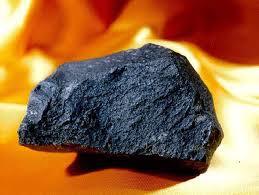
This rock was found near the mouth of a volcano. What type of rock is this?
a)
Sedimentary
b)
Igneous
c)
Metamorphic
62.
When sediments are pressed together tightly, this is called ____________.
a)
Compaction
b)
Cementation
c)
Weathering
d)
Erosion
63.
What are the 3 major types of rocks?
a)
Igneous, Metamorphic, Sedimentary
b)
Metamorphic, Igneous, Cementation
c)
Brown, Red, Gray
d)
Streak, Hardness, Breakage
64.
Each rock type can follow only one pathway of the rock cycle.
a)
True
b)
False
65.
The color of a mineral in powder form is called the mineral's 
a)
hardness
b)
specific gravity
c)
luster
d)
streak
66.
How light reflects off of a mineral is called the mineral's 
a)
luster
b)
streak
c)
cleavage
d)
fracture
67.
Diamond has a hardness of ___ on Mohs Hardness Scale.
a)
1
b)
5
c)
8
d)
10
68.
By definition, a mineral has which of the following characteristic(s)?
a)
definite chemical composition
b)
crystal structure
c)
naturally occuring
d)
all of the above
69.
Which mineral would scratch calcite but not scratch apatite?
a)
fluorite
b)
gypsum
c)
talc
d)
topaz
70.
The five characteristics that all minerals share are:
a)
Definite Chemical Composition, Color, Density, Igneous, and Solid
b)
Definite Chemical Composition,  Crystal Structure, Inorganic, Naturally Occurring, and Solid
c)
Cleavage, Faces, Hardness, Metamorphic, and Streak
d)
Cleavage, Crystal Structure, Density, Igneous, and Solid
71.
The _________ of a mineral is a physical property that is easy to observe.
a)
Chemical Composition
b)
Color
c)
Hardness
d)
Streak
72.
________ is the mass per unit volume.
a)
Crystal Structure
b)
Density
c)
Hardness
d)
Solid
73.
This rock is formed by erosion (continuously broken down into small fragments) and  then is compressed and  cemented together.
a)
Inorganic
b)
Igneous
c)
Metamorphic
d)
Sedimentary
74.
This rock is formed by extreme heat and/or pressure that alters the chemical composition into a new form of rock.
a)
Inorganic
b)
Igneous
c)
Metamorphic
d)
Sedimentary
75.
When identifying minerals, _______ can be tested by scratching the surface with different materials such as your fingernail or a coin.
a)
Cleavage
b)
Density
c)
Hardness
d)
Streak
76.
What is weathering?
a)
The process by which
water, ice, wind or gravity
moves fragments of rock
and soil.
b)
The process by which
water, ice, wind or gravity
deposit rock sediments
and soil in a new place.
c)
The breaking down of
Earth’s crust into smaller
and smaller pieces.
77.
What is erosion?
a)
The process by which
water, ice, wind or gravity
moves fragments of rock
and soil.
b)
The process by which
water, ice, wind or gravity
deposit rock sediments
and soil in a new place.
c)
The breaking down of
Earth’s crust into smaller
and smaller pieces.
78.
What is deposition?
a)
The process by which
water, ice, wind or gravity
moves fragments of rock
and soil.
b)
The process by which
water, ice, wind or gravity
deposit rock sediments
and soil in a new place.
c)
The breaking down of
Earth’s crust into smaller
and smaller pieces.
79.
How do plants weather rocks?
a)
during photosynthesis
b)
when roots grow into cracks of rocks and expand the rock
c)
when the plant moves water from the roots to the leaves
80.
moving weathered material (sediment)
a)
Weathering
b)
Erosion
c)
Deposition
d)
Delta
81.
Mechanical and chemical processes that breakdown Earth's surface
a)
Weathering
b)
Erosion
c)
Deposition
d)
Delta
82.
Laying down of eroded material
a)
Weathering
b)
Erosion
c)
Deposition
d)
Delta
83.
Material from broken down rocks
a)
Sediment
b)
Mass wasting
c)
Deposition
d)
Delta
84.
What words do "break it, take it, drop it" match?
a)
weathering, erosion, deposition
b)
sediment, delta, deposition
c)
mechanical weathering, chemical weathering
d)
Erosion, mass wasting, sediment
85.
The freezing and thawing action of water affects a rock by
a)
transforming the rock into igneous rock
b)
chemically changing the rock
c)
gradually breaking down the rock into smaller pieces
d)
leaving behind sediment particles from evaporation