wayground logo

Free Printable Worksheets

NEW

Font size

S
M
L
XL
Worksheets

Elements of Design for Architecture orientation

Total questions: 40

Worksheet time: 27mins

Name
Class
Date
1.

A mark created by a path of a moving point.

a)

line

b)

value

c)

contrast

d)

form

2.

An design element that refers to the lightness and darkness of a color.

a)

hue

b)

value

c)

movement

d)

intensity

3.

The empty or open area between, around, above, below and within objects.

a)

form

b)

balance

c)

color

d)

space

4.
Any three dimensional object that can be measured by height, width and depth.
a)
emphasis
b)
space
c)
form
d)
shape
5.

The surface quality or the way something feels such as rough-smooth

a)

shape

b)

texture

c)

color

d)

line

6.

A definite area; described as geometric or organic, positive or negative.

a)

line

b)

form

c)

shape

d)

space

7.

Element of art produced when a wavelength of light reflects a hue.

a)

primary

b)

secondary

c)

teriary

d)

color

8.

Area in a work of art that catches and holds the viewers attention also called focal point.

a)

space

b)

unity

c)

emphasis

d)

balance

9.

The relation of one object to another in size, amount, and or number.

a)

variety

b)

monochromatic

c)

proportion

d)

triad

10.

The use of different lines shapes, textures,colors and other elements of design to create interest in a work of art.

a)

variety

b)

emphasis

c)

space

d)

value

11.
The area around, above or inside an object is called:
a)
form
b)
perspective
c)
contrast
d)
space
12.

Composition is

a)

The artistic arrangement of the parts of a picture

b)

the different values in a work of art

c)

Using recycled materials in a piece of artowrk

d)

An image combined of two different things or a compound.

13.

The definition of Line is

a)

a dot that went for a walk or the path of a moving dot

b)

a straight thing

c)

A never ending dash

d)

A line that connects to itself

14.

Shape is

a)

a form with definite edges

b)

a geometric form

c)

A line that connects to itself

d)

A form with an inside and an outside

15.

Form is

a)

A round object

b)

Something with Value

c)

A 3-D shape

d)

a shape

16.

Another word for shading is

a)

Pencil

b)

shadows

c)

value

d)

gray

17.

Texture is

a)

The lights and darks in an image

b)

A work of art that has a lot of contrast

c)

When something feels smooth

d)

The way something feels or looks like it feels

18.

Which of the following is not an element of art?

a)

color

b)

line

c)

texture

d)

composition

19.

Which of the following is NOT a law of space?

a)

how far away something is can be measured with a ruler

b)

objects get smaller as they go back into space

c)

overlapping creates depth

d)

Things that are closest are more detailed and usually darker or have more contrast

20.
Line, color, value, texture, shape, form, and space are considered...
a)
elements of design
b)
principles of design
21.
Balance, pattern, movement, emphasis, rhythm, unity, and contrast are considered...
a)
principles of design
b)
elements of design
22.
Pattern uses the art elements in planned or random repetitions to enhance surfaces of paintings or sculptures.  Which of the examples given below is NOT a pattern?
a)
quilt
b)
grapefruit (sliced open)
c)
jewelry
d)
plain white canvas
23.
The principle of contrast refers to differences in values, colors, textures, shapes, and other elements.  Which company used contrast in commercials to promote a popular product?
a)
Apple
b)
Samsung
c)
Microsoft
d)
LG
24.
Rhythm is the __________ of visual movement--colors, shapes, or lines.  Fill in the missing word.
a)
repetition
b)
stopping
c)
replacing
25.
Visual movement is used by artists to direct viewers through their work, often to a certain point in the picture. This is called a...
a)
empty space
b)
back drop
c)
focal point
26.
The principle of balance refers to the distribution of visual weight in a work of art.  This famous image, popular in Chinese culture, is called...
a)
Yin & Yang
b)
Pisces symbol
c)
the Rooster
27.
The principle of emphasis is used by artists to create dominance & focus in their work.  Your eye is drawn to which color?
a)
red 
b)
green
28.
The element of texture refers to the surface quality, both simulated & actual, of artwork.  Texture describes how something...
a)
feels
b)
smells
c)
sounds like
29.
The element of value refers to light and dark. Value contrasts helps us to see & understand a 2-dimensional work of art. What popular fruit is shown in this image?
a)
pumpkin
b)
apple
c)
cucumber
30.
The element of form describes the volume & mass or the three dimensional aspects of objects that take up space. Which object is not shown in the following image?
a)
rectangular prism
b)
cube
c)
cylinder
31.

What is a self contained 2-dimensional defined area and can be geometric or organic?

a)

Shape

b)

Color

c)

Size

d)

Value

32.
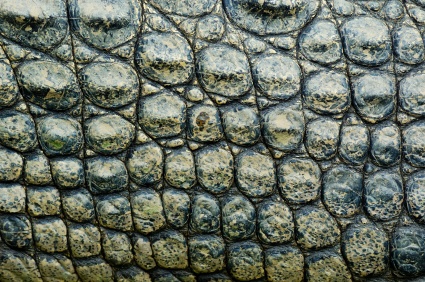
The image is a good example of which element?
a)
pattern
b)
texture
c)
shape
d)
emphasis
33.

The ____________ surface characteristics of a work of art that are either felt or perceived visually.

a)

Line

b)

Form

c)

Texture

d)

Color

34.

The volume and shape of a three-dimensional work, or an image that gives the illusion of being three dimensional.

a)

Line

b)

Form

c)

Texture

d)

Color

35.

This is an example of

a)

balance

b)

line

c)

shape

d)

form

e)

texture

36.

This is an example of

a)

balance

b)

line

c)

shape

d)

form

e)

texture

37.

This is an example of

a)

balance

b)

line

c)

shape

d)

form

e)

texture

38.

This is an example of

a)

balance

b)

line

c)

shape

d)

form

e)

texture

39.

This is an example of

a)

balance

b)

line

c)

shape

d)

form

e)

texture

40.

Which of these is a representation of a shape?

a)
b)
c)
d)