
Font size
 Worksheets
Separation of Substances
Total questions: 101
Worksheet time: 1hrs 5mins

In nature a large number of substances are found (a) with other substances.

In order to be useful, these substances must be (a) from each other.

3. Solids can be separated from each other by
a. ___________________,
b. ___________________,
c. ___________________, and
d. ___________________,
(a)
When components of a mixture are separated by hand, it is known as (a) .
Onions and tomatoes in a salad can be separated by
Hand picking method
Threshing method
Churning
Distillation method
Handpicking method depends on the ____________ of substances
Mass & Shape
Size & Shape
Purity & Size
State & Heat
Handpicking method is preferred in ____________ mixture
Solid-Solid
Solid-Liquid
Liquid-Gas
Solid-Gas
Hand picking is done where the number of substances to be separated out is __________
More
Less
Does not depend
Extremely More
Which among the following can be separated by Handpicking Method?
Sand from Soil mixed in a container
Black stone from Dark brown stone mixed in a bag
Chalk powder from Salt
Black grapes from Green Grapes
Beating of any mixture to separate substances is called as
Beating Method
Threshing Method
Thrushing Method
Thrusting Method
The substance in the mixture to be separated out should be
Tightly bounded with mixture
Loosely bounded with mixture
having high density
None of these
Grains can be separated out from bundle of stalk by
Handpicking
Sieving
Threshing
Filtration
In which of the following, does the threshing process can be applied
Removing husk from grains
Removing dust from broom
Removing sand from water
Removing oil from cloth
What you understood by threshing?
The process of removal of husk from grains
The process of removal of husk from stalk
The process of removal of grains from stalk
The process of removal of grains from husk
what is the method of separating components from a mixture by blowing?
handpicking
threshing
winnowing
washing
Where is grain separated from?
Stalks
Wheat
Rice
Atta
The density of the husk is
less than grain
more than grain
equal to grain
sometimes less, sometimes more
Chaff separated out can be used as to
Sow another crop
Produce fertilizers
burn and remove mosquitoes
produce fodder for cattles
The air blown will take the heavier grains
away
near
very far
none of these
Sieving is a method of separating mixtures which is judged by the size and thickness of the particles of the components which make up the mixture.
True
False
Sieving can be applied in mixtures having components of the same particle size.
True
False
Sieving can separate the components of all kinds of mixtures.
True
False
The number of particles to be separated must be taken into consideration when using the method of sieving
True
False
Sieving is.....
good for separating solids and liquids
good for separating solid of different sizes
good for separating a solid that is dissolved in a liquid
Which property is used in the separation process of sieving?
shape
size
solubility
What is the purpose of sifting in a recipe?
to filter out dirt and bugs
to make the product rise higher during baking
to break lumps and add air

This involves using a strainer or a big screen to separate the components of solid mixtures.
physical manipulation
distillation
sieving

You've got a mixture of powdered sugar and cooking salt. What is the suitable separation technique for this mixture? Hint: the particles of cooking salt are much bigger than those of powdered sugar.
filtering
sieving
separation technique

You had these materials together but after performing a separation technique, you have these five groups. Which separation technique did you use?
Distillation
Decanting
Sieving
Which of the following mixture can be separated by sieving method?
Sugar and ice
Salt and fine spices
Salt and sugar cubes
Sand and few stone mixture can be separated by
Sieving
Handpicking
Both sieving and handpicking


The process of separating the components of a liquid by agitating it vigorously is known as (a)
The process of settling down of particles of a solid in a liquid is
Sublimation
Sedimentation
Filtration
Decantation
During _________________ the solid particles that settle down forming a layer are called sediments
Decantation
Condensation
Evaporation
sieving
Sedimentation
How do you separate sand from water ?
Decantation
Sedimentation
Filtration
Evaporation

This is a picture of a ___________________ basin where sediments and particles settle to become sludge.
sedimentation
filtration
chlorination
absorption
The process of letting dirty or polluted water sit so particles can settle to the bottom is called _______________________
filtration
absorption
sedimentation
precipitation


Sawdust is not soluble in water. If, accidentally some particles of sawdust drop into a glass of water. How would you separate them from water?
Decanting
Filtering
Sieving
Distillation
What is the purpose of Filtration?
Separating and insoluble solid from a liquid
Separation of a mixture of 2 solids
Separates heavier substances from a suspension
Which one of the following techniques would best be used to separate soil and water?
crystallization
distillation
Filtration
Chromatography
The process of separating small, insoluble solids from a liquid using a filter
filtration
evaporation
sieving
desalination
The sand that is left on the filter paper is known as
filtrate
semi-permeable
residue
sieving
What substance would be collected if you dry residue after filterng dirty water
water
salt
nothing
dirt
Insoluble solids like sand and flour can be separated from water by
decanting
sieving
filtration
evaporation


If I pour salt and water through filter paper, what will happen?
water and salt will go through the filter
salt will get caught in the filter, water will pass through
both salt and water will get caught in the filter
Evaporation is a process where _____________________
liquid changes to gas
throughout whole water
on surface of water
at any temperature
at boiling point
During evaporation, water molecules on the surface of water ___________________ from surroundings to move faster and then escapes into the air
obtain energy
lose energy
share energy
produce energy
When we sweat, our sweat evaporates and cools our body because ___________________________
part of the heat is removed from our body
sweat removes heat energy from the skin
air surrounding our body is colder
air movement is faster

Diagram above shows the change in the water level in a beaker after a few days. Which of the following explains the situation?
Water diffuses quickly
Water evaporates into the air
Water turns to solid
Water loses heat energy
Factors that affect the rate of evaporation are :
Humidity
Air movement
Exposed surface area
Surrounding temperature
Volume of water
The higher humidity, the ________________________ the rate of evaporation of water
lower
higher
no change
changes
The higher the surrounding temperature, the __________________ the rate of evaporation of water.
lower
higher
same
changes
The larger exposed surface area of water, the _________________ rate of evaporation of water.
slower
faster
changes
same
The faster the movement of air, the ____________the rate of evaporation of water.
slower
faster
changes
same
Which of the following can dry the wet handkerchief faster?
Hang it under the moving fan
Hang it in a dark place
Fold it into smaller size
Hang it under the Sun
The rate evaporation of water increases when the :
surrounding temperature is decreases
air movement is faster
humidity is higher
exposed surface area is larger
The correct application of water evaporation is everyday life are :
Using hair dryer to dry wet hair.
Fold the cloth half when hanging to dry.
Seafood like fish, squids and prawns are dried under the sun
Close the fan while we sweating


Steam rising from wet clothes while ironing them. This is an example of__________.
Evaporation
Condensation

Paint dries up after a while. This is an example of__________.
Condensation
Evaporation

Water drops seen on the lid of a hot tea pot is an example of__________.
Evaporation
Condensation
Precipitation
Water cycle
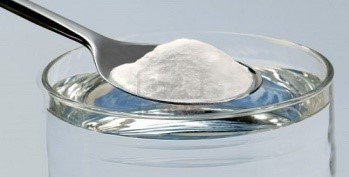
Identify the solute
You are given a small beaker of solution at room temp. You add a bit of solute to the solution and it dissolves. The solution was:
saturated
unsaturated
concentrated
warm
How do you know when you have a saturated solution?
You don't see anymore material in the solution. It has dissolved.
The material dissolves and no more will dissolve because you see it collect at the bottom.
The solution is bubbling and cloudy.
The solution is clear and there is nothing at the bottom.
To separate a solution, you can ________________ it.
filter
evaporate
solute
saturate

