
Font size
 Worksheets
class 6th chemistry
Total questions: 100
Worksheet time: 54mins
Which of the following materials is not lustrous?
Gold
Silver
Wood
Diamond
Which type of the following materials is used for making the front glass (wind screen) of a car?
Transparent
Translucent
Opaque
None of the above
Materials that cannot be compressed easily are called __________
Soft
Rough
Scaly
Hard
Which of the following statements is not true?
Materials are grouped for convenience.
Materials are grouped to study their properties.
Materials are grouped for fun.
Materials are grouped according to their uses.
Which of the foll has dull appearance ?
aluminium foil
brick
steel bucket
steel chair

The teacher of a class sorted out certain objects into two groups. On what basis has the teacher sorted them?
whether the objects are circular or not.
whether the objects give light or not.
whether the objects are used for measuring or not
whether the objects are useful to us or not.

Shown here is a tent used by a mountain climber.
What are the qualities such a tent MUST have?
1. very light to carry
2. has nice colours
3. easy to wash
4. folds into a small size
Only 1
Only 1 and 2
Only 1 and 4
all - 1,2,3 and 4

Which one of the following is a transparent material?
Rock
Wood
Glass
Paper
Which of the following does not float on water
Feather
Coconut oil
Paper
Stone
Which of the following does not float on water
Feather
Coconut oil
Paper
Stone
The glass fitted in the front windshield of car is
Translucent
Opaque
Transparent
Confused
Which of the following substance is translucent
Oily paper
Plain paper
White paper
Coloured paper
Which of the following has lustre
A plastic toy
A cotton Shirt
A stainless Steel Spoon
A newspaper
Which of the following has lustre
A plastic toy
A cotton Shirt
A stainless Steel Spoon
A newspaper
Substances through which we cannot see at all are called
Transparent
Translucent
Opaque
Confusing
Grouping things with similar properties together is called
Variation
Specification
Nomenclature
Classification
Vinegar and Lemon juice are--------- in water
Miscible
Immiscible
Both the options
Confusing
Vinegar and Lemon juice are--------- in water
Miscible
Immiscible
Both the options
Confusing
Which of the following materials is hard, opaque and shines?
Rubber
Plastic
Wood
Tin
A mirror is
opaque.
transparent
translucent.
flexible
A vendor sells white powdered salt mixed with white powdered stone. Which of these properties will help you detect his malpractice?
Ductility
Opacity
Density
Solubility
Kerosene does not dissolve in water. What are they called?
Immiscible liquids
Solute and solvent
Solvent and solution
Miscible liquids
If opacity is the distinct feature of wood, then what is glass known for in the same way?
Its transparency
Its magnetic nature
Its conductivity to heat
Its lustrous nature
which is the hardest known substance on Earth:-
diamond
gold
all of the above
none of the above
the substances that dissolve in water are called
soluble substances
immiscible substances
sugar
water
which is form of matter:-
washing powder
solid
sugar
plasma
choose the symbol for:- oxygen
O2
H2O
atom
water
choose the symbol for:- sodium
Na
C1
O
sodium
choose the following which are soft:-
satin fabric
bark of tree
cushion
none of the above
choose the following that are hard:-
bark of tree
potter's clay
lampshade
stone
materials that allow the transfer of heat and electricity are called:-
conductors
insulators
water
conduction
materials that allow light to pass through it completely:-
opaque
transparent
translucent
all of the above

Pliers used by electrician usually have a plastic cover on the handle.Why?
A) Plastic is a bad conductor of heat
B) Plastic is water resistant
C) Plastic is bad conductor of electricity
D) All of these
Steel spoons used for cooking becomes hot easily.They are often given handle of
A) Iron
B) Copper
C) Wood
D) Aluminium
Find the odd one out from the following.
A) Iron Nail
B) Utensils
C) Magnet
D) Glass beaker
Which of the following is correct for the term ' lustre '?
A) Hardness
B) Softness
C) Dull appearance
D) Shiny appearance
Which one of the following is insoluble in water?
oxygen
sugar
milk
sawdust
Which one of the following will not attract magnet?
Iron nail
Steel rod
Copper vessel
A coin made of nickel
All gases are poor conductors of heat.
True
False
Find the odd one?
Sugar
Salt
Glucose
Sand
Which of the following statements is not true?
Materials are grouped for convenience.
Materials are grouped to study their properties.
Materials are grouped for fun.
Materials are grouped according to their uses.


Nisha was making a list of things that are obtained from plants and Amol was making a list of things that can dissolve in water. Which can be grouped in both the list?
Oil
Sugar
Cotton
Table salt
Nina had a mixture of sand and salt. Which of the following properties of salt can she use to separate them?
Salt is white in colour.
Salt dissolves in water.
Salt has a taste.
Salt is a powder.
Ramesh was applying paint on the wall during which some of the paint fell on his hands. Instead of using water, Ramesh used kerosene oil to wash his hands.
Which of the following options explains Ramesh's decision?
Kerosene is softer than water.
Kerosene smells better than water.
Paints dissolve in kerosene and not in water.
Kerosene is more easily available than water.
The process of settling down of particles of a solid in a liquid is
Sublimation
Sedimentation
Filtration
Decantation
The solubility ____________ with increase in temperature.
doesn't change
decreases
increases
While preparing chapatis, Paheli found that the flour to be used was mixed with wheat grains. Which out of the following is the most suitable method to separate the grains from the flour?
Threshing
Sieving
Winnowing
Filtration
What is the process that is used to separate grains from stalks called?
handpicking
threshing
sieving
winnowing
When is the solution saturated?
No more salt can be dissolved in the amount of water we have taken
Lot more salt can be added
You have to add some sugar into the solution
None of the above

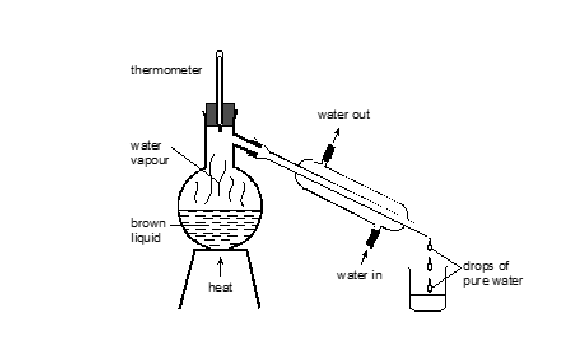
Which separation technique uses the apparatus shown in the diagram?
filtration
evaporation
distillation
chromatography


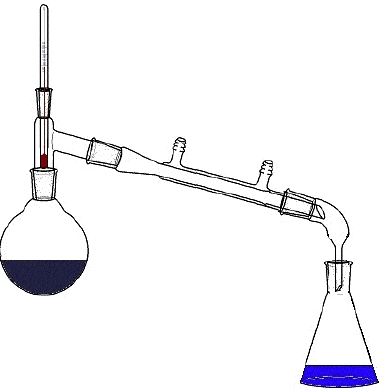
What separation technique does the picture show?
Sieving
filtering
magnetic separation
Distillation

Sawdust is not soluble in water. If, accidentally some particles of sawdust drop into a glass of water. How would you separate them from water?
Decanting
Filtering
Sieving
Distillation

You had these materials together but after performing a separation technique, you have these five groups. Which separation technique did you use?
Distillation
Decanting
Paper chromatography
Sieving


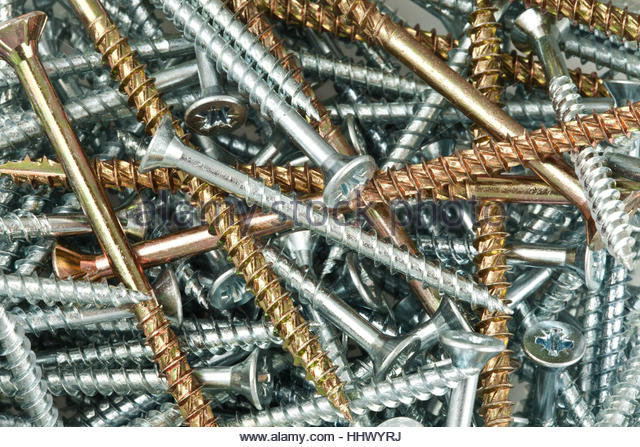
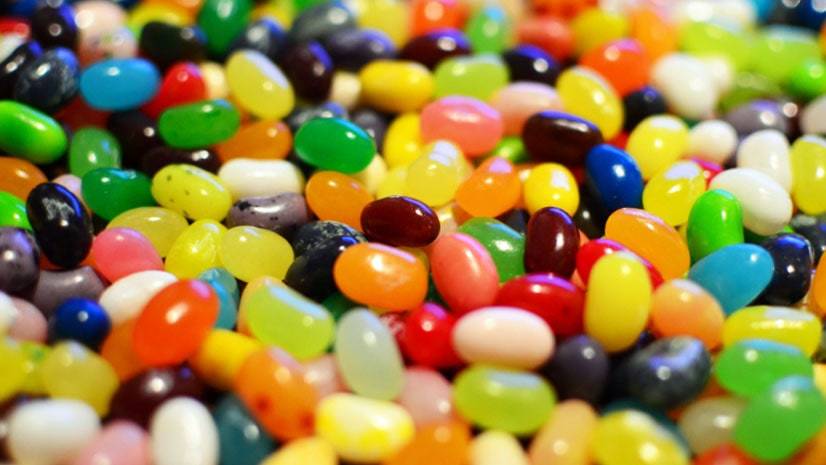
What is the purpose of Filtration?
Separating and insoluble solid from a liquid
Separation of a mixture of 2 solids
Separates heavier substances from a suspension
Which of the following is essential to perform winnowing activity?
Wind
Water
Magnet
Filter paper
What is a mixture?
A chemical combination of two or more different substances.
A physical combination of two or more different substances.
A chemically pure substance.
A special type of solution
How are grain seeds removed from their stalks?
Sieving
Winnowing
Threshing
All of the above
Lemonade is a special mixture called a
substance
solution
plasma
ingredient
A fruit salad is a
solution
mixture
Which of the following is essential to perform winnowing activity?
Wind
Water
Magnet
Filter paper
While preparing chapatis, Nitya found that the flour to be used was mixed with wheat grains. Which out of the following is the most suitable method to separate the grains from the flour?
Threshing
Sieving
Winnowing
Filtration
Hand picking method is effective in
solid mixture
Liquid mixture
Gaseous mixture
None of these
1. What is Winnowing ?
A method used to separate the components of a mixture which are different sizes substances.
The practice of separating undesirable solid substances and impurities from useful solids by hand.
A method used to separate lighter components of a mixture from the heavier ones by wind or by blowing air.
2. What means to cut the crop from the field?
Threshing
Winnowing
Harvesting
Sieving
4.When do we mostly use handpicking?
When we separate stones from rice
When we separate water from sand
When we separate sugar from water
ALL of the above
3.How do we separate grains from stalks?
Sieving
Threshing
Winnowing
Handpicking
5.A solution in which no more solute can be added is called
True Solution
Unsaturated solution
Saturated solution
Mixture
Which can be separated using Magnetism?


Which of the following methods of separation are we going to use to separate two liquids with different boiling points?
Filtration
Evaporation
Distillation
Decantation
What household activity does sieving useful?
baking cake
cooking rice
cleaning the toilet
washing the dishes
Which of the following can be separated by Distillation?


Which mixture can be separated using Sieving?


Which of the following mixtures can be separated by Evaporation?


Butter is separated from milk by
sedimentation
filtration
churning
decantation
Filtration is a method to separate the components of a
solution
mixture of a liquid and an insoluble substance
pure substance
Threshing is done by
beating
bullocks
machines
all of these
Sand from water is separated by
sieving
evaporation
filtration
sedimentation and decantation
The process of conversion of water vapours into liquid is called
condensation
decantation
sedimentation
evaporation
The process of conversion of water into its vapours is called
evaporation
condensation
transpiration
Larger quantity of sugar can be dissolved in water by
cooling
heating
icing
None of the above
Tick the correct option
solute: water
solvent:sugar,salt, lemon juice
solution:lemonade
solute: lemonade
solvent: water
solution: sugar,salt, lemon juice
solute: sugar,salt, lemon juice
solvent: water
solution:lemonade
All of the above
Decantation can also be used to separate
vinegar and water
lemon juice and water
salt and water
oil and water
In which of the following 1 tablespoon of sugar will dissolve quickly ?
Warm water
Icy water
Cold water
Hot water

Identify the separation method
(a)
Which of the following gets dissolved in water ? (You can tick multiple options)
salt
stone
sand
oil
sugar

