
 Worksheets
Grade 6 Revision Quiz 2 2018
Total questions: 96
Worksheet time: 1hrs 12mins
Name
Class
Date
1.
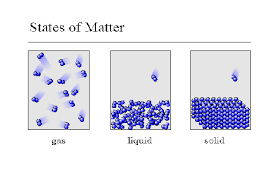
At higher temperatures
a)
particles in an object have less energy
b)
particles in an object move faster
c)
a gas contracts
2.
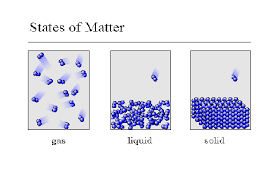
A gas
a)
has a definite shape but no definite volume
b)
has a definite volume but no definite shape
c)
has fast-moving particles
3.
Freezing
a)
Solid to gas
b)
Liquid to solid
c)
Gas to solid
d)
Liquid to gas
4.
Boiling
a)
liquid to gas
b)
gas to solid
c)
gas to liquid
d)
solid to liquid
5.
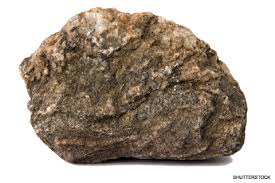
Which state of matter has tightly packed molecules?
a)
solid
b)
liquid
c)
gas
6.
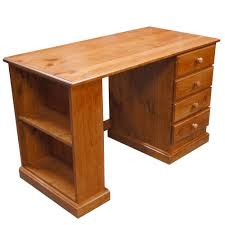
Which state of matter has a definite shape?
a)
solid
b)
liquid
c)
gas
7.
What is happening when my ice cream changes from a solid to a liquid?
a)
freezing
b)
melting
c)
burning
d)
evaporation
8.
Define a liquid.
a)
Indefinite shape, indefinite volume
b)
Definite shape, definite volume
c)
Found in stars
d)
Definite volume, indefinite shape
9.
The state of matter that has no definite size or shape is
a)
Solid
b)
Liquid
c)
Gas
10.
Particles (molecules) in a ______________________ have more energy than the other states of matter.
a)
gas
b)
solid
c)
liquid
11.
Particles of a liquid
a)
are tightly packed together and stay in a fixed position.
b)
have no viscosity.
c)
decrease in volume with increasing temperature.
d)
are free to move around one another but still touch.
12.
What term describes a solid changing to a gas?
a)
Deposition
b)
Sublimation
c)
Evaporation
d)
Freezing
13.
Particles (molecules) in a ______________________ have more energy than the other states of matter.
a)
gas
b)
solid
c)
liquid
14.
What is condensation?
a)
gas to solid
b)
gas to liquid
c)
liquid to solid
d)
solid to liquid
15.
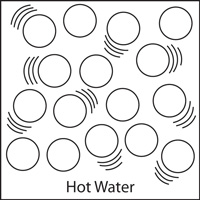
The speed of the molecules determines the _____.
a)
volume
b)
density
c)
pressure
d)
temperature
16.
Which has a greater distance between particles?
a)
Solid
b)
Liquid
17.
The slower the particles in a substance move,
a)
the colder it is.
b)
the warmer it is.
c)
the more energy it has.
d)
the less energy it has.
18.
Thermal energy is...
a)
heat energy.
b)
the energy of motion
c)
energy of nuclear processes.
d)
an indication of physical change.
19.
A chemical change
a)
doesn't really change much.
b)
creates a new substance
c)
is a change in the state of matter
20.
A physical change is...
a)
a change that doesn't change the identity
b)
a change that makes something new.
c)
a chemical reaction
21.
What part of the moon do we see from Earth?
a)
all of it
b)
the same side
c)
none of it
d)
only one quarter
22.
The moon seems to change shape from day to day in a cycle that lasts about a month as it goes through _.
a)
revolutions
b)
phases
c)
rotations
d)
eclipses
23.
As the moon's shape appears to get smaller, we say that the moon is _.
a)
swelling
b)
waxing
c)
waning
d)
disappearing
24.
About how long does it take the moon to make one complete cycle around the earth?
a)
65 days
b)
8 days
c)
365 days
d)
28 days
25.
Which moon phase is when you can't see the moon at all?
a)
Waning crescent
b)
Full moon
c)
Waxing gibbous
d)
New moon
26.
Phases of the moon in which the moon appears to be getting larger are referred to as _.
a)
waxing
b)
waning
c)
new
d)
eclipse
27.
The cycle of the moon lasts about a _.
a)
day
b)
year
c)
week
d)
month
28.
During the phases of the Moon, the Moon appears to change shape. This change in appearance is due to the Moon...
a)
physically changing size and shape.
b)
moving closer and then farther away from Earth.
c)
reflecting a different amount of light due to alignment with Earth and the Sun.
d)
having craters on its surface.
29.
One complete revolution of the Earth around the sun takes about
a)
one rotation
b)
half a year
c)
one year
d)
one season
30.
The Earth takes about __________________ hours to complete one rotation of its axis.
a)
12
b)
24
c)
14
d)
28
31.
At all times the moon is half lit up by the sun.
a)
true
b)
false
32.
The spinning of an object on its axis is called______
a)
orbit
b)
rotation
c)
revolution
d)
tide
33.
Day and night is caused by the _____________ of earth on its axis.
a)
revolution
b)
orbit
c)
rotation
34.
As the Earth travels around the sun, this tilt causes different areas of the Earth’s surface to get different amounts of daylight at different times of the year. The angle of the Sun’s rays to the surface also causes areas to have more or less of the Sun’s energy. This causes the ________.
a)
months
b)
day and night
c)
seasons
d)
years
35.
A ______ eclipse occurs when the moon passes between Earth and the sun, blocking the sunlight from reaching Earth. The moon's shadow then hits Earth.
a)
solar eclipse
b)
lunar eclipse
c)
vernal equinox
d)
autumnal equinox
36.

Which layer is made up of iron and nickel?
a)
Crust
b)
Mantle
c)
Inner Core
d)
Lithosphere
37.
What is the correct layers of the earth starting with the surface?
a)
crust, outer core, inner core, mantle
b)
mantle, outer core, inner core ,crust
c)
crust, mantle, outer core, inner core
d)
outer core, inner core , crust, mantle
38.
What affects the strength of gravity between two objects?
a)
The density of the objects
b)
The mass of the objects
c)
The distance between the objects
d)
Both the mass and the distance between the objects
39.
Which layer of Earth is liquid metal?
a)
Outer Core
b)
Mantle
c)
Inner Core
d)
Asthenosphere
40.
What are the features of Earth's mantle?
a)
made of iron and nickel, there are two layers, a liquid outer and solid inner
b)
made of hot but solid rock
c)
layer of solid rock including dry land and ocean floor.
41.
An organism that produces its own food supply from inorganic compounds is called a(an)
a)
heterotroph
b)
consumer
c)
detritivore
d)
autotroph
42.
What is the original source of almost all energy in most ecosystems?
a)
carbohydrates
b)
sunlight
c)
water
d)
carbon
43.
Autotrophs make up the _______ level in all ecosystems.
a)
First
b)
Second
c)
Third
d)
Fourth
44.

The image provided is an example of a(n):
a)
Carnivore
b)
Herbivore
c)
Producer
d)
Autotroph
45.

The image provided is an example of a(n):
a)
Producer
b)
Autotroph
c)
Consumer
d)
Insect
46.
The amount of energy that usually transfers from one trophic level to the next...
a)
10%
b)
20%
c)
80%
d)
50%
47.
A collection of organisms that belong to different populations but all live in the same area and interact with one another.
a)
Population
b)
Ecosystem
c)
Community
d)
Ecosphere
48.
A place where an organism lives.
a)
Terrain
b)
Habitat
c)
Community
d)
Population
49.
A collection of organisms that make up a community as well as all of the nonliving aspects of the environment.
a)
Population
b)
Community
c)
Habitat
d)
Ecosystem
50.
Organisms that feed on both living producers and other consumers.
a)
Carnivores
b)
Omnivores
c)
Herbivores
d)
Detritivores
51.
The general name for organisms like animals and fungi that get their energy from eating other organisms.
a)
Producers
b)
Consumers
c)
Detritivores
d)
Carnivores
52.
An organism at the second trophic level would be considered a...
a)
Top carnivore
b)
Producer
c)
Herbivore
d)
Carnivore
53.
A graphic illustration that shows each trophic level and the amount of useable energy contained within.
a)
Food chain
b)
Food web
c)
Energy Pyramid
d)
All of these
54.
True or False: It is possible for a carnivore to be a producer.
a)
False
b)
True
55.
Which of the following substances contain acid?
a)
An orange
b)
Bleach
c)
Distilled water
d)
Washing powder
56.
Which of the following substances contain a base?
a)
Baking powder
b)
Coca cola
c)
Distilled water
d)
Vinegar
57.
Which of the following pH numbers indicates a neutral substance?
a)
1
b)
5
c)
7
d)
14
58.
Which of the following pH numbers indicates a strong acid?
a)
1
b)
5
c)
7
d)
14
59.
Which of the following pH numbers indicate a strong alkali?
a)
1
b)
5
c)
7
d)
14
60.
Which of the following acids do we have in our stomach?
a)
Ethanoic acid
b)
Hydrochloric acid
c)
Nitric acid
d)
Sulphuric acid
61.
What colour is universal indicator in strong acid?
a)
Green
b)
Orange
c)
Purple
d)
Red
62.
What colour is universal indicator in a neutral solution?
a)
Green
b)
Orange
c)
Purple
d)
Red
63.
What colour is universal indicator in a strong alkali?
a)
Green
b)
Orange
c)
Purple
d)
Red
64.
What is the pH of pure water?
a)
pH 7
b)
pH 3
c)
pH 12
d)
pH 8
65.
What happens to the pH of a acid during neutralisation?
a)
It stays the same
b)
It moves up towards pH 7
c)
It moves down to pH 1
d)
It lowers
66.
A wasp sting is alkaline. Which one of these substances would neutralise the sting?
a)
Vinegar
b)
Bleach
c)
Baking soda
d)
Pure water
67.
Indigestion medicine is taken to neutralise excess stomach acid. What type of substance is this medicine?
a)
Basic
b)
Acidic
c)
Neutral
68.
What two substance are formed when an acid and alkali react together in equal amounts?
a)
Salt and water
b)
Alkali and water
c)
Acid and water
d)
Acid and alkali
69.
What substance could you use to test if a substance is an acid or alkali?
a)
Indicator
b)
Salt
c)
Catalyst
d)
Water
70.
When found in food, acids are ________
a)
Sour
b)
Bitter
c)
Salty
d)
Slippery
71.
The pH of a solution is tested, and it is found to be a basic solution. Of the following choices, what could the pH have been?
a)
3
b)
9
c)
7
d)
5
72.
What is an acid?
a)
a chemical substance that neutralizes alkalis, dissolves some metals, and turns litmus paper red
b)
Has a pH of 11
c)
Has a pH of 7
d)
a soluble base
73.
Which of the following substances is the strongest acid?
a)
soda, pH 3
b)
tomatoes, pH 4.5
c)
stomach acid, pH 2
d)
coffee, pH 5
74.
What type of liquid would taste bitter and feel slippery?
a)
an alkali
b)
an acid
c)
water
d)
citrus juice
75.

Which of the following is true of acids and bases?
a)
The lower the pH, the stronger the acid.
b)
The higher the pH, the stronger the acid.
c)
The lower the pH, the more neutral the acid.
d)
The higher the pH, the weaker the base.
76.

When mass increases then gravity
a)
Decreases
b)
Increases
c)
Stays the same
77.

The dog's force is?
a)
Applied
b)
Normal
c)
Gravitational
d)
Magnetic
78.

What type of force?
a)
Magnetic
b)
Gravitational
c)
Applied
d)
Normal
79.

What type of force is holding this balloon to the wall?
a)
Applied
b)
Gravitational
c)
Magnetic
d)
Electrical
80.

What force holds the planets in motion around the sun?
a)
Magnetic
b)
Electrical
c)
Gravitational
d)
Air Resistance
81.

What type of force causes these balloons to move toward or away from each other?
a)
Gravitational
b)
Applied
c)
Magnetic
d)
Electrical
82.
What does the strength of gravity between two objects depend upon?
a)
Mass & distance
b)
Mass & weight
c)
Gravity & inertia
d)
Inertia & mass
83.
All objects in the universe have a gravitational attraction to each other.
a)
True
b)
False
84.

What force brings the pencil down?
a)
Applied
b)
Magnetic
c)
Normal
d)
Gravitational
85.
Which has more gravitational force acting upon it?
a)
a bus
b)
a train
c)
a car
d)
a person
86.

What force ultimately slows the roller coaster to a stop?
a)
Applied
b)
Normal
c)
Friction
d)
Magnetic
87.
Simon wanted to know if the height of a ramp affected how fast the car went down it. What part of this experiment is Simon's INDEPENDENT (Test) Variable?
a)
height of the ramp
b)
the type of car
c)
the speed of the car
d)
there isn't one
88.
After Simon conducted his experiment he analyzed his data and saw some speeds that were surprising. Why would it be a good idea for Simon to ask his friends to replicate (redo) his experiment?
a)
They can test many more different variables that he did
b)
they can compare their results to Simon's to see if he was accurate
c)
So they can get better results
d)
They wouldn't do that, scientists do repeat other scientists experiments.
89.
An _______ force must act on an object for it to CHANGE it's motion
a)
balanced
b)
unbalanced
c)
gravitational
d)
electrical
90.
Speed is
a)
the distance covered per unit of time
b)
the time it takes something to move a certain distance
c)
distance x time
d)
time x distance
91.
This type of force is when one object pushes or pulls on another object by touching it
a)
contact
b)
gravity
c)
friciton
92.
This type of force is an attraction between two objects
a)
contact
b)
gravity
c)
friction
93.
This type of force resist motion between two surfaces that are pressed together
a)
contact
b)
gravity
c)
friction
94.
If the net force is equal to zero, the forces acting on the object are
a)
balanced
b)
unbalanced
95.
Balanced forces do not change the objects speed or
a)
direction
b)
distance
c)
time
d)
mass
96.
The unit of force is
a)
m/s
b)
m/s^2
c)
newton
d)
kg
100 %

