
 Worksheets
3rd 9 weeks review
Total questions: 100
Worksheet time: 1hrs 27mins

Match the following "Kick" trials to the accurate speed values.
Kick 1
11 m/s
Kick 2
10 m/s

2.0 seconds
Speed
The rate at which an object travels within a certain time frame.
Acceleration
Speeding up, slowing down, and/or changing direction.
Match the following average speeds to the correct graph.

0.2

1.66

0.12

0.15

5.2

What is the horse's average speed in kilometers per minute?
(a)


A bus travels 20 km in 30 minutes. What is the average speed of the bus?
20 km/min
30 km/min
40 km/min
50 km/min

1.4 m/s
0.71 m/s
22.4 m/s
35 m/s
If a car travels 400 m in 20 seconds, how fast is it going?
20 m/s
2 m/s
32 m/s
It takes a freight train 2.3 seconds to move 26 meters. Calculate its average speed.
11.3 m/s
1.13 m/s
22 m/s
You arrive in my class 45 seconds after leaving math, which is 90 meters away, How fast did you travel?
3 m/s
2 m/s
4 m/s
A runner races in the 100 meter dash. If her average speed is 10 m/s, what will her time be at the end of the race?
10 m/s
1000 m/s
100 seconds
10 seconds

Kermit rides his bike at a constant speed of 12 miles per hour. How long will it take him to travel 24 miles?
12 miles per hour
6 hours
2 hours
24 miles

Vocabulary Check:
What is the difference between speed and velocity
Speed is based on time and velocity is not
Velocity has distance and speed does not
Speed has direction
Velocity has direction
Steve runs 20 m North in 4 seconds. What is his velocity
5 m/s
4 m/s south
5 m/s south
5 m/s north
speed =
speed x time
distance ➗ time
mass x velocity
distance ➗ speed
Anthony and his family went on a road trip with a friend to New York. They drove 1000 miles in 25 hours. What was Anthony’s family’s speed?
(a)
Anthony and his family went on a road trip with a friend to New York. They drove 1000 miles in 25 hours. What was Anthony’s family’s speed?
The speed limit on the highway is 75m/h. Was Anthony’s family driving under the speed limit? Explain your answer.

Are the forces acting on the object balanced or unbalanced? The man does a flip on the fly board.
(a)

How will this object move?
It will not move
It will move in both directions
It will move to the right
It will move to the left

How will this object move?
It will not move
It will move in both directions
It will move to the right
It will move to the left
Shadell pushes a box 35 N to the right. Nazai pushes the box 25 N in the same direction. What is the net force?
(a)

What is net force?
(a)

Balanced or Unbalanced
(a)

What is the net force?
(a)
Which of the answer choices is not a characteristic of a balanced force?
no change in motion
moving at a constant speed
causes a change in motion
net force of zero

If an object is not moving the forces acting upon it are (a)

A (a) is a push or a pull on an object.
Balanced forces causes
speed of an object
change in motion
no change in motion
no friction on object
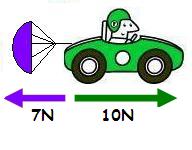


Calculate the net force shown in the diagram?
(a)

Which line shows a faster speed in the graph below?
The dotted line
The solid line
They have the same speed

What is happening to the motion of the walker in the graph?
The walker stopped walking
The walker slowed down
The walker turned around and walked towards the starting point
The walker walked the same direction the entire time

Which graph shows two runners running at the SAME speed?
A
B
Both graphs

Which graph shows a person LEAVING their house, STOPPING to tie their shoe, and then continuing in the SAME direction?
A
B
C
None of the graphs show that

What is the motion of the car in the graph?
The car is speeding up
The car is slowing down
The car is at a constant speed going back to starting point
The car is at a constant speed moving away from the starting point

What is the motion of the car in the graph?
The car is speeding up
The car is slowing down
The car is traveling at a constant speed
The car is not moving

What is the motion of the car in the graph?
The car is speeding up
The car is slowing down
The car is traveling at a constant speed
The car is not moving

What is the motion of the car in the graph?
The car is speeding up
The car is slowing down
The car is traveling at a constant speed
The car is not moving

Which graph shows the runners starting their race at the same spot?
Graph A
Graph B
Neither graph starts in the same spot
Both graphs start in the same spot

Which line shows a runner stopping closer to the "starting line" than the other?
Solid Line
Dotted Line
Both lines stop at the same point

Which line shows a slower speed on the graph?
Solid Line
Dotted Line
Both lines represent the same speed

What is the motion of the car in the graph?
The car starts off slow then speeds up
The car is not moving
The car speeds up then slows down
The car is moving at a constant speed

Which graph represents a student walking to their desk and sitting down the remainder of class?
Graph A
Graph B
Graph C
Which graph represents a student walking to their desk to sit down, then walking back to the classroom door at the end of class?
Graph A
Graph B
Graph C

At which point is potential energy greatest?
W
X
Y
Z


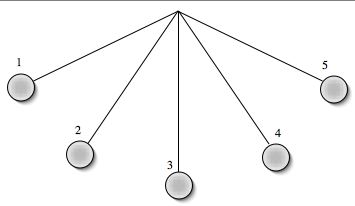

An object falling from 50m will have ___________ potential than an object falling from
30m.
greater
less
equal

A diver just before she dives off the 30m platform.
potential energy
kinetic energy

A bobsled is moving at its fastest speed around the final
turn.
potential energy
kinetic energy

A baseball just before being released by the pitcher.
potential energy
kinetic energy

A golf ball as it gains height after being hit by the driver.
potential energy
kinetic energy

A swimmer in the middle of a 50 m race.
potential energy
kinetic energy
A girl sliding down a slide
Kinetic Energy
Potential Energy
Dominos stand up on the floor
Potential Energy
Kinetic Energy
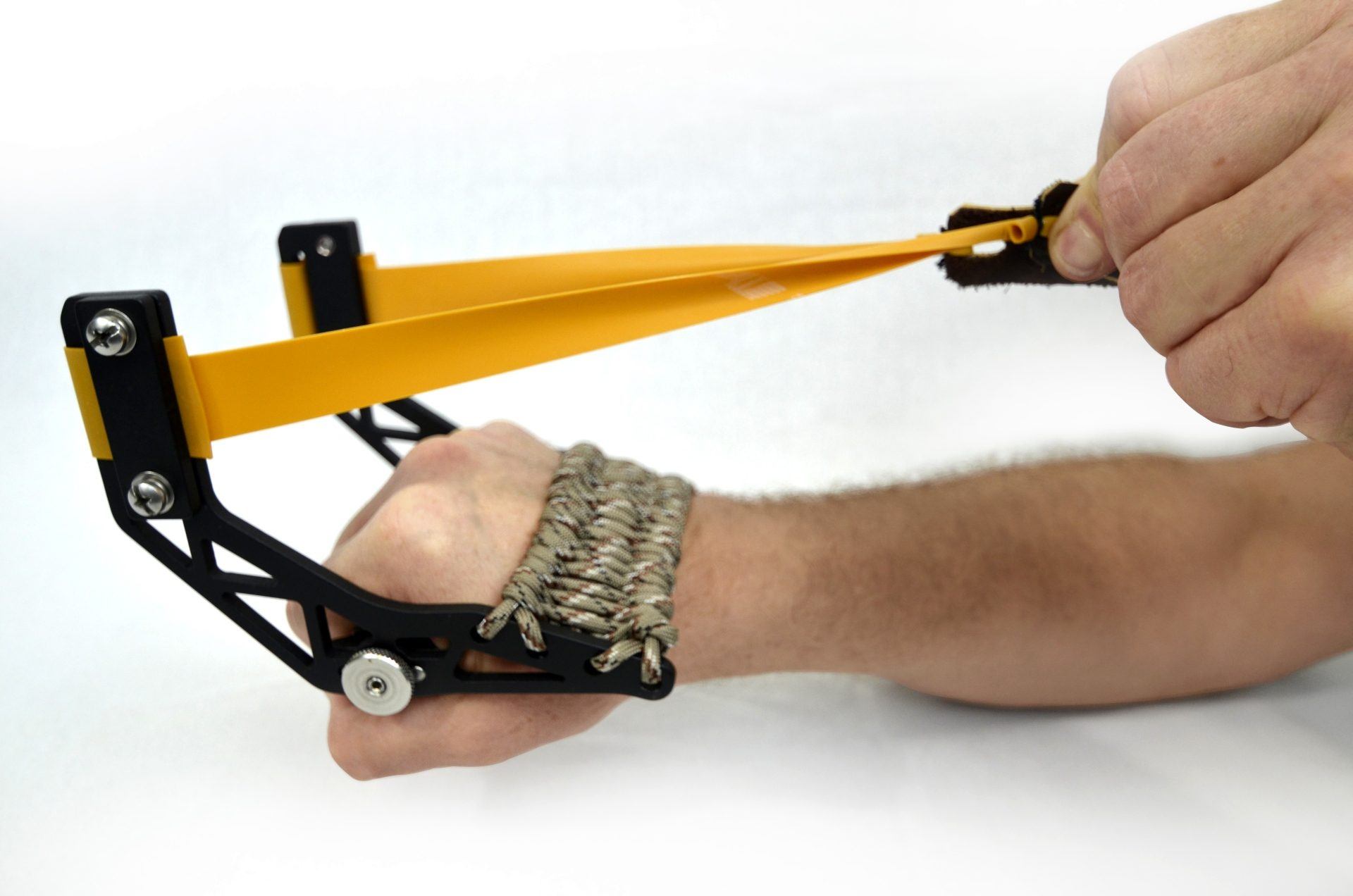

What is the energy transformation that occurs in an electric pencil sharpener?
mechanical energy to electrical energy
electrical energy to mechanical energy
radiant energy to sound energy
chemical energy to mechanical energy
Which object shows an energy transformation from electrical to mechanical?


When a car burns gasoline it creates hot air to move the pistons in the engine, which causes the car to move. What energy transformation occur from the fuel to the movement of a car?
thermal energy to mechanical energy
thermal energy to chemical energy to mechanical energy
chemical energy to thermal energy to mechanical energy
chemical energy to electrical energy

The roller coaster cart has the most kinetic energy at position-
W
X
Y
Z
Which items would have this energy transformation: mechanical energy -> sound energy?
turning on a flashlight
nuclear power plant
wind turbine turning
playing a violin


What type of energy transformation happens in hydro-electric power?
kinetic to potential
sound to mechanical
chemical to electrical
mechanical to electrical



Four containers made of different materials, each containing water at 45º C, were set out on a table. The initial temperature of the water was recorded. The temperature of the water was also recorded 15 minutes later. Which contain dropped the least amount of temperature.
Container A
Container B
Container C
Container D
Thermal energy always moves from –
large objects to small objects.
dark objects to light objects.
warm objects to cool objects.
smooth objects to rough objects.
Which of the following is an example of heat transfer by conduction?
Sunlight warming a room early in the morning.
A metal spoon getting hot in a bowl of soup.
Warm and cold water circulating in an ocean.
Hot air rising and cold air sinking on a beach.
A student notices that the saucer below a coffee cup becomes warmer after coffee is poured into the cup. Energy was transferred from –
the cup to the saucer by conduction.
the saucer to the cup by conduction.
the cup to the saucer by convection.
the saucer to the cup by convection.
Which of the following is an example of heat transfer through radiation?
A pot of soup warming on a hot burner.
A crayon melting on a hot sidewalk.
Beach sand getting warmed by the Sun.
An egg getting cooked in a pot of boiling water.
While seated next to a camp fire, a person begins to feel the warmth of the fire. Energy is transferred from –
the fire to the person by conduction.
the person to the fire by conduction.
the fire to the person by radiation.
the person to the fire by radiation.
Match the following
The total kinetic eneergy of tiny particles that make up matter; the warmer the matter becomes
Thermal Energy
Measured by a thermometer in degrees (Celsius or Fahrenhiet)
Temperature
The transfer of energy by the movement of electromagnetic waves or subatomic particles
Radiation
Heat transfer caused by the rising of hotter, less dense fluids and the falling of cooler, denser fluids
Convection
Transfer of thermal energy that occurs in solids, liquids, and gases when two substances of different temperatures touch
Conduction
Which of the following sets of tools would be most useful in an experiment measuring the rate of transfer of thermal energy in four different liquids?
Triple-beam balance, beakers, metric ruler
Hot plate, beakers, thermometers
Microscope, funnel, metric ruler
pH meter, test tubes, forceps

In an energy transfer experiment, four blocks of different temperatures are stacked. Where would energy transfer by conduction move downward, from a higher block to a lower block?
Sample 2 to Sample 4
Sample 1 to Sample 2
Sample 3 to Sample 4
Sample 1 to Sample 3

Four containers made of different materials, each containing water at 30º C, were set out on a table. The initial temperature of the water was recorded. The temperature of the water was also recorded 15 minutes later. Which container was the most effective at preventing heat transfer from the water to the environment?
Container P
Container Q
Container R
Container S

When an egg is boiled in a pot of water on the stove, there is more than one kind of heat transfer. Heat is transferred from the stove to the pot directly since they are physically touching. Heat is also transferred from the pot to the egg, carried through the water. What two kinds of heat transfer are represented?
Stove → Pot = radiation, Water → Egg = conduction
Stove → Pot = conduction, Pot → Egg = radiation
Stove → Pot = convection, Pot → Egg = conduction
Stove → Pot = conduction, Water → Egg = convection

A container of hot water was left out on a table. Some of its thermal energy was transferred to the environment. The results in degrees Celsius are shown here. What was the change in temperature resulting from this heat transfer in degrees Celsius? Record and bubble your answer below.
(a)
Which of the following is an example of conduction?
Solar energy warming a room.
Heat rising from the coils of a stove.
Hot air drying a wet towel.
Heat moving from a clothes iron to a shirt.

Four steel blocks were heated to different temperatures and stacked together as shown. In which direction will heat be transferred by conduction?
From Sample 4 to Sample 1
From Sample 2 to Sample 3
From Sample 2 to Sample 4
From Sample 3 to Sample 2
Thermal energy transfer by conduction is accomplished when heat moves from a warmer object to a cooler one by –
moving across a solid barrier.
being carried in a fluid, like air or water.
coming in direct physical contact with it.
traveling through empty space.

Water at 34º C was placed into containers made of four different materials. An initial temperature was taken, and a final temperature was taken after 10 minutes. Which container allowed the most transfer of thermal energy from the water to the environment?
Glass
Wood
Paper
Plastic

