wayground logo

Free Printable Worksheets

Font size

S
M
L
XL
Worksheets

IIT-JEE & NEET LEVEL - 12 (8-T)

Total questions: 100

Worksheet time: 2hrs 40mins

Name
Class
Date
1.
What does the picture show?
a)
A Food Web
b)
An Ecosystem
c)
A Food Chain
d)
A nice scenery
2.

Where does the food chain START?

a)

with consumers that eat grass

b)

with the sun giving energy to producers

c)

with the sun giving energy to consumers

d)

with consumers eating other consumers

3.

Breaks down and feeds on the remains of other organisms

a)

decomposer

b)

consumer

c)

producer

4.

An oak tree is a/an...

a)

Producer

b)

Primary Consumer

c)

Secondary Consumer

d)

Decomposer

5.

Which of the following is not part of the classification community?

a)

Fox

b)

Tree

c)

Sun

d)

Bear

6.
The place where an organism lives is its _________.
a)
habitat
b)
abiotic
c)
ecosystem
d)
community
7.
Temperature, light, air, water, and soil are all  _____  parts of the environment
a)
alive
b)
biotic 
c)
abiotic
d)
living
8.
All of the living and nonliving things in an area that interact with each other are called a/an ______.
a)
community
b)
habitat
c)
population
d)
ecosystem
9.
Carnivores, herbivores, omnivores, and scavengers are all examples of __________.
a)
producers
b)
consumers
c)
decomposers
d)
abiotic factors
10.
A relationship where one organism benefits and one organism is harmed is called __________.
a)
mutualism
b)
commensalism
c)
parasitism
11.
This is the branch of biology that deals with the relations of organisms to one another and to their physical surroundings.
a)
Physics
b)
Ecology
c)
Chemistry
d)
Psychology
12.
It is a biological community of interacting organisms and their physical environment.
a)
Ecosystem
b)
Biotic System
c)
Abiotic System
d)
None of the choices
13.
What is the term used to describe all living things in an ecosystem?
a)
Biotic Factors
b)
Abiotic Factors
c)
Environmental Factors
d)
Population
14.
What is the term used to describe all non-living things in an ecosystem?
a)
Biotic Factors
b)
Abiotic Factors
c)
Environmental Factors
d)
Population
15.
These are organisms that creates their own food such as plants and trees.
a)
Population
b)
Community
c)
Producers
d)
Consumers
16.
These are different groups of organisms that belong to the same species (Example: rats, rabbits, snakes)
a)
Population
b)
Community
c)
Producers
d)
Consumers
17.
When a plant is eaten by a grasshopper, the grasshopper is called
a)
Producer
b)
Primary consumer
c)
Secondary consumer
d)
Tertiary consumer
18.
When a plant is eaten by a caterpillar and the caterpillar is eaten by a frog, the frog belongs to
a)
Producer
b)
Primary consumer
c)
Secondary consumer
d)
Tertiary consumer
19.
When a plant is eaten by a caterpillar and the caterpillar is eaten by a frog, and the frog is eaten by a snake, the snake belongs to
a)
Producer
b)
Primary consumer
c)
Secondary consumer
d)
Tertiary consumer
20.
When the animal dies, what do you call those organisms that break them down?
a)
Producers
b)
Decomposers
c)
Consumers
d)
None of the choices
21.
A battery or other device which provides energy for a circuit
a)
Conductor
b)
Power source
c)
Parallel circuit
d)
Complete circuit
22.
Switch
a)
The part of a circuit which can control whether electricity flows
b)
An electrical force which occurs as electrons are built up in an object
c)
A small device that stores energy in a chemical form
d)
The area of a conductor through which a current is able to move
23.
The flow of electricity through a conductor
a)
Battery
b)
Current
c)
Static electricity
d)
Switch
24.
A small device that stores energy in a chemical form
a)
Complete circuit
b)
Switch
c)
Power source
d)
Battery
25.
a)
Power source
b)
Closed circuit
c)
Insulator
d)
Open circuit
26.
a)
Parallel circuit
b)
Series circuit
c)
Incomplete circuit
d)
Switch
27.
Electricity that flows in a closed path is called a
a)
path
b)
current
c)
circuit
28.
____________ allows electricity to flow.
a)
A conductor
b)
An insulator
c)
A magnet
29.
____________ stops the flow of electricity.
a)
A conductor
b)
An insulator
c)
A magnet
30.
To complete a circuit the switch must be
a)
unattached
b)
open
c)
closed
31.
When the switch is closed, the light
a)
comes on
b)
stays off
c)
burns out
32.
The plastic around the wire is
a)
conductor
b)
insulator
c)
decoration
33.
Two batteries in a circuit make the lights in the circuit brighter than one battery.
a)
true
b)
false
34.
If the lights are on, the circuit is
a)
closed
b)
open
35.
If the lights are off, the circuit is
a)
closed
b)
open
36.
Two types of circuits are
a)
parallel and magnetic
b)
electromagnetic and series
c)
series and parallel
37.
The flow of electricity requires a
a)
complete path
b)
incomplete path
c)
insulated current
38.

Opposite charges _______________.

a)

attract

b)

repel

c)

nothing changes

39.

Like charges _______________.

a)

attract

b)

repel

c)

nothing changes

40.

The flow of electric charge in a circuit is called _______.

a)

Heat

b)

Sound

c)

Electric Current

d)

Magnetic

41.

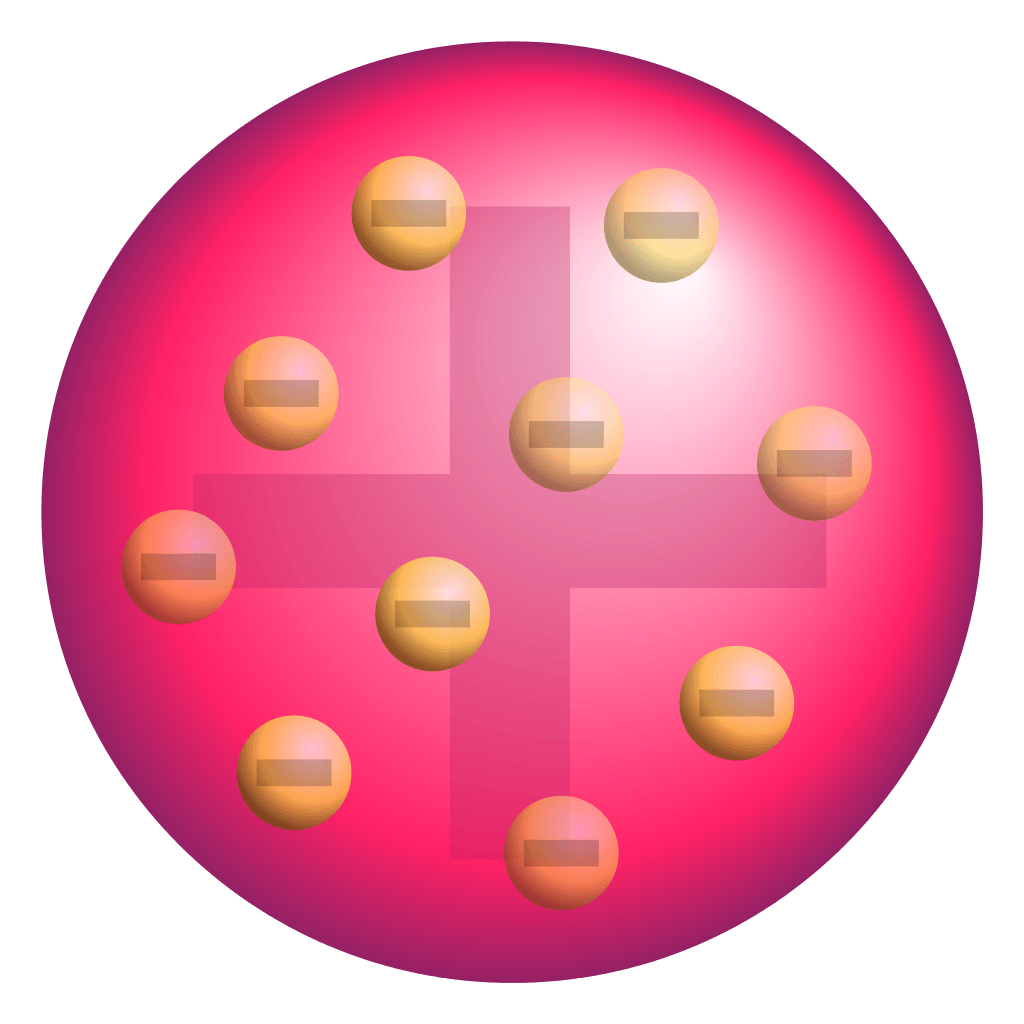
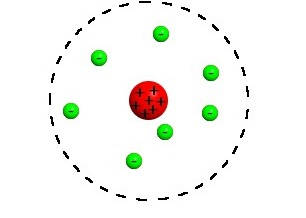
This model was developed after J.J. Thompson discovered electrons, a particle smaller than an atom. It shows electrons floating freely in a positive region.

a)

The "Plum Pudding Model" of the atom

b)

The "Rutherford Model" of the atom

c)

Democritus's model of the atom

d)

The "Quantum Mechanical Model" of the atom
42.

This model this model was the first to show a nucleus, consisting of protons and neutron. Electrons surround the nucleus but are not shown in distinct energy levels.

a)

The "Rutherford Model" of the atom

b)

The "Plum Pudding Model" of the atom

c)

The "Quantum Mechanical Model" of the atom

43.
Ernest Rutherford discovered that atoms were mostly _________________. 
a)
negatively charged
b)
positively charged
c)
electrons
d)
empty space. 
44.

Which scientist proposed the "plum pudding model" of the atom?

a)

J. J. Thomson

b)

Joseph Proust

c)

Ernest Rutherford

d)

Antoine Lavoisier

e)

John Dalton

45.

Who was the first to propose that matter consist of indivisible particle of matter called atoms?

a)

John Dalton

b)

Aristotle

c)

Democritus

d)

Plato

46.
What scientist is best known for his gold foil experiment?
a)
J.J. Tomson
b)
Ernest Rutherford
c)
John Dalton
d)
Democritus
47.

What are electrons?

a)

an atom’s central regions, which is made up of protons and neutrons

b)

subatomic particles that have negative charges

c)

subatomic particles that have neutral charges

d)

subatomic particles that have positive charges

48.

In Rutherford's famous "Gold Foil" experiment, some particles passed through the foil, some were deflected, and some were bounced straight back. This observation made Rutherford conclude

a)

gold atoms have a solid nucleus

b)

gold atoms can conduct electricity

c)

gold atoms are denser than other metals

d)

gold's elections orbit the nucleus at definite distances from the center

49.
He discovered the neutron in the nucleus and completed the current atomic model.
a)
J.J. Thomson
b)
Ernest Rutherford
c)
Niels Bohr
d)
James CHadwick
50.
He found that atoms have smaller parts and found negative electrons that he theorized were surrounded in a sphere of positive charges
a)
J.J. Thomson
b)
Ernest Rutherford
c)
Niels Bohr
d)
James Chadwick
51.
He found that atoms have smaller parts and found negative electrons that he theorized were surrounded in a sphere of positive charges
a)
J.J. Thomson
b)
Ernest Rutherford
c)
Niels Bohr
d)
James Chadwick
52.
He found the positively charged protons in the nucleus and said that electrons moved around the nucleus
a)
J.J. Thomson
b)
Ernest Rutherford
c)
Niels Bohr
d)
James Chadwick
53.
According to Ernest Rutherford, an atom is made of mostly....
a)
empty space
b)
electrons
c)
the nucleus
d)
protons
54.
The atomic particle with no charge is the...
a)
proton
b)
neutron
c)
electron
d)
nucleus
55.
The atomic particle with a positive charge is the...
a)
proton
b)
neutron
c)
electron
d)
nucleus
56.
The smallest part of the element with the properties of the element is the...
a)
electron
b)
quark
c)
atom
d)
proton
57.
The atomic particle with a negative charge is the...
a)
proton
b)
neutron
c)
electron
d)
nucleus
58.
The atomic particle with a positive charge is the...
a)
proton
b)
neutron
c)
electron
d)
nucleus
59.
According to Ernest Rutherford, an atom is made of mostly....
a)
empty space
b)
electrons
c)
the nucleus
d)
protons
60.
Which of the following was not part of John Dalton's theory of an atom?
a)
Matter can be created and destroyed
b)
All atoms of the same element are exactly alike
c)
Every compound is composed of atoms of different elements in a specific ratio
d)
All elements are composed of atoms that can not be divided
61.
Find the volume of the figure?
a)
4003 cm3
b)
336 cm3
c)
36 cm3
d)
412 cm3
62.
Find the volume of the figure?
a)
1100 in3
b)
1600 in3
c)
1200 in3
d)
1500 in3
63.
Find the Volume of the given figure.
a)
30 ft3
b)
36 ft3
c)
96 ft3
d)
11 ft3
64.
Find the surface area of this figure.
a)
148 cm²
b)
120 cm²
65.

The total surface area of a cube whose edge is "a" is

a)

4a2

b)

6a2

c)

5a2

d)

3a2

66.

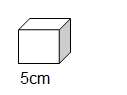
What is the volume of the cube?

a)

10cm310cm^3

b)

15cm315cm^3

c)

25cm325cm^3

d)

125cm3125cm^3

67.

What is the volume of the cuboid?

a)

344m3344m^3

b)

360m3360m^3

c)

378m3378m^3

d)

420m3420m^3

68.

What is the volume of the cube?

a)

27m327m^3

b)

36m336m^3

c)

721m2721m^2

d)

729m3729m^3

69.

What is the volume of the cube?

a)

27m327m^3

b)

36m336m^3

c)

721m2721m^2

d)

729m3729m^3

70.

What is the volume of the cuboid?

a)

144cm3144cm^3

b)

288cm3288cm^3

c)

312cm3312cm^3

d)

432cm3432cm^3

71.

What is the volume of a cube of length 4cm?

a)

 64cm364cm^3  

b)

 48cm348cm^3  

c)

 16cm316cm^3  

d)

 12cm312cm^3  

72.

To find the volume of a figure you need to use which of the following formulas?

a)

l x w

b)

l x w x h

c)

1/2 x b x h

d)

2l x 2w x 2h

73.
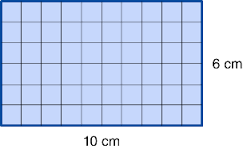
What is the area of the rectangle?
a)
15 square cm
b)
15 cm
c)
8 square cm
d)
16 cm
74.
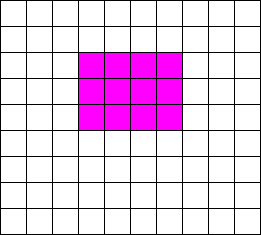
What is the total area of the pink model?
a)
3
b)
4
c)
7
d)
12
75.
Farmer Bob's son built a pen for his pet pig. The pig pen is 6 feet long and 6 feet wide.  What is the area of the pen?
a)
11 feet
b)
30 feet
c)
36 feet
d)
36 square feet
76.
1. In order to find the area of a figure you must
a)
add up all the sides.
b)
multiply length times width.
c)
count each square unit inside the figure.
d)
 multiply length times width or  count each square unit inside the figure.
77.
Find the area.
a)
17 cm2
b)
40 cm2
c)
26 cm2
d)
60 cm2
78.

What is the area?

a)

30 square units

b)

25 square units

c)

6 square units

d)

5 square units

79.

Area is the distance around a shape

a)

True

b)

False

80.

The width of the shape shown is 2 units the length is 3 units. What is the area?

a)

5 units square

b)

6 units square

c)

5 units

d)

6 units

81.
A rational number can be written as a fraction.
a)
True
b)
False
82.
Numbers like -3, -2, -1, 0, 1, 2, 3 are called
a)
whole numbers
b)
integers
c)
rational numbers
d)
natural numbers
83.
a)
Whole numbers
b)
Rational numbers
c)
Integers
84.
A worker in a silver mine descends 60 feet. Use an integer to represent the change in the worker's position.
a)
60
b)
−60 feet
c)
60 feet
d)
−60
85.
Write 'True' or 'False'
0 is a rational number
a)
TRUE
b)
FALSE
86.

Express -7 ⁄ 5 with NUMERATOR as (-35)

a)

-35 ⁄ 25

b)

-35 ⁄ 20

c)

-35 ⁄ 15

d)

-35 ⁄ 30

87.

Which of the following rational number is in STANDARD form?

a)

- 3 ⁄ 2

b)

3 ⁄ -2

c)

- 3 ⁄ -2

d)

None of the above

88.
A fraction is which type of number?
a)
Rational
b)
Irrational
c)
Integer
d)
Whole
89.
a)
Not defined
b)
Integer
c)
Natural Number
d)
Not a rational number 
90.
The multiplicative inverse of 0.7 is ____
a)
10⁄7
b)
7⁄10
c)
7⁄9
d)
Not defined
91.
Write 'True' or 'False'
-∣- x∣ = x for all rational numbers
a)
TRUE
b)
FALSE
92.
The additive inverse of (-a⁄b) is ______
a)
a⁄b
b)
b⁄a
c)
a⁄-b
d)
-b⁄a
93.

-7 is classified as...

a)

Rational

b)

Whole

c)

Natural

d)

Integers

94.

Which number would be classified as a whole number?

a)

0

b)

-17

c)

3/4

d)

-8.5

95.

Which Venn diagram best represents the relationship among integers, natural numbers, and whole numbers?

a)
b)
c)
d)
96.

Which number would represent a rational numbers?

a)

137

b)

-97

c)

0

d)

-89.5

97.

Which number is a whole number but not a natural number?

a)

-6

b)

0

c)

5

d)

9

98.

All integers are whole numbers.

a)

True

b)

False

99.

Which subset of numbers does 30/15 belong?

a)

whole, rational

b)

integers, rational

c)

whole integers, rational

d)

natural, whole, integer, rational

100.

Which number is classified as a natural number but not a whole number?

a)

3

b)

-3

c)

0

d)

3/2