wayground logo

Free Printable Worksheets

Font size

S
M
L
XL
Worksheets

IIT-JEE & NEET LEVEL- 10 (8-T)

Total questions: 100

Worksheet time: 2hrs 40mins

Name
Class
Date
1.
Can you separate salt from water using filtration?
a)
yes
b)
no
2.
Which one of the following solids is insoluble in water?
a)
sugar
b)
sand
c)
copper sulfate
d)
salt
3.

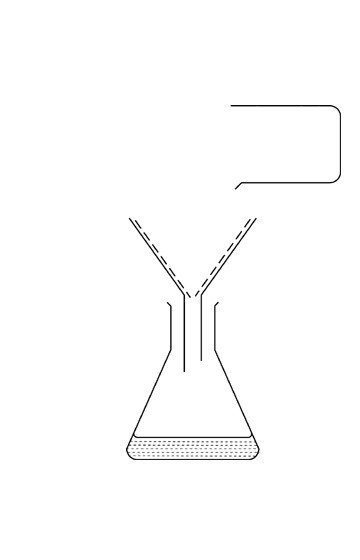
What is the separation technique for which this lab instrument is needed?

a)

sieving

b)

decanting

c)

filtering

d)

magnetic separation

4.

Which separation technique is this instrument for?

a)

Distillation

b)

Filtering

c)

Magnetic separation

d)

Sieving

5.

What separation technique does the picture show?

a)

Sieving

b)

filtering

c)

magnetic separation

d)

Distillation

6.

You've got a mixture of powdered sugar and cooking salt. What is the suitable separation technique for this mixture? Hint: the particles of cooking salt are much bigger than those of powdered sugar.

a)

filtering

b)

sieving

c)

distillation

d)

separation technique

7.

Ethanol and water have different boiling point. What would be the suitable separation technique for a mixture of both substances?

a)

Distillation

b)

Chromatography paper

c)

Sieving

8.

How would you separate the substances shown in the picture (oil and water)?

a)

by sieving

b)

by decanting

c)

by distillation

d)

by filtering

9.

What is the suitable separation technique for a mixture of iron filings and salt?

a)

sieving

b)

filtering

c)

magnetic separation

10.

What is the suitable technique for a mixture of iron filings and sand?

a)

filtering

b)

magnetic separation

c)

decanting

11.

What is the suitable separation technique for a mixture of water and CCl4 (hint: these substances are immiscible)

a)

magnetic separation

b)

decanting

c)

filtering

d)

sieving

12.

The picture shows what you get by performing a separation technique. What's its name?

a)

sieving

b)

paper chromatography

c)

decanting

d)

distillation

13.

Which separation technique is this equipment for?

a)

Sieving

b)

Decanting

c)

Paper chromatography

d)

Magnetic separation

e)

Distillation

14.

Which separation technique is the instrument shown for?

a)

sieving

b)

decanting

c)

distillation

d)

magnetic separation

15.

Which is the separation technique that doesn´t need filter paper?

a)

filtering

b)

decanting

c)

paper chromatography

16.

Sulphur is not soluble in water. If, accidentally, some sulphur drops into a glass of water. Which separation technique would you use to separate it from the water?

a)

by decanting

b)

by filtering

c)

by crystallization

d)

by sieving

17.

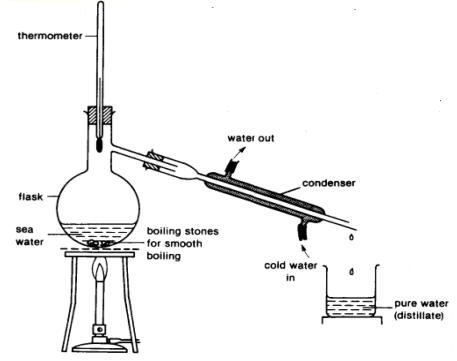
What is the name of this separation technique?

a)

Simple distillation

b)

Fractional distillation

c)

Boiling

d)

Evaporation

18.

Which of the following statements tells us that a sample of liquid is pure water?

a)

It is colourless.

b)

It leaves no residue when filtered.

c)

It boils at 100oC.

d)

It is odourless.

19.

Which separation technique is used to obtain pure water from seawater?

a)

Simple distillation

b)

Filtration

c)

Chromatography

d)

Evaporation

20.

What is the name of this separation technique?

a)

distillation

b)

filtration

c)

evaporation

d)

chromatography

21.
Heat is a form of _______________.  
a)
movement
b)
energy
c)
melting
22.
What will happen to ice if you leave it out in the room?
a)
it will melt
b)
it will stay the same
c)
it will freeze
23.
Something will melt faster in the _______________.
a)
shade
b)
freezer
c)
sun
24.
Does this give off heat?
a)
yes
b)
no
25.
Does this give off heat?
a)
yes
b)
no
26.
Does this give off heat? 
a)
yes 
b)
no
27.
Does this give off heat? 
a)
yes 
b)
no
28.
Does this give off heat? 
a)
yes
b)
no 
29.
Heat transfers from ______ objects to cold objects. 
a)
Cold
b)
Hot
c)
Convection
d)
Radiation 
30.
what is the meaning of conduction
a)
when heat transfers from objects that are not touching
b)
heat rise 
c)
cold fall
d)
when heat transfers from objects that are touching
31.
heat rises
a)
true
b)
false
32.
When things are hot molecules are moving...
a)
Fast
b)
Slow
c)
They are not moving
d)
They are moving by not fast or slow
33.
When things are cold molecules are moving...
a)
Fast
b)
Slow
c)
They are not moving
d)
They are moving by not fast or slow
34.
Heat and Temperature are the same thing
a)
True
b)
False
35.
Energy that does NOT need a medium to transfer heat is called...
a)
Radiation
b)
Conduction
c)
Convection
d)
Reflection
36.
Heat passes from...
a)
High to low
b)
Cold to hot
c)
Hot to cold
d)
Heat cannot be passed
37.
What is an insulator?
a)
Something that does NOT absorb heat very well.
b)
Something that absorbs heat.
38.
What is a conductor?
a)
Something that does NOT absorb heat very well.
b)
Something that absorbs heat.
39.
Movement of thermal energy
a)
Thermal Energy
b)
Temperature
c)
Heat
40.
Heat 
a)
Moves from hot to cold
b)
Moves from cold to hot
c)
Always rises up
d)
It depends on the molecules
41.
What does the picture show?
a)
A Food Web
b)
An Ecosystem
c)
A Food Chain
d)
A nice scenery
42.

Where does the food chain START?

a)

with consumers that eat grass

b)

with the sun giving energy to producers

c)

with the sun giving energy to consumers

d)

with consumers eating other consumers

43.

Breaks down and feeds on the remains of other organisms

a)

decomposer

b)

consumer

c)

producer

44.

Which of the following are factors that could cause extinction?

a)

Destruction of animals' habitat

b)

Climate change

c)

Pollution

d)

Increased human population (more people)

e)

ALL of the above could cause extinction

45.

Which is not an element of biodiversity?

a)

Ecosystem diversity

b)

Species diversity

c)

Genetic diversity

d)

Habitat diversity

46.

An oak tree is a/an...

a)

Producer

b)

Primary Consumer

c)

Secondary Consumer

d)

Decomposer

47.

Which of the following is not part of the classification community?

a)

Fox

b)

Tree

c)

Sun

d)

Bear

48.
An individual living thing is a/an __________.
a)
habitat
b)
ecosystem
c)
organism
d)
population
49.
The place where an organism lives is its _________.
a)
habitat
b)
abiotic
c)
ecosystem
d)
community
50.
All of the nonliving parts of an ecosystem are _______.
a)
biography
b)
biotic
c)
abiotic
d)
biology
51.
All of the living and nonliving things in an area that interact with each other are called a/an ______.
a)
community
b)
habitat
c)
population
d)
ecosystem
52.
Temperature, light, air, water, and soil are all  _____  parts of the environment
a)
alive
b)
biotic 
c)
abiotic
d)
living
53.
A group of bunnies living in the forest is an example of a __________.
a)
Population
b)
Ecosystem
c)
Individual
d)
Community
54.
Carnivores, herbivores, omnivores, and scavengers are all examples of __________.
a)
producers
b)
consumers
c)
decomposers
d)
abiotic factors
55.
A relationship where one organism benefits and one organism is harmed is called __________.
a)
mutualism
b)
commensalism
c)
parasitism
56.

In a food web, each ____________ depends on the trophic level below it for energy.

a)

consumer

b)

producer

c)

decomposer

d)

detritivore

57.

In an ecosystem, a fungus, such as the mushroom pictured here, functions as a

a)

autotroph

b)

heterotroph

c)

decomposer

d)

predator

58.

The transfer of energy from one organism to the next in an ecosystem begins with a producer. A producer is an organism that produces its own food. A consumer is an organism in a food chain that obtains energy from producers or other consumers; consumers may be herbivores or carnivores.


Which food chain correctly describes the flow of energy in an ecosystem?

a)

grass → grasshopper → fish → human

b)

grasshopper → fish → human

c)

human → fish → grasshopper

d)

human → grasshopper → fish → grass

59.

Something important is missing from this food web! The grass starts this food web. But the plant's energy comes from __________, the one picture that is missing from the food web.

a)

water

b)

the sun

c)

the air

d)

the soil

60.

In an ecosystem, a fungus, such as the mushroom pictured here, functions as a

a)

autotroph

b)

decomposer

c)

predator

d)

producer

61.
Find the area of a parallelogram with a base of 30 m and a height of 25 m
a)
750 m2
b)
375 m2
c)
705 m2
d)
110 m2
62.
Find the PERIMETER of this figure.
a)
20 square feet
b)
20 cm
c)
25 square feet
d)
20 cm sq.
63.
Find the area of the triangle.
a)
39 sq feet
b)
30.8 sq feet
c)
78 sq feet
d)
101.4 sq feet
64.
What is the area?
a)
35 cm
b)
30 cm
c)
35 sq cm
d)
12 cm
65.
Area
a)
12 in sq
b)
12 in
c)
24 in sq
d)
6 in sq
66.
find the area
a)
70
b)
35
c)
140
d)
60
67.
find the area
a)
19.5
b)
78
c)
39
d)
27
68.
What is the sum of the exterior angles of a 20-gon?
a)
180
b)
360
c)
3240
d)
162
69.

Determine the measure of a central angle in the regular polygon shown.

a)

51.4

b)

360

c)

128.6

d)

25.7

70.
Find the area.
a)
46.2 ft2
b)
92.4 ft2
c)
46.2 ft
d)
92.4 ft
71.

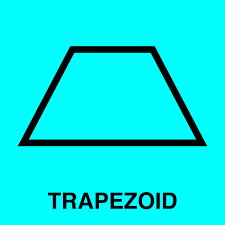
Choose the following images that are a polygons.
a)
b)
c)
d)
72.

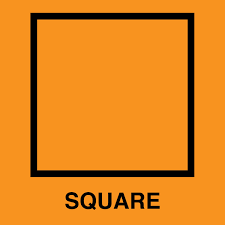
Click on the attributes that a square and rectangle have in common.

a)

opposite sides are parallel

b)

all sides are congruent

c)

four right angles

d)

adjacent sides are equal

73.

Name a property of an isosceles triangle.

a)

all sides are equal

b)

no sides are equal

c)

2 sides are equal

d)

has 1 right angle

74.

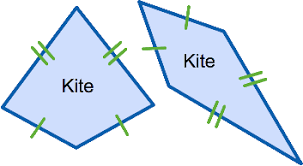
If you were to draw a kite, what do you need to make sure is true.

a)

all side are equal

b)

opposite sides are parallel

c)

adjacent sides are congruent

d)

1 pair of congruent angles

75.

How many quadrilaterals makes up this shape person?

a)

1

b)

5

c)

7

d)

8

76.
How many sides does a Quadrilateral have?
a)
4
b)
3
c)
6
d)
9
77.

Identify this polygon

a)

Concave decagon

b)

Convex octagon

c)

Concave hexagon

d)

Convex heptagon

78.

TRUE or FALSE.

A circle is a polygon.

a)

TRUE

b)

FALSE

79.

TRUE or FALSE.

A regular polygon has all different sides and all different measure angles.

a)

TRUE

b)

FALSE

80.

How many diagonals can you draw from one vertex in a hexagon?

a)

2

b)

3

c)

4

d)

5

81.
What is a possible integer that could be between -6 and 2 on a number line?
a)
4
b)
-8
c)
3
d)
-3
82.
Numbers like -3, -2, -1, 0, 1, 2, 3 are called
a)
whole numbers
b)
integers
c)
rational numbers
d)
natural numbers
83.
A rational number can be written as a fraction.
a)
True
b)
False
84.
0.8 is a rational number
a)
True
b)
False
85.
0 is a whole number
a)
True
b)
False
86.
-9 is an integer
a)
True
b)
False
87.

Which number would be classified as a whole number?

a)

0

b)

-17

c)

3/4

d)

-8.5

88.

Counting numbers that are positive

a)

absolute value

b)

opposites

c)

whole numbers

89.

Whole numbers, their opposites, and zero

a)

whole numbers

b)

integers

c)

absolute value

d)

opposites

90.

Any number that can be written as a fraction

a)

opposite

b)

rational number

c)

absolute value

91.
Is the sum of -7 + 5 positive or negative?
a)
Positive
b)
Negative
92.
Is the sum of -7 3/5 + -4 3/4 positive or negative?
a)
Positive
b)
Negative
93.
a)
Not defined
b)
Integer
c)
Natural Number
d)
Not a rational number 
94.
The multiplicative inverse of 0.7 is ____
a)
10⁄7
b)
7⁄10
c)
7⁄9
d)
Not defined
95.
The additive inverse of (-a⁄b) is ______
a)
a⁄b
b)
b⁄a
c)
a⁄-b
d)
-b⁄a
96.
a)
Commutative Property
b)
Distributive Property
c)
Associative Property
d)
None of the above
97.
a)
TRUE
b)
FALSE
98.
Which number has no reciprocal?
a)
1
b)
-1
c)
0
d)
-2
99.
Identify the largest rational number among the following numbers
a)
3⁄31
b)
4⁄31
c)
13⁄31
d)
27⁄31
100.
The reciprocal of a negative rational number is _______
a)
A positive rational number
b)
A negative rational number
c)
Can be either positive or negative rational number
d)
Not defined