
 Worksheets
Cells/Viruses
Total questions: 49
Worksheet time: 37mins
takes over the cell's functions.
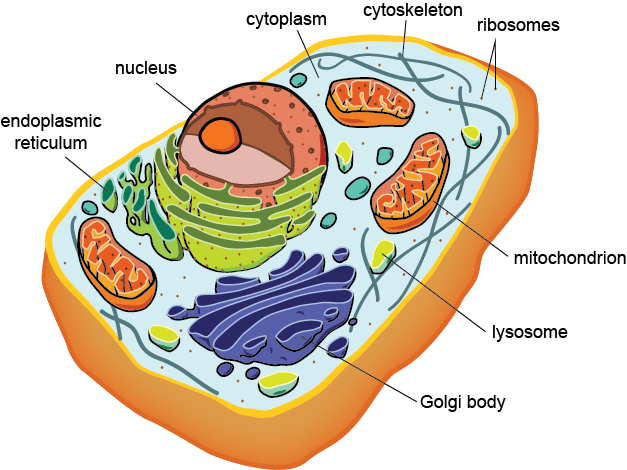
Which of the following statements is NOT part of the cell theory?
Cells are the basic unit of structure and function in all living things.
All cells are produced from other cells.
Cells are the basic unit of structure and function in all matter.
All living things are composed of cells.
The _____________ stores food, water, wastes, and other materials in both plant and animal cells.
Vacuole
Mitochondria
Cytoplasm
Nucleus
This organelle controls what goes in and out of plant and animal cells.
Cell Wall
Cell Membrane
Chloroplasts
Cytoplasm
The _____________ holds the DNA, and controls the functions of eukaryotic cells.
Nucleus
Nuclear Membrane
Mitochondria
Chloroplast
The _____________ is a gel-like fluid that fills plant and animal cells. It holds the organelles in place and gives each cell its shape.
Cytoplasm
Cell Membrane
Cell Wall
Chloroplast
What can only be found in plant cells?
Cell membrane
Vesicles
Chloroplast
Mitochondria
Cell organelles work together to maintain
homeostasis
eukarya
prokarya
organisms
What is the main difference between prokaryotic and eukaryotic cells?
Prokaryotic cells are found only in multicellular organisms
Eukaryotic cells are found only in unicellular organisms
Eukaryotic cells have a nucleus and prokaryotic cells do not
Prokaryotic cells have DNA and eukaryotic cells do not
When we exercise we use a lot more energy than when we are at rest. How to our cells help to maintain homeostasis during periods of exercise?
The cells will die from using too much energy.
The cells won't be able to keep up so they will multiply and create new cells.
The cells will slowly die from using too much energy.
The cells will create more mitochondria over time to produce more energy.
What are the three parts of the cell theory?
All cells come from pre-existing cells.
Cells are the basic unit of structure and organization in all living things.
Cells are the basic unit of structure and organization in all matter.
All organisms are made of one or more cell.s
Why is a cell membrane important to both plant and animal cells?
It stores food and water.
It controls the activities of the cell.
It uses energy from the Sun to perform photosynthesis.
It provides a barrier between the cell and its environment.
Different cell organelles perform different functions. Which cells would most likely have the largest vacuoles?
Cells found in a fox
Cells found in a maple tree
Cells found in a desk
Cells found in a butterfly
What organelle packages proteins?
Ribosome
Mitochondria
Golgi Body
Cell Membrane
A group of organs working together create an
organelle
organ
organ system
organism
Who said that "all cells come from other cells?"
Hooke
Schlieden
Schwann
Virchow
Which organelle is the control center of the cell? (It is the BOSS.)
Nucleus
Nucleolus
Golgi Body
Mitochondria
Who looked at animal cells & said "cells are the basic unit of structure & function in living things?"
Virchow
Hooke
Schlieden
Schwann
Who gave cells their name when he looked at cork?
Hooke
Van Leeuwenhook
Schlieden
Schwann
Which organelle breaks down waste & is similar to the "clean up crew?"
cell membrane
Ribosome
Lysosome
Smooth ER
Which organelle is responsible for transport of proteins & has ribosomes attached?
Chloroplast
Rough ER
Smooth ER
Cell Wall
______ has a double membrane AND creates energy for the animal cell.
Chloroplast
Mitochondria
Cell Wall
Nucleus
A specific type of cell is being studied by a scientist. She notices the cell contains a nucleus, chloroplasts, a cell membrane and cell wall. What is the correct classification of this cell?
A prokaryotic animal cell
A prokaryotic plant cell
A eukaryotic animal cell
A eukaryotic plant cell


Student 1: Cell 1 is a plant cell because it has a cell wall
Student 2: Cell 2 is an animal cell because it has a nucleus
Student 3: Cell 1 is a plant cell because it has chloroplasts
Student 4: Cell 2 is an animal cell because it has a cell membrane
Who is correct?
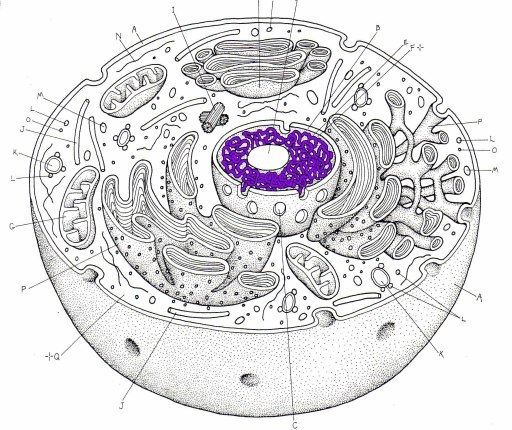
This organelle makes ribosomes. It is found in the nucleus.
nucleus
centrosome
centriole
nucleolus
This organelle is the main organizing center of the microtubules. It is involved in cell division.
centroplast
centrosome
nucleus
nucleolus

