wayground logo

Free Printable Worksheets

Font size

S
M
L
XL
Worksheets

MBS 7th Midterms

Total questions: 127

Worksheet time: 3hrs 14mins

Name
Class
Date
1.
The high temperature was -7 degrees on Monday and -15 on Tuesday.  On which day was it the warmest?
a)
Monday
b)
Tuesday
2.
What is the opposite of 12
a)
12
b)
-12
c)
24
d)
-24
3.
What is the absolute value of 25
a)
25
b)
-25
c)
0
4.
Find the sum. 
-10 + 20
a)
-10
b)
10
c)
0
d)
30
5.
What is the BASE in the power below?
43
a)
4
b)
3
c)
43
d)
64
6.
What number is the base in the following:  86
a)
6
b)
86
c)
68
d)
8
7.
What is the Exponent in the following example?
-25
a)
-2
b)
2
c)
5
d)
-25
8.
Write each product using an exponent. 
4 x 4 x 4 x 4 x 4 
a)
45
b)
54
c)
46
d)
46
9.
Write each product using an exponent. 
14 x 14 
a)
214
b)
142
c)
14
d)
1414
10.
Write each product using an exponent. 
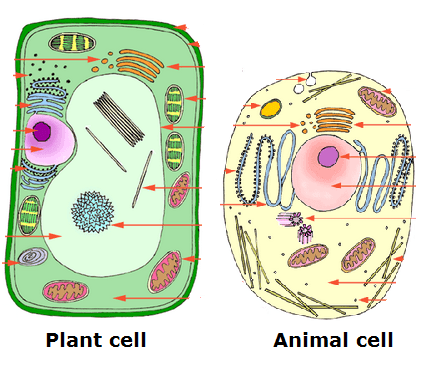
7 x 7 x 7 x 7 x 7 x 7 x 7 x 7 
a)
77
b)
78
c)
87
d)
79
11.
Write each product using an exponent. 
7 x 7 x 7 x 7 x 7 x 7 x 7 x 7 
a)
77
b)
78
c)
87
d)
79
12.
What is another way to write 63?
a)
6 × 6 × 6
b)
3 × 3 × 3 × 3 × 3 × 3
c)
6 + 6 + 6
d)
6 × 3
13.
What is another way to write x4?
a)
x ∗ 4
b)
4 ∗ 4 ∗ 4 ∗ 4 ∗ 4
c)
x  ∗  x ∗  x  ∗  x
d)
x + x + x + x
14.
Which is equivalent to 5 x 5 x 5 x 5
a)
53
b)
54
c)
45
d)
55
15.
How do you write 5x5x5x5x5x5x5 as an exponent?
a)
57
b)
56
c)
75
d)
5
16.
10x10x10x10 is equal to which exponent?
a)
1000
b)
103
c)
104
d)
410
17.
(34)(37)
a)
328
b)
33
c)
3-3
d)
311
18.
7⁰
a)
1
b)
7
c)
0
d)
-7
19.
n²⋅n⁴⋅n⁵
a)
n¹¹
b)
n⁴⁰
c)
n¹³
d)
n²²
20.
a)
a
b)
b
21.
8⁷ ⁄ 8²
a)
8⁵
b)
8⁹
c)
8¹⁴
d)
1⁵
22.
Evaluate this expression using the quotient rule.
a)
95
b)
99
c)
15
d)
9-5
23.
Simplify the following:
y6/y4
a)
y10
b)
y2
c)
y-2
d)
1/y2
24.
√ 16 
a)
8
b)
3
c)
4
d)
6
25.
What is the square root of 25?
a)
5
b)
12
c)
3
d)
6
26.
What do we call √ ?
a)
radicand
b)
radical symbol
c)
cube root
d)
index
27.
172 =
a)
34
b)
289
c)
225
d)
324
28.
11=
a)
22
b)
44
c)
144
d)
121
29.
What is the Square Root of 289?
a)
17
b)
16
c)
15
d)
18
30.
A perfect square is when a whole number is multiplied by itself?
a)
FALSE
b)
TRUE
31.
All the following are Perfect Squares except for which one?
a)
81
b)
121
c)
361
d)
198
32.
Between which two whole numbers is the
√5?
a)
1 and 2
b)
2 and 3
c)
3 and 4
d)
4 and 5
33.
Between which two whole numbers is the square root of 277?
a)
15 and 16
b)
16 and 17
c)
18 and 19
d)
14 and 15
34.
500
a)
Is a perfect square.
b)
Is not a perfect square.
35.
196
a)
Is a perfect square.
b)
Is not a perfect square.
36.
125
a)
Is a perfect square.
b)
Is not a perfect square.
37.
144
a)
Is a perfect square.
b)
Is not a perfect square.
38.
244
a)
Is a perfect square.
b)
Is not a perfect square.
39.
0
a)
Is a perfect square.
b)
Is not a perfect square.
40.
0
a)
Is a perfect square.
b)
Is not a perfect square.
41.
Estimate the square root.
a)
3
b)
4
c)
5
d)
6
42.
What is the square root of 4?
a)
9
b)
4
c)
2
d)
10
43.
Which would be the next number in the pattern? 
36, 49, 64, 81 __
a)
82
b)
18
c)
64
d)
100
44.
Which statement is NOT true?
a)
√169 = 13
b)
152 = 225
c)
42 = √16
d)
√164 = 18
45.
A scientific name consists of 
a)
Genus and Order
b)
Genus and Domain
c)
Genus and species
d)
Kingdon and Phylum
46.
The most general in the order of classification is?
a)
Kingdom 
b)
Phylum 
c)
Class 
d)
Order
47.
The most specific of the classifications is?
a)
class 
b)
order 
c)
genus 
d)
species
48.
 An autotroph feeds on other organisms?
a)
True 
b)
False
49.
Binomial Nomenclature means?   
a)
classification
b)
characteristics
c)
2 name system
50.
A heterotroph means?
a)
feeds itself
b)
feeds on other organisms
c)
2 word name
d)
8 legged
51.
Which term means "True Nucleus" or cell(s) with a nucleus?
a)
Eukaryotes
b)
Prokaryotes
c)
Multi-cellular
52.

_____ kicked the ball. John kicked the ball to ____.

a)

her / she

b)

I / me

c)

him / he

d)

me / I

53.

Where did the boy go? _____ went to school.

a)

Her

b)

He

c)

She

d)

Him

54.

I didn't see _____.

a)

he

b)

him

55.
a)
a
b)
b
c)
c
d)
d
56.
a)
a
b)
b
c)
c
d)
d
57.
a)
a
b)
b
c)
c
d)
d
58.

Type Taco Bell

(a)  

59.

Type Samsung is better than Apple

(a)  

60.

Type Mason likes samung and hates apple

(a)  

61.
How would you write 564,000,000 in scientific notation?
a)
5.64 x 10⁻⁷
b)
5.64 x 10⁶
c)
5.64 x 10⁸
d)
56.4 x 10⁷
62.
Scientific Notation is made up of two number parts. The second part is a power of base 10.
a)
True
b)
False
63.
The rule of scientific notation is to write all exponents with a base of ____.
a)
50
b)
5
c)
100
d)
10
64.
When writing a number in scientific notation, the first number must be greater than 1, but less than 10.
a)
False
b)
True
65.
Which property is this an example of?
6 x 7 = 7 x 6
a)
Associative Property of Multiplication
b)
Commutative Property of Multiplication
c)
Inverse Property of Multiplication
d)
Distributive Property
66.
Rewrite (9 x 6) x 5 using the associative property.
a)
270
b)
9 x 30
c)
9 x (6 x 5)
d)
5 x 9 + 5 x 6
67.
Which of these illustrates the zero property of multiplication?
a)
4 x (5 x 6) = (4 x 5) x 6
b)
6 (9 + 1) = (6 x 9) + (6 x 1)
c)
4 x (56) = (45) x 6
d)
5 x 0 = 0
68.
Which property is this an example of?
9 x 1 = 9
a)
Identity Property of Multiplication
b)
Commutative Property of Multiplication
c)
Associative Property of Multiplication
d)
Multiplicative Inverse
69.
The _______________ property of addition states that any number plus zero equals the other number.
a)
identity
b)
commutative
c)
associative
d)
Inverse
70.
4 + 3 + (2 + 5) = 4 + (3 + 2) + 5
a)
Commutative Addition 
b)
Associative Addition 
c)
Commutative Multplication 
d)
Associative Multiplication 
71.
3 + (12 + 8) = 3 + (8 + 12) 
a)
Associative Addition 
b)
Associative Multiplication 
c)
Commutative Addition 
d)
Commutative Multiplication 
72.
This property tells us that when we change the order of numbers when we are adding, the answer does not change.  
a)
Commutative Addition
b)
Commutative Multiplication
c)
Associative Addition
d)
Associative Multiplication
73.
3(w + 4) = 3w + 12 is an example of...
a)
Inverse Property
b)
Distributive Property
c)
Multiplicative Inverse
d)
Associative Property
74.
If the property is Identity of Addition what is the answer to this equation?
0 + 5 =______
a)
2
b)
3
c)
55
d)
5
75.
Which property of multiplication is shown below:
(5 × 8) × 6 = 5 × (8 × 6)
a)
Commutative Property
b)
Associative Property
c)
Identity Property
d)
Zero Property
76.
Which property of multiplication is shown below:
17 × 113 = 113 × 17
a)
Commutative Property
b)
Associative Property
c)
Identity Property
d)
Zero Property
77.
What state is this?
a)
Alabama
b)
Kentucky
c)
Virginia
d)
Pennsylvania
78.
Is this state in the North (Union) or South (Confederacy)?
a)
North
b)
South
79.
Is this state in the North (Union) or South (Confederacy)?
a)
North
b)
South
80.
Is this state in the North (Union) or South (Confederacy)?
a)
North
b)
South
81.
Is this state in the North (Union) or South (Confederacy)?
a)
North
b)
South
82.
Is this state in the North (Union) or South (Confederacy)?
a)
North
b)
South
83.
Is this state in the North (Union) or South (Confederacy)?
a)
North
b)
South
84.
Is this state in the North (Union) or South (Confederacy)?
a)
North
b)
South
85.
Is this state in the North (Union) or South (Confederacy)?
a)
North
b)
South
86.
a violent action in opposition to a government or law
a)
Domesticated 
b)
Missionaries 
c)
Revolt
87.
the treatment of people as property. People who are denied freedom in this way are said to be enslaved.
a)
Conquistador
b)
Missionaries
c)
Domisticated
d)
Slavery
88.
In the American Revolution, the Patriots were fighting for
a)
Britain
b)
France
c)
America's freedom from Britain
89.
In the American Revolution, the Loyalists wanted
a)
America to be free of Britain
b)
America to remain loyal to Britain
90.
The Declaration of Independence was a document which 
a)
formed a new government for America
b)
told the world the colonists complaints against the King of England
91.
The Declaration of Independence was signed on 
a)
December 25, 1770
b)
July 4, 1776
92.

A national bank

a)

Federalist

b)

Democratic-Republican

93.
Directs all cell activities "Brain or Control Center of cell"
a)
Lysosomes
b)
Nucleus
c)
ribosomes
d)
Mitochondria
94.
Jelly-like substance found inside cell that acts as a medium for chemical reactions within the cell
a)
Nuclear Membrane
b)
Golgi Body
c)
Cytoplasm
d)
Ribosome
95.
Packages the proteins made by the ribosomes so they can be sent out of the cell. The UPS store of the cell
a)
Ribosomes
b)
Vacuole
c)
Cell Membrane
d)
Golgi Body
96.
"powerhouse of the cell" breaks down sugar molecules to release energy, site of cellular respiration, double membrane, self-replicating, contains own DNA, cristae
a)
Mitochondria
b)
Chloroplast
c)
Cell Wall
d)
Vesicle
97.
"Storage tanks" Can hold food, water or waste for the cell
a)
Ribosomes
b)
Vacuole
c)
Chloroplast
d)
Nucleolus
98.
Makes proteins for the cell, can be found attached to the endoplasmic reticulum or free in the cytoplasm
a)
Cell Wall
b)
Golgi Body
c)
Ribosome
d)
Cytoplasm
99.
"Stomach of the cell" Helps the cell digest food, waste and worn out cell parts
a)
Cytoplasm
b)
Cytoskeleton
c)
Cell Wall
d)
Lysosomes
100.
Produces ribosomes and rRNA( stuff ribosomes are made of)
a)
Lysosomes
b)
Nucleolus
c)
Cell Wall
d)
Golgi Body
101.
"Gatekeeper" Separates the cell from the rest of the environment and helps control what passes in and out of the cell.  Semi-permeable: allows some materials to pass through but not all
a)
Cell Wall
b)
Cytoplasm
c)
Mitochondria
d)
Cell Membrane
102.
A special plastid that contains chlorophyll a pigment that captures the sun's energy to produce glucose in a process called photosynthesis
a)
Chloroplast
b)
Cell Membrane
c)
Cell Wall
d)
Nuclear Membrane
103.
Rigid outer layer made of cellulose that supports and protects the cell (plant, fungi, and bacterial cells)
a)
Nucleolus
b)
Golgi Body
c)
Cell Wall
d)
Cytoskeleton
104.
Stores and Transports substances from the Golgi Body to the cell membrane for export. "The UPS truck of the cell"
a)
Ribosome
b)
Lysosome
c)
Vesicle
d)
Vacuole
105.

What distinguishes a plant cell from an animal cell? (How do you tell them apart) Hint: There's 3 ways (Check all 3)

a)

Central Vacuole

b)

Mitochondria

c)

Cell Wall

d)

Ribosomes

e)

Chloroplasts

106.

The 3 parts of the Cell Theory are...?

a)

All living things are composed of cells

Cells are the basic units of structure and function in living things

All cells are produced from other cells

b)

All living things are composed of cells

Cells are the basic units of dance and vibes in living things

All cells are destroyed from other aliens

c)

All living things are composed of Jell-O

Cells are the basic units of structure and function in living things

All cells are produced from factories in Canada

d)

All living things are composed of cells

Cells do karate and practice eating whole pies in their free time

All cells are produced from other cells

107.

Our bodies use this Bio-molecule as it's building material. Often found in meats, eggs, and dairy products.

a)

Carbohydrates

b)

Proteins

c)

Lipids

d)

Baconidis

108.

I like to be thought of as the "storage bubble" for both plant and animal cells. I am a...

a)

Cell Membrane

b)

Cytoskeleton

c)

Vacuole

d)

Endoplasmic Reticulum

109.

Photosynthesis takes place within me. I am a...

a)

Mitochondria

b)

Cell Wall

c)

Chlorine

d)

Chloroplast

110.
Seventy feet above sea level
a)
positive
b)
negative
111.

Which organelle is responsible making food (Glucose) using sunlight?

a)

Cell Membrane

b)

Nucleus

c)

Chloroplast

d)

Mitochondria

112.

Select all that are products of Photosynthesis.

a)

Water

b)

Carbon Dioxide

c)

Oxygen

d)

Sunlight (Light Energy)

e)

Glucose (Sugar/food)

113.

Which organelle stores water for use in photosynthesis?

a)

Chloroplast

b)

Cell Membrane

c)

Vacuole

d)

Nucleus

114.

Is Glucose (C6H12O6) a Raw Material (Ingredient) or Product of Photosynthesis?

a)

Product

b)

Raw Material

c)

Neither

115.

How does most of the water needed by the plant get into its leaves?

a)

It enters through the stomata

b)

The roots absorb it and then it travels up the stem

c)

It's made during a chemical reaction in the leaf

d)

The flowers capture water and deliver it to the leaves

116.
Why do plants conduct photosynthesis?
a)
To make light
b)
To make mitochondria
c)
To make glucose
d)
To release carbon dioxide
117.
How does carbon dioxide get into the leaves of a plant?
a)
It's absorbed by the roots
b)
It's made in a chemical reaction in the stem
c)
It enters through the stomata
d)
It goes through the flowers
118.
Which choice correctly shows the gases that enter and exit plants during photosynthesis?
a)
Enter: Oxygen
Exit: Carbon dioxide
b)
Enter: Water vapor
Exit: Glucose
c)
Enter: Carbon dioxide
Exit: Oxygen
d)
Enter: Light
Exit: Water vapor
119.
Which of the following is the correct equation for PHOTOSYNTHESIS?
a)
CO+ light + H2O --> O+ Sugar
b)
CO+ sugar + H2O --> O+ light
c)
O2 + light + H2O --> CO+ Sugar
d)
CO+ O2 + H2O --> Light+ Sugar
120.
What process occurs when light energy is captured in autotrophs and converted into sugar?
a)
Photosynthesis
b)
Cellular Respiration
121.
Which gas is removed from the atmosphere during photosynthesis?
a)
hydrogen
b)
oxygen
c)
nitrogen
d)
carbon dioxide
122.
What are the products of photosynthesis?
a)
water and carbon dioxide
b)
oxygen and glucose
c)
oxygen and carbon dioxide
d)
oxygen and water
123.
Which of the following is not needed for photosynthesis to occur?
a)
sunlight
b)
carbon dioxide
c)
water
d)
oxygen
124.

Oxygen (O2) is a reactant material of which process?

a)

Photosynthesis

b)

Cellular Respiration

125.
Cellular respiration is a cellular process that occurs in the cells of –
a)
plants
b)
Plants and Animals
c)
Animals
d)
None
126.
What are the two reactants of cellular respiration?
a)
C6H12O6 & 6CO2
b)
6 CO2 & 6H2O
c)
C6H12O& 6O2
d)
6CO2 & 6O2
127.
Fermentation involves
a)
aerobic respiration
b)
anaerobic respiration