
 Worksheets
Lowe POE Final Exam
Total questions: 125
Worksheet time: 5hrs 53mins
The unit of resistance is....
Volts
Siemens
Ohms
Amps
You measure voltage..
Through a resistor
Across a resistor
Around a resistor
On a resistor
You measure current..
Across a resistor
Through a resistor
Over a resistor
In a resistor
Complete circuit is also known as _____________
Short circuit
Open Circuit
Closed Circuit
Finished Circuit
SI unit for Reactance is ___________________.
Joule
Ohm
Siemens
Hertz
SI unit for Power is ___________________.
Joule
Ohm
Watt
Volt
If one bulb in series circuit is broken or removed, current still flows. The remaining bulbs do light up.
True
False
If one bulb breaks or removed in parallel circuit, other bulbs on the circuit remain lit.
True
False

Which engineer may design a GPS for your vehicle?
mechanical engineer
computer engineer
electrical engineer
agricultural engineer

Using technological and scientific knowledge to solve practical problems is call _______________.
Math
Invention
Innovation
Engineering

An ______________ engineer may evaluate the effects of global warming on food production.
chemical
agricultural
mechanical
electrical

A ________________ engineer may create a robot to discover water on a planet.
mechanical
electrical
computer
chemical
A model that can be tested and redesigned is called a...
product
prototype
process
Definition Of Force
Force is a gravitational force upon an object resulting interaction with another object.
Force is a action upon an object resulting from the object’s to move
Force is a push or pull upon an object resulting from the object’s interaction with another object.
Force is a action on object resulting the object’s to have force
SI Unit for force
Newton (N) @ kgms-2
Meter(M)/
Second(S)
Joule
Meter(M)/
Second(S)-2
Correct example of Force
A box of book
Climbing a mountain
Walking down a street
Pushing a trolley in supermarket
What is weight?
The force of object on the gravity
The force of gravity on the object
The force of moving object to the object force
The gravitational force of gravity on the object
What is ABET, Inc?
A category of engineering.
Absolute Biological Engineering Technology.
A recognized accreditor for college and university programs in applied science, computing, engineering, and technology.
A recognized accreditor for college and university programs in mathematics, statistics and probability.
What is Mass?
The amount of material in an object
The amount of density in an object
The amount of force in an object
The amount of gravitational force in an object
What are the 4 major categories of engineering?
Mechanical, Chemical, Civil, Electrical
Mechanical, Biomedical, Civil, Electronics
Mechanical, Chemical, Structural, Electrical
Mechanical, Biomedical, Structural, Electrical
What engineering is this? Researches, develop, design, manufacture, and maintain devices that produce or consume power.
Civil
Electrical
Chemical
Mechanical
Compression is ...
The strength a material has to resist being pulled apart. If you glue something to the ceiling, the weight of the object tests the glue’s tensile strength.
A material is in compression when its particles are being pushed together.
The action of twisting one end of an object/material relative to the other end.
Tension is ...
The action of twisting one end of an object/material relative to the other end.
The strength a material has to resist being pulled apart. If you glue something to the ceiling, the weight of the object tests the glue’s tensile strength.
A material is in compression when its particles are being pushed together.
Torsion is ...
The strength a material has to resist being pulled apart. If you glue something to the ceiling, the weight of the object tests the glue’s tensile strength.
A material is in compression when its particles are being pushed together.
The action of twisting one end of an object/material relative to the other end.
This type of bridge carry a combination of compression and tension forces and is less bulky (heavy) than other types of bridges.
Beam Bridge
Arc Bridge
Truss Bridge
Cable-stayed Bridge
A simple machine made of a plank and fulcrum
pulley
lever
wheel & axel
Incline plane
wedge

What simple machine is in this image
Wedge
Lever
screw
wheel and axel
Incline plane
an energy resource that takes millions of years to form from the remains of plants and animals, such a coal, oil, and natural gas
nonrenewable
renewable
the splitting of uranium atoms to release energy.
geothermal
wind
nuclear
natural gas
turbines harness the movement of air and convert it to useable energy
wind
biomass
natural gas
hydropower
Calculate the energy released from a battery in a hand vacuum cleaner that was switched on for 45 s. The voltage drop was 6 V and the current was 0.30 A.
35 J
81 J
42 J
82 W
Calculate the power rating of an electric toaster that uses 210 000 J while toasting bread for 140 s
1500 J
1200 W
1500 W
1300 J
Calculate the percent efficiency of an electric motor that uses 15 000 J of energy to produce
11 500 J of useful movement.
76.6%
82.3%
75.4%
23.3%
Calculate the cost of operating a heater of 1.75kw for 20 hours at rate of $0.13 per kwh?
$6.75
$4.55
$53.43
$45.53
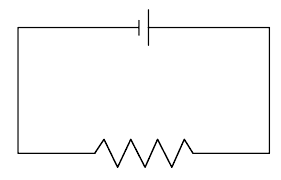
Resistor symbol is


Potentiometer symbol is
LED positive is
Longer pin
Shorter pin
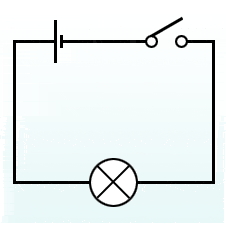


What is the centroid of the following object?
X=2 in, Y=1 in
X=1 in, Y=2 in
X=4 in, Y=2 in
X=2 in, Y=4 in

What is the centroid of the following object?
X=1 in, Y=2 in
X=3 in, Y=1.5 in
X=2 in, Y=1 in
X=1.5 in, Y=3 in

What is the centroid of the following object?
X=2.5 in, Y=2.5 in
X=5 in, Y=5 in
X=1.06 in, Y=2.5 in
X=1.67 in, Y=1.67 in

What is the centroid of this object?
x = 2.71 in, y = 2.71 in
x = 3 in, y = 3 in
x = 2.75 in, y = 2.75 in
x = 3.14 in, y = 3.14 in
If given a complex shape how do you find the true centroid?
Break it into smaller shapes and add the centroid locations together
Break it into smaller shapes and average the centroid locations
Break it into large shapes and subtract the smallest from the largest
Multiply the centroid locations with the shape area, add the products up, divide by total shape area
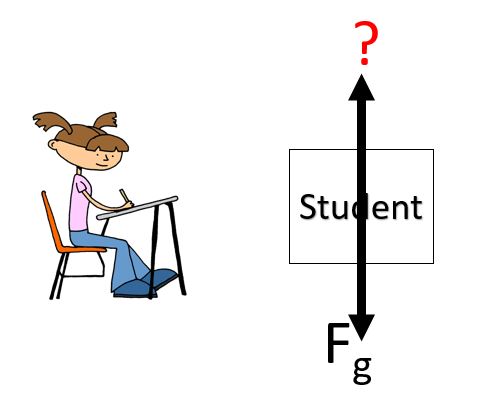
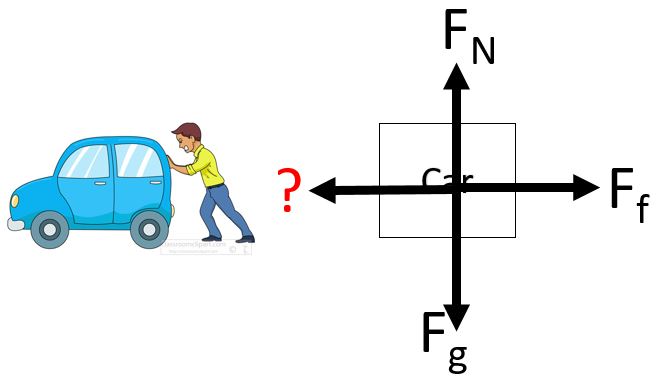
Whenever an object is moving, there is always this force opposing the motion:
inertia
momentum
friction
applied force
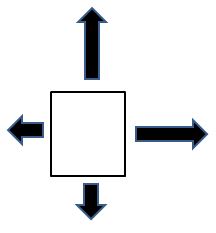
This object would be moving (pick all that are correct):
up
down
left
right
The down-arrow in this diagram is most-likely:
gravity
normal
a push or pull
friction

What forces are on a leopard laying on a log?
Fg & Fapp
Fb & Fg
Fg & FN
Ff & FN
A mathematical property of a cross section (measured in inches) that gives important information about how that cross-sectional area is distributed about a centroidal axis:
Centroid Principles
Moment of Inertia
Modulus of Elasticity
Beam Deflection
The ratio of the increment of some specified form of stress to the increment of some specified form of strain. Also known as coefficient of elasticity, elasticity modulus, elastic modulus:
Centroid Principles
Moment of Inertia
Modulus of Elasticity
Beam Deflection

Beam A and B are the same material and same dimensions. What distinguishes beam A from beam B?
Beam A will have a greater resistance to bending because it has a lower moment of inertia.
Beam A will have a greater resistance to bending because it has a higher moment of inertia.
Beam B will have a greater resistance to bending because it has a lower moment of inertia.
Beam B will have a greater resistance to bending because it has a higher moment of inertia.
Correct formula for calculating beam deflection:


In the formula above, how to do read the 'Σ' symbol?
Average of
Product of
Sine of
Sum of

Given the information above, calculate the beam deflection for Beam A:
.12 inches
1.39 inches
.53 inches
.24 inches
Flashback: Second Law of Thermodynamics
Thermal energy can change form and location, but it cannot be created or destroyed
Law of energy conservation applied to a thermal system
Thermal energy flows from hot to cold
The transfer of thermal energy by movement of fluid (liquid or gas)
Flash-forward: soh cah toa
The three ratios for electronic circuits
a phrase to remember the three trigonometric functions
Relationships of three types of trusses
Names of the three blind mice
Flashback: Thermal Energy Transfer Equation


Compare the maximum deflection distance for two boards made of yellow pine with a cross-section of 3 in. by 5 in.
If the two boards experience 1000 N point load at the center of the beam, but one board is 3 times longer, then which of the following is true?
The longer board deflects 27 times more.
The longer board deflects 9 times more.
The longer board deflects 3 times more.
The shorter board deflects 8 times more.

Using the stress-strain curves provided, which of the two materials experiences more plastic deformation?
Material #1
Material #2
Using the stress-strain curves provided above, which of the two materials shown is more brittle?
Material #1
Material #2
What does the Moment of Inertia describe?
An objects stiffness related to its shape
An objects stiffness related to its chemical properties
An objects rotation because of inertia
An objects rotation because of force
What does the Modulus of Elasticity describe?
An objects stiffness based on its shape
An objects stiffness based on its chemical properties
An objects rotation because of inertia
An objects rotation because of force
Why does a beam's orientation change it's Moment of Inertia? (Choose the BEST option)
You are changing what the measured Height is, which heavily impacts Inertia Calculations
You are changing the measured Base, which heavily impacts Inertia Calculations
You are changing the beam's length, which heavily impacts Inertia Calculations
Beam orientation doesn't matter, the Moment of Inertia stays the same.

How many members are seen in the truss bridge pictured here?
2
3
4
5

A roller support moves with forces applied to the truss bridge. How many reactions does roller support have?
1
2
3
None

A pinned support, seen on the left side in this truss bridge, has how many reactions?
1
2
3
None

How many joints are seen in the truss bridge pictured here?
2
3
4
5

Considering the method of joints, is the truss bridge shown here statically determinate or statically indeterminate?
Statically determinate
Statically indeterminate

This bridge contains one pinned support and one roller support. How many reactions doe s this bridge have?
1
2
3
4

How many joints are seen in this bridge?
1
2
3
5

How many members are seen in the this truss bridge?
8
7
6
5


Considering the methods of joints, is this bridge statically determinate or statically indeterminate?
Statically Determinate
Statically Indeterminate
The forces that pulls a material apart is...
compression
tension
torsion
shear
The force of squeezing a material together is...
compression
tension
torsion
bending




Which is an example of decreasing entropy in a closed system?
Boiling water
Freezing water
Cells in a body coming together
Ice melting
The 1st law of Thermodynamics
Energy can not be created or destroyed. It just changes forms.
Energy can only be created by the sun
Some energy is lost to the environment.
2nd law of thermodynamics
Every time energy changes form, some of it is lost to the environment
Energy can't be created or destroyed
All energy generates heat
Conductor
A material that thermal energy travels through easily
A material that energy does NOT transfer through easily
Energy that travels in the form of electromagnetic waves
Convection
The transfer of thermal energy through liquids and gases
The transfer of thermal energy through solids
The transfer of thermal energy as electromagnetic waves
What is effort (input) force?
the force one exerts on a machine
the force which an effort force must overcome in order to do work on an object via a simple machine.
the force the machine exerts on a object
the output work times the input distance


A box of weight W is lifted by a force F using a lever as shown below.
What is the mechanical advantage of the lever (MA=Input Distance/Output Distance)?
0.5
2
3
6


How much effort would it take to lift Lever A?
60 N
50N
40 N
30 N
A simple gear train is composed of three gears. Gear A is the driver and has 60 teeth, gear B has 40 teeth, and gear c has 15 teeth. If the output at gear C is 300 RPM, what is the input torque at gear A?
600 RPM
1200 RPM
75 RPM
2400 RPM

If the small gear is driving the large gear, what is happening to the torque (TRACCION)?
Torque is increasing
Torque is decreasing
Torque remains constant
Not enough information to answer the question

Which gear train would you use to apply the force necessary to ride up a hill?
A
B

