Wayground logo

Free Printable Worksheets

Font size

S
M
L
XL
Worksheets

Earth Science Pre-Assessment for 8th Graders

Total questions: 50

Worksheet time: 37mins

Name
Class
Date
1.

The Theory of Continental Drift proposes that the 7 major continents were once joined together as a supercontinent called...

a)

Mars

b)

Ethiopia

c)

Pangea

d)

Utopia

2.
This picture is a sea arch. As erosion from ocean waves continues, what will most likely happen to the hole in this landform?
a)
It will become larger
b)
It will fill with sediment
c)
it will remain the same size
d)
it will be covered with water
3.
The process that moves weathered rocks is called
a)
erosion
b)
gravity
c)
layering 
d)
folding
4.
A mountain range is MOST LIKELY formed due to 
a)
erosion of the land around a mountain
b)
deposition from a nearby river that results in soil accumulated over time
c)
they have always existed, but due to their density, they are never changed
d)
tectonic plates shifting during an earthquake
5.
Shifting pieces of the Earth's crust are called
a)
tectonic plates
b)
volcano
c)
magma
d)
island
6.
The type of plate boundary where two plates come together is a .....
a)
Convergent Boundary
b)
Divergent Boundary
c)
Transform Boundary
d)
Plate Boundary
7.
What type of event will occur at this boundary?
a)
Earthquake
b)
Volcano Eruption
c)
Tornado
d)
Mountain Building
8.
Which layer of the earth is the thinnest? 
a)
Mantle
b)
Inner Core
c)
Outer Core
d)
Crust
9.
Which type of rock results from melting and cooling of magma?
a)
Igneous
b)
Metamorphic
c)
Sedimentary
d)
Extrusive
10.
Which type of rock forms from extreme heat and pressure?
a)
Igneous
b)
Sedimentary
c)
Organic
d)
Metamorphic
11.
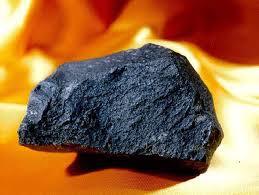
This rock was found near the mouth of a volcano. What type of rock is this?
a)
Sedimentary
b)
Igneous
c)
Metamorphic
12.
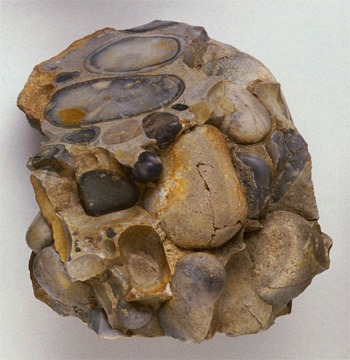
This rock was formed by smaller pieces of rock that settled at the bottom of a lake millions of years ago. What type of rock is this?
a)
Sedimentary
b)
Igneous
c)
Metamorphic
13.
What are the 3 major types of rocks?
a)
Igneous, Metamorphic, Sedimentary
b)
Metamorphic, Igneous, Cementation
c)
Brown, Red, Gray
d)
Streak, Hardness, Breakage
14.
Liquid water changing slowly into a gas and rising into the atmosphere is called
a)
evaporation
b)
condensation
c)
rain
d)
typhoon
15.
Which is the most abundant gas in the atmosphere?
a)
Oxygen
b)
Nitrogen
c)
Ozone
d)
Carbon Dioxide
16.

Which is the 3rd planet from the sun?

a)

Mars

b)

Jupiter

c)

Earth

d)

Venus

17.

What is the sun?

a)

Black Hole

b)

Light Bulb

c)

Star

d)

Supernova

18.

Which is the 1st planet from the sun?

a)

Venus

b)

Earth

c)

Mercury

d)

Mars

19.

Which planet has rings?

a)

Saturn

b)

Earth

c)

Venus

d)

Mars

20.

What orbits Earth?

a)

Mars

b)

Sun

c)

Moon

d)

Mr. L

21.

What do you call people who explore space?

a)

Biologist

b)

Teachers

c)

Astronauts

d)

Sailors

22.

A group of stars

a)

Constellation

b)

Bros

c)

School

d)

Starstellation

23.
What do the planets orbit in our Solar System?
a)
Each other
b)
The Moon
c)
The Earth
d)
The Sun
24.
What is the 5th planet from the Sun?
a)
Mars
b)
Jupiter
c)
Venus
d)
Earth
25.
How many planets are in our solar system?
a)
7
b)
9
c)
8
d)
10
26.
What is the largest planet in our Solar System?
a)
Mercury
b)
Jupiter
c)
Saturn
d)
Neptune
27.
What is the hottest planet in our System?
a)
The Sun
b)
Mars 
c)
Mercury
d)
Venus
28.
What is the farthest planet in our Solar System?
a)
Neptune
b)
Uranus
c)
Pluto
d)
Saturn
29.
Which planet has been re-classified as a dwarf planet?
a)
Mars
b)
Mercury
c)
Neptune
d)
Pluto
30.

In which time period are we currently living?

a)

Precambrian Time

b)

Paleozoic Era

c)

Mesozoic Era

d)

Cenozoic Era

31.

Jellyfish are one of the oldest species on Earth. In what time period did they first appear?

a)

Precambrian Time

b)

Paleozoic Era

c)

Mesozoic Era

d)

Cenozoic Era

32.

Dinosaurs, small mammals, and birds are found in this time period.

a)

Precambrian Time

b)

Paleozoic Era

c)

Mesozoic Era

d)

Cenozoic Era

33.

Which fossil is the youngest?

a)

fossil A

b)

fossil B

c)

fossil C

d)

fossils A and B are the same age

34.

This chronological time chart is broken into different time chunks, the largest being the Eon, then Era, Period, and Epoch.

a)

Timeline

b)

Calendar

c)

Geological time scale

d)

Time chart

35.

Approximately how old is the Earth?

a)

4.6 billion years old

b)

4.6 million years old

c)

5 billion years old

d)

5 million years old

36.

The end of life for a group of organisms, usually a species, is called a(n) ________________.

a)

Extinction

b)

Retirement

c)

Endangerment

d)

Catastrophe

37.
Which BEST describes the rock cycle?
a)
New rocks form from older rocks.
b)
Lunar rocks change into terrestrial rocks.
c)
Rocks in the ocean become rocks on land.
d)
Layers of rock are broken by faults.
38.
Which of these substances is a mineral?
a)
sandstone
b)
granite
c)
quartz
d)
coal
39.

a naturally occurring, non-living solid that has a specific chemical make-up and a repeating structure.

a)

rock

b)

mineral

c)

stone

d)

mountain

40.

-the name of the scale used to determine a mineral's hardness.

a)

Miller's scale of hardness

b)

The Scale of Hardness

c)

Mohs scale of hardness

d)

Mineral Hardness Scale

41.

Which of the following minerals is one of the hardest minerals?

a)

pearl

b)

diamond

c)

talc

d)

quartz

42.
How a mineral reflects light from its surface
a)
crystal
b)
luster
c)
streak
d)
refraction
43.
The softest mineral on the Mohs Hardness scale
a)
Gypsum
b)
Talc
c)
Diamond
d)
Feldspar
44.
Geologist have identified over _____________ minerals.
a)
40
b)
400
c)
1000
d)
2000
45.
A substance composed of a single kind of atom
a)
element
b)
compound
46.
Gold is an example of a/an
a)
compound
b)
element
47.
When 2 or more elements combine a/an __________ is formed.
a)
atom
b)
compound
48.

A mineral can be scratched by gypsum and quartz.

What is the hardness range?


a)

1-2

b)

2-7

c)

2-10

d)

7-10

49.

A mineral could NOT be scratched by both calcite (3) and apatite (5).

What is the hardness range?

a)

1-3

b)

3-5

c)

3-10

d)

5-10

50.

Minerals have a definite chemical composition.

a)

TRUE

b)

FALSE