
NEW
Font size
 Worksheets
Chemical bond
Total questions: 45
Worksheet time: 1hrs 11mins
Predict the bond that will form between S and O.
Ionic
Covalent

What type of diagram is this?
Lewis Dot Structure
Bohr Model
Alkali Diagram
Chemical Diagram



Why do atoms bond?
to find a date
to become bigger
to go to dog jam
to become stable

What is the chemical formula of this compound?
N3H
NH3
3NH
NH2

What type of bond is shown in the image?
Hydrogen
Ionic
Covalent

Which of the following is NOT a covalent bond?
K2S
H2O
I2
CO2
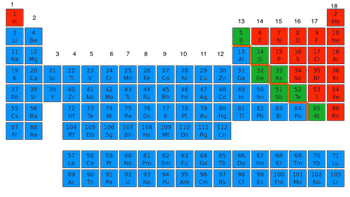
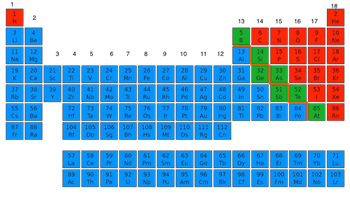
Which of the following atoms is most likely to bond with another atom?


An ionic bond is formed when
Valence electrons are shared.
Valence electrons surround the cations.
Valence electrons are transferred between atoms.
Valence electrons are completely transferred between two metals.

What is the number of valence electrons of Oxygen?
1
2
6
8
Why don't noble gases form bonds?
Noble gases do form bonds
They all have a full octet
They only bond with each other

In covalent bonds, atoms__________.
gain electrons
lose electrons
transfer electrons
share electrons

Valence electrons are the basis of all chemical bonds.
True
False
Which of the following is the reason why atoms of sodium and chlorine attract each other in a salt crystal?
Sodium has a positive charge and chlorine has a negative charge
Sodium has a negative charge and chlorine has a positive charge
Both have a positive charge
Both have a negative charge
Which of the following is a similarity between ionic and covalent bonds?
Both include the gaining and losing of electrons
Both include the sharing of electrons
Both make the elements more stable
Both are typically found as solids at room temperature

What type of bond is formed by the transfer of electrons as illustrated in this diagram?
Non-polar covalent
Metallic
Ionic
Polar covalent
An atom with 1 valence electron 'needs' a full shell, so it can either gain 7 electrons or lose 1. Which is more likely to occur?
nothing
gain 7
lose 1
Atoms involved in a covalent bond are not charged, while atoms involved in an ionic bond are charged (negative or positive)
True
False
NaCl is the chemical formula for what?
sodium chloride
sodium metal
water
chlorine gas

