
 Worksheets
Transmission of impulse
Total questions: 23
Worksheet time: 23mins
Name
Class
Date
1.
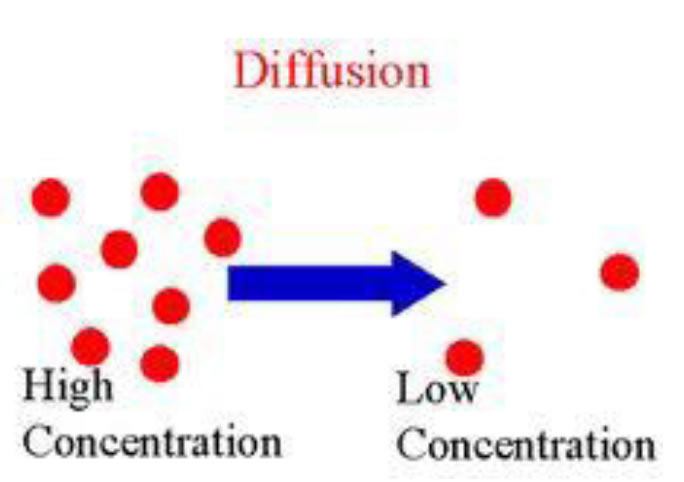
Movement of particles from high to low concentration.
a)
Passive Transport
b)
Active Transport
2.
Osmosis is a form of ______________.
a)
Passive Transport
b)
Active Transport
3.
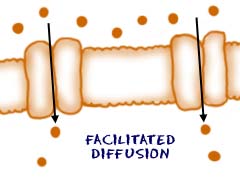
a)
Passive Transport
b)
Active Transport
4.

a)
Passive Transport
b)
Active Transport
5.
This uses energy
a)
endocytosis
b)
exocytosis
c)
both
6.
What is it called when molecules move across the cell membrane from an area of high concentration to an area of low concentration through a carrier protein?
a)
Diffusion
b)
Osmosis
c)
Active Transport
d)
Facilitated Diffusion
7.
The release of large particles, often waste materials from the inside of the cell to the outside of the cell.
a)
Osmosis
b)
Exocytosis
c)
Endocytosis
d)
Diffusion
8.
Condition that occurs if too much water leaves the cell and cell collapses.
a)
Plasmolysis
b)
Osmosis
c)
Cytolysis
d)
Exocytosis
9.
What type of solution has more solutes and less water than a cell that it contains?
a)
Isotonic
b)
Hypertonic
c)
Hypotonic
d)
None of the Above
10.
What happens to a plant cell that is placed into a hypotonic solution?
a)
It shrinks
b)
Plasmolysis
c)
It swells
d)
Cytolysis
11.
A cell with a 5% salt solution is placed into a beaker with a 10% salt solution. What will happen to the cell?
a)
It will shrink
b)
It will swell
c)
No change
d)
Cytolysis
12.
The movement of molecules across a membrane from high concentration to low concentration is called:
a)
Osmosis
b)
Diffusion
c)
Endocytosis
d)
Active Transport
13.

The molecule responsible for increasing the fluidity of the membrane are:
a)
Glycolipids
b)
Glycoproteins
c)
Cholesterols
d)
Aquaporins
14.

Active Transport typically uses ______ to transport materials across the cell membrane.
a)
ATP
b)
Glucose
c)
Na+
d)
K+
15.

The red blood cells in solution C are in a ____________ environment
a)
Acidic
b)
Isotonic
c)
Hypotonic
d)
Hypertonic
16.

A Hypotonic solution contains an excess amount of:
a)
Na+
b)
H+
c)
Solute
d)
Water
17.
What is facilitated diffusion?
a)
Transport that uses proteins to help move molecules across the membrane.
b)
Movements of substances through a membrane.
c)
When molecules spread from High to Low concentration on their own.
d)
When pressure pushes something through a membrane.
18.

Look at the diagram of a cross-section of a cell membrane below. The cell membrane controls movement of materials into and out of the cell. The following particles are moving from high concentration to low concentration and are using a carrier protein. How would you describe this type of movement across the membrane?
a)
simple osmosis
b)
active transport
c)
simple diffusion
d)
facilitated diffusion
19.
The diffusion of water across a selectively permeable membrane is called
a)
active transport
b)
facilitated diffusion
c)
osmosis
d)
phagocytosis
20.
Lets some things pass through but not others
a)
Selectively permeable
b)
Selectively impermeable
c)
Partially permeable
d)
Particularly permeable
21.
The cell membrane is ______ to materials like oxygen and nutrients
a)
impermeable
b)
permeable
c)
allergic
d)
toxic
22.
Active transport requires _____ to move materials across the cell membrane.
a)
proteins
b)
sunlight
c)
oxygen
d)
energy
23.
During active transport, molecultes move from an area of ______ concentration to an area of _____ concentration.
a)
higher, lower
b)
lower, higher
c)
higher, equal
d)
lower, equal
100 %

