wayground logo

Free Printable Worksheets

NEW

Font size

S
M
L
XL
Worksheets

Population and Communities

Total questions: 45

Worksheet time: 25mins

Name
Class
Date
1.

All of the following could limit the growth of a population except which factor?

a)

harsh winter

b)

increased predator population

c)

lack of rain

d)

plentiful food sources

2.

What is the carrying capacity of an ecosystem?

a)

the lowest number of organisms an ecosystem can support

b)

the minimum number of organism an ecosystem can support

c)

the maximum number of organisms an ecosystem can support

d)

the heaviest load an organism can carry

3.

The closer a population of an ecosystem get to its carrying capacity,

a)

the less competition there is for resources

b)

the more competition there is for resources

c)

it does not effect the ecosystem at all

d)

everything dies out

4.

In a predator/prey relationship

a)

both organisms die

b)

both organisms are competing for the same resources

c)

one organism benefits and the other is unaffected

d)

one organism eats the other for food

5.

An example of a predator/prey relationship is

a)

zebras and oxpecker birds

b)

a giraffe eating leaves on a tree

c)

polar bear and a harp seal

d)

tick and a deer

6.

What is one ABIOTIC factor in this ecosystem?

a)

frog

b)

tadpole

c)

water

d)

snail

7.

What is one BIOTIC factor in this ecosystem?

a)

Soil

b)

Water weeds

c)

Sun

d)

Water

8.

All living and non-living things that interact in an area is the definition of __________________.

a)

Ecosystem

b)

Community

c)

Population

d)

Organism

9.

All the different populations that live together in an area is the definition of ____________.

a)

Ecosystem

b)

Community

c)

Population

d)

Organism

10.

All the members of one species in a particular area is the definition of ____________.

a)

Ecosystem

b)

Community

c)

Population

d)

Organism

11.

A member of one species is the definition of ____________.

a)

Ecosystem

b)

Community

c)

Population

d)

Organism

12.
All the living and nonliving things that interact in a particular area make up a(n)
a)
ecosystem
b)
population
c)
community
d)
biome
13.
How do you think an increase in the fox population affected the hare population?
a)
The hares decreased beacause there were fewer food sources
b)
The hares increased because there were more food sources
c)
The hares decreased because there were more fox to prey on them
d)
The hares increased because they had more space 
14.
Environmental conditions that prevent populations from increasing
a)
abiotic factors
b)
carrying capacity
c)
limiting factors
d)
biotic factors
15.
The largest population that an environment can support
a)
carrying capacity
b)
ecosystem
c)
adaptation
d)
limiting factors
16.
A term that means to leave a population is 
a)
emigration
b)
immigration
c)
sampling
d)
population density
17.

Predator population lags behind prey population because:

a)

Increase in predators leads to decrease in prey

b)

Increase in predators leads to increase in prey

c)

Increase in predators leads to decrease in producers

18.
What is the carrying capacity of the following graph?
a)
1000
b)
8000
c)
800
d)
600
19.
Example of a decomposer
a)
fungus
b)
mouse
c)
plants
d)
frogs
20.
What is a producer?
a)
an organism that gets energy from eating other organisms
b)
an organisms that uses sunlight to make its own food
c)
an organism that gets energy from eating dead organisms, non-living material or waste
d)
an organism that uses chemical energy to make its own food
21.
A connection of food chains with many food energy paths in an ecosystem is a ____________
a)
ecosystem
b)
food web
c)
environment
d)
population
22.
What is a carnivore?
a)
an animal that gets energy by eating other animals
b)
An animal that gets energy by eating only plants
c)
an animal that gets energy by eating both plants and animals
d)
an animal that makes its own energy through photosynthesis
23.
All energy transformations in an ecosystem begin with
a)
a scavenger
b)
the sun
c)
a decomposer
d)
a herbivore
24.
a system of food chains that shows the transfer of energy  is termed
a)
food web
b)
food chain
c)
prey
d)
predator
25.
an organism that can produce its own food through photosynthesis
a)
consumer
b)
heterotroph
c)
autotroph
d)
herbivore
26.
Biodiversity is 
a)
the variety of species within an ecosystem
b)
a large number of the same species in an ecosystem
c)
an abundant amount of the same primary consumers 
d)
the ability to have an abundant source from the same species
27.
Use the diagram to answer the question.
The Mayfly is a food source for which 3 organisms?
a)
Frog, Dragon Fly and snake
b)
Frog, trout and dragon fly
c)
Frog, salamander and trout
d)
Frog and phytoplankton
28.

Which organisms compete for food in the food web to the

right?

a)

Orca and Herring

b)

Seal and Copepod

c)

Killifish and Snapper

d)

Mackerel and Bluefish

29.

What are animals called in a food chain?

a)

Producers

b)

Consumers

c)

Decomposers

d)

Plants

30.

Which of these organisms would receive energy from the snake?

a)

Plant

b)

Rabbit

c)

Mouse

d)

Hawk

31.

Which of the following is producer/autotroph?

a)

rabbit

b)

frog

c)

tree

d)

worm

32.

Using the food web what would happen if the eagle became extinct?

a)

The frog population would decrease.

b)

The frog population would increase.

c)

The butterfly population would increase.

d)

The snake population would decrease.

33.

In a food web the arrow always points to

a)

the consumer

b)

the prey

c)

producer

d)

autotroph

34.
What energy role do the kelps and other algae have in this food web?
a)
Producer
b)
Composer
c)
Consumer
d)
Decomposer
35.
What do the arrows show in a food chain picture?
a)
They always point to the smallest animals.
b)
They point to the animal that tastes the best.
c)
They always point to the producers.
d)
They point in the direction that energy is flowing.
36.
What factor describes when populations increase because animals are moving into a population?
a)
Emigration
b)
Limiting Factors
c)
Immigration
d)
Exponential Growth
37.
What factor describes when populations decrease because animals are moving out of a population?
a)
Emigration
b)
Limiting Factors
c)
Immigration
d)
Exponential Growth
38.

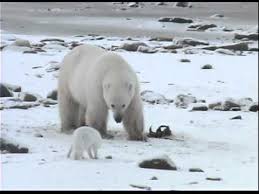
Two arctic fox are fighting with a polar bear for a sea lion carcass. One fox distracts the bear while the other eats. What type of limiting factor is the polar bear?

a)

Predator-Prey Relationships

b)

Competition

c)

Herbivory Effect

d)

Weather

39.

One of the wolf populations begins to compete with a new bear population for the same herbivores. Over time, bushes, trees and rivers improve in numbers. There is an effect on the producer populations. What is the limiting factor to the herbivore?

a)

Predator-Prey Relationships

b)

Herbivory Effect

c)

Competition

d)

Wolves and Bears

40.
Any thing or organism that regulates the size of a population of another organism is known as __________.
a)
a limiting measure
b)
a limiting factor
c)
factorization
d)
materialization of precipitation
41.
What happens when an environment reaches its carrying capacity?
a)
Populations will decrease
b)
Resources such as food, water, and space will be unlimited
c)
Populations will increase
d)
Nothing, everything will stay the same.
42.

What is a producer?

a)

Organism that makes its own energy

b)

Organism that breaks down dead organisms

c)

Organism that eats other organisms for food & energy

d)

Organism that makes its own food

43.

The picture to the right represents a sunny, dry desert.

Which factor most likely limits the desert’s carrying

capacity for plant life?

a)

the number of animals that eat plants

b)

the amount of sunlight

c)

the availability of space to grow

d)

the availability of water

44.

Which factor that limits a population’s size is important especially when population numbers become large and dense?

a)

seasonal changes

b)

extreme weather

c)

competition for food

d)

sea level height

45.

A scientist was studying a population of fish in a pond over a period of 10 years. He observed that

the population increased each year for 3 years, and then remained nearly constant for the rest of

the study. The best explanation for this observation is that the population had

a)

stopped reproducing

b)

reached carrying capacity

c)

mutated into a different species

d)

run out of food and all died