
Font size
 Worksheets
CBA 2 Extra Credit Review
Total questions: 40
Worksheet time: 31mins
What is the 15th amendment?
powers reserved to the states
president and vice president voted for separately
grants citizenship to former slaves
suffrage will not be restricted by race

What organization was Elizabeth Cady Stanton president of?
The National Association of Mothers
The National Temperance Association
National American Woman Suffrage Association
The American Association of Women
What does the 19th Amendment guarantee?
The right to vote for married women
The right to vote for Upper Class Women
The right to vote for Native Born white women
The right to vote for all women


Which of the following is a result of Prohibition?
An increase in unemployment.
A decrease in violent crime.
An decrease in alcohol consumption.
An increase in organized crime.

Which word best explains the changes shown in these photographs?
Immigration
Assimilation
Nullification
Nativism
Which of the following is most characteristic of the Cold War?
The growth of nuclear arsenals in the United States and the Soviet Union
The expansion of national borders by imperialistic European countries
the implementation of isolationist foreign polices in Great Britain and China
The rapid industrialization of many Southeast Asian countries
Which of the following characterize the 1950s in America
growth of subarbs
development of the interstate highway system
expansion of the middle class
all of the above

What caused the Baby Boom, Interstate Highways, the growth of the Middle Class, and the rise of Suburbs.
An increase in immigration
A decrease in trade
1950S economic prosperity
A reduction (decrease) in peacetime spending
Choose the answer that best describes the Dust Bowl.
When people get a lot of dust in their plates and bowls.
A period of time where a large part of the US experienced drought and huge dust storms.
When a dust storm came through Lubbock last year.
A general term for when objects become dirty.
Which government agency gives benefits to people when they are retired or unemployed?
Federal Deposit Insurance Corporation
Tennessee Valley Authority
Securities and Exchange Commission
Social Security Admistration
Which was a guiding principle of New Deal economic policies?
“Rugged individualism” will end social inequality
Antitrust legislation could destroy the free enterprise system
Government must assume greater responsibility for helping the unfortunate
State governments should have more power over the economy than the national government
Which of the following occurred between 1865 and 1900 as a result of the rapid industrialization of the United States?
Factory owners introduced wage-equity policies for women in the workplace.
Concerns about air pollution led to stricter environmental regulations.
Social and economic class divisions began to disappear.
Union membership increased as workers sought better pay and conditions.
A primary goal of the Progressive Movement in the United States in the early 20th century was to -
Correct political and economic injustices resulting from industrialization during the Gilded Age
Maintain the traditional laissez-faire attitude toward business
Encourage big business to become more efficient through mergers and monopolies
Solve racial tensions that existed in northern industrial states
Why was the Panama Canal built?
faster routes between the East and West coasts of the U.S.
Reduced transportation costs
access to overseas markets and natural resources
Spending for the navy increased

practice of annexing new territory -
Expansionism
Yellow Journalism
Annexation
Isolationism
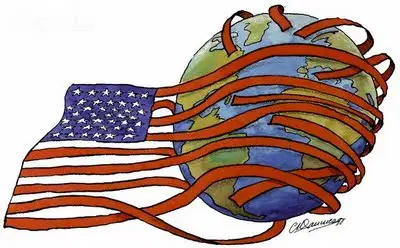
After the Spanish-American war the US became a ...
world power

This map shows an example of the policy of extending a country's power and influence through diplomacy or military force. What is this policy called?
imperialism
nationalism
patriotism
isolationism
What is the best title for the map below?
Territories Lost by Cuba
Territories Lost by the U.S.
Territories Gained by Spain
Territories Gained by the U.S.

What is the best caption for this picture?
Many African Americans were ranchers after World War I
After the War many African Americans returned as heroes.
Often African Americans followed birds.
In every town African Americans were leaving by the hundreds to go North and enter into Northern industry.
What was one of the push factors for African Americans to leave the South during the Great Migration?
Opportunity for education
Higher wages
Escape racism
Limited economic opportunities
Which group was primarily targeted for internment by Executive Order 9066?
German-Americans
Italian-Americans
Japanese-Americans
All of the above
What was the purpose of Executive Order 9066 issued by Franklin Roosevelt?
To free slaves in the Confederate states.
To intern Americans of Japanese ancestry during World War II.
To desegregate the armed forces.
To regulate steel production during the Korean War.
What was the impact of the Sedition Act of 1917?
It limited freedom of speech and press
It encouraged citizens to grow Victory Gardens
It provided funding for the war effort
It increased job opportunities for women

Laws passed by Congress that made it illegal to criticize the war. Those who participated in anti-war activities faced fines and prison.
War Bonds
Propaganda
Mobilize
Espionage and Sedition Acts
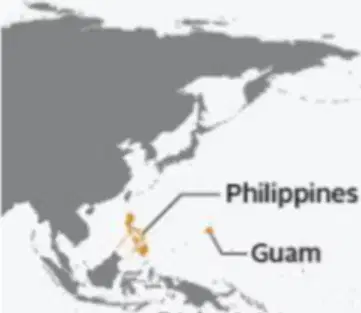
Which territories did we win from the Spanish American War? (There are 3)
Puerto Rico
Guam
Philippines
Hawaii
Who is responsible for Hawaii being annexed (added) to the United States?
Alfred T Mahan
Woodrow Wilson
Sanford Dole
Polo G
As part of the American response to Sputnik I, what new program was put in place?
Civil Rights Commission
House Committee on Unamerican activities
NASA space program
Manhattan Project
As part of the American response to Sputnik I, which subject areas in education received increased funding?
history & geography
political science
science & math
language arts & foreign language

What policy implemented in the Cold War said the U.S. would give military aid to a country that needed to resist communism?
Marshall Plan
Truman Doctrine
Domino Theory
Open Door Policy
How did the raising of U.S tariffs expand the worldwide depression?
other nations retaliated and world trade became even worse
though demand for U.S. exports increased , payments fell behind
other nations fell behind competitively without such tarrifs
U.S imports increased sharply, leading to further unpaid debt
Who became an international celebrity in 1927 for being the first person to fly across the Atlantic Ocean?
Henry Ford
John Scopes
Charles Lindbergh
William Jennings Bryan
What was the main focus of the House Committee on Un-American Activities?
Investigating communist and fascist activities
Investigating tax evasion
Promoting American culture abroad
Regulating labor unions

What was the arms race?
The US and Soviet Union began to race and see who could conquer more countries.
The US and Soviet Union began competing to build more and more powerful weapons.
The US wanted to have peace with the Soviet Union.
The Soviet Union wanted to become allies with the United States.

A competition between the Soviet Union and the United States to send people to space was called the:
Arms Race
Space Race
Snail Race
Atomic Race

