Wayground logo

Free Printable Worksheets

Font size

S
M
L
XL
Worksheets

Science Review and Trivia!

Total questions: 41

Worksheet time: 37mins

Name
Class
Date
1.

What base unit would you use to measure lemonade

a)

grams

b)

meters

c)

liters

2.

The base unit of mass is

a)

gram

b)

liter

c)

meter

d)

cubic centimeter

3.

How many centimeters in on meter

a)

1

b)

10

c)

100

d)

1000

e)

depends on the meter used

4.

The metric system is based or scaled on units of:

a)

ten

b)

100

c)

1000

d)

inches

5.

Which unit is not used in the metric system?

a)

meter

b)

gram

c)

pound

d)

liter

6.

A unit of length in the metric system is the:

a)

liter

b)

gram

c)

meter

d)

Newton

7.

Two tools used to find the volume of an object are the:

a)

ruler and graduated cylinder

b)

triple beam balance and ruler

c)

graduated cylinder and triple beam balance

d)

test tube and graduated cylinder

8.

Which unit would be best to measure the length of a pencil?

a)

meters

b)

centimeters

c)

kilometers

d)

decimeters

9.
These are small tubes used for viewing chemical reactions.
a)
test tubes
b)
metric ruler
c)
goggles
d)
funnel
10.
This is used to accurately measure the volume of a liquid in the lab.
a)
graduated cylinder
b)
metric ruler
c)
electric scale
d)
eye dropper
11.
This objects helps to pour and guide materials into a container.
a)
funnel
b)
metric ruler
c)
test tube
d)
beaker
12.
Which piece of lab equipment would give a measurement with the units of grams?
a)
electric balance
b)
graduated cylinder
c)
metric ruler
d)
beaker
13.
This property of matter refers to the amount of space it takes up in the world.
a)
volume
b)
length
c)
mass
d)
width
14.
This property of matter refers to the amount of matter (stuff) the substance is made of.
a)
mass
b)
volume
c)
density
d)
length
15.
A possible explanation to a problem that has not yet been tested. 
a)
data
b)
theory
c)
hypothesis
d)
fact
16.
The summary at the end of an experiment that explains the results. 
a)
conclusion
b)
procedures
c)
materials
d)
responding variable
17.
A testable answer to a scientific question
a)
Question
b)
Observation
c)
Hypothesis
d)
Experiment
18.
A series of steps used by scientists to solve a problem or answer a question. 
a)
scientific method
b)
recipe
c)
data collection
d)
metric system
19.
Which is NOT a step in the scientific method?
a)
Make observation
b)
Form a theory
c)
Collect data
d)
Form a hypothesis
20.
Should experiments be repeated over and over to see if the results are the same each time?
a)
yes
b)
no
21.
Testing a hypothesis often involves a(n):
a)
answer
b)
experiment
c)
problem
d)
safety check
22.
It is a measure of how close measurements come to each other when they are made in the same way
a)
Accuracy
b)
Precision
c)
Error
d)
Extrapolation
23.

How close a measurement is to the accepted value is called..

a)

Accuracy

b)

Precision

c)

Significant

d)

Estimate

24.
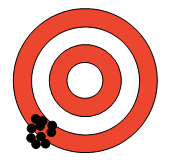
This bullseye demonstrates...
a)
High Accuracy & High Precision
b)
High Accuracy & Low Precision
c)
Low Accuracy & High Precision
d)
Low Accuracy & Low Precision
25.
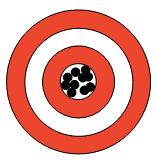
?
a)
High Accuracy & High Precision
b)
High Accuracy & Low Precision
c)
Low Accuracy & High Precision
d)
Low Accuracy & Low Precision
26.
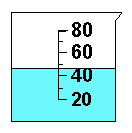
volume?
a)
48 mL
b)
48.2 mL
c)
48.25 mL
d)
4 mL
27.
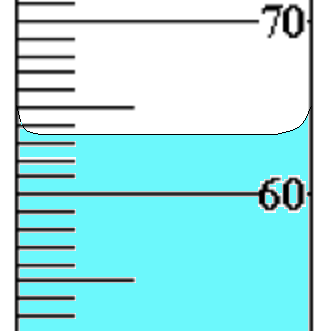
Volume?
a)
63.5 mL
b)
63 mL
c)
63.55 mL
d)
6 mL
28.
What is the chemical symbol for the element Silicon
a)
S
b)
Si
c)
si
d)
Sl
29.
What is the chemical symbol for the element copper?
a)
co
b)
c
c)
Cu
d)
cu
30.
What is water?
a)
element
b)
compound
c)
mixture
31.
What is krypton?
a)
element
b)
compound
c)
mixture
32.

the basic structural unit of matter

a)

atom

b)

matter

c)

element

d)

nucleus

33.

a collection of atoms of one type that cannot be broken down into simpler substances by ordinary chemical or physical means

a)

element

b)

subatomic particle

c)

electron

d)

matter

34.

the positively charged subatomic particle contained in the nucleus of an atom

a)

proton

b)

neutron

c)

electron

d)

matter

35.

a subatomic particle, contained in the nucleus of an atom, having the same mass as a proton but no electrical charge

a)

proton

b)

neutron

c)

electron

d)

matter

36.

a negatively charged subatomic particle that orbits the nucleus of an atom

a)

proton

b)

neutron

c)

electron

d)

matter

37.

What is the correct representation of 702.2g in scientific notation?

a)

7.02 x 10³g

b)

70.22 x 101 g

c)

7.022 x 10² g

d)

70.22 x 10² g

38.
Which of the following is correct scientific notation?
a)
20.35 x 10⁴
b)
.2035 x 104
c)
2035 4
d)
2.035 x10⁴
39.
What is the standard form?
1.245 x 10³
a)
0.001245
b)
12.45
c)
1245
40.
How would you write 4.3756 x 10⁴ in standard form?
a)
437,560,000
b)
0.00043756
c)
43,756
41.
How would you write -5.6 x 10⁻³ in standard form?
a)
0.0056
b)
-5,600
c)
0.00056
d)
-0.0056