
 Worksheets
Unit 1: Origins of Life Review
Total questions: 35
Worksheet time: 43mins
What is the term for the smallest unit of life?
cell
tissue
organ
organ system

Which of the following shows the order from simplest to most complex?
organelle -> cells->tissue->organs->organ systems-> organism
tissue->cells->organelle -> organs->organ systems-> organism
organelle -> organs->organ systems-> organism->cells->tissue
organism -> organ systems -> organs -> tissues -> cells -> organelle
Which of the following shows the order from most complex to least complex?
Organelle -> cells->tissue->organs->organ systems-> organism
tissue->cells->organs->organ systems-> organism
organs->organ systems-> organism->cells->tissue
organism -> organ systems -> organs -> tissues -> cells -> organelles

makes proteins from amino acids
ribosomes
mitochondria
nucleus
lysosome

breaks down glucose to produce energy (ATP) during cellular respiration
mitochondria
nucleus
cytoplasm
chloroplast

contains DNA, which has the information on how to make the cell's proteins
control center for the cell
nucleus
lysosome
mitochondria
endoplasmic reticulum


What is this cell structure?
Mitochondria
Ribosome
Chloroplast
Nucleus
Vacuole
A jellylike substance that transports materials in the cell
vacuoule
nucleus
cytoplasm
ectoplasm
What is the function of cell membrane ?
responsible for making proteins
responsible for storage
responsible for materials going in and out of cell
responsible for DNA
What hormone is produced in the pancreas that lowers blood sugar?
Insulin
Glucagon
Ketones
Glucose

Which is not one of the ways the body maintain homeostasis?
uses energy
noticing changes in the body
changing or making chemical compounds
pulling blankets over yourself when it is cold at night

Which of the following is a lipid?
lard (animal fat)
cellulose
glucose
protein

Identify the structure for "A"
Nucleus
Cell membrane
Mitochondria
Vacuole
Identify the structure for "B"
Nucleus
Cell membrane
Mitochondria
Vacuole
Identify the function for "A"
stores genetic information
transports materials in and out
makes ATP (energy)
Storage of waste
Identify the structure for "C"
Nucleus
Cell membrane
Mitochondria
Vacuole
Identify the function for "C"
stores genetic information
transports materials in and out
releases energy
Storage of waste
Enzymes are an example of
Lipids
Carbohydrate
Protein
Nucleic Acid
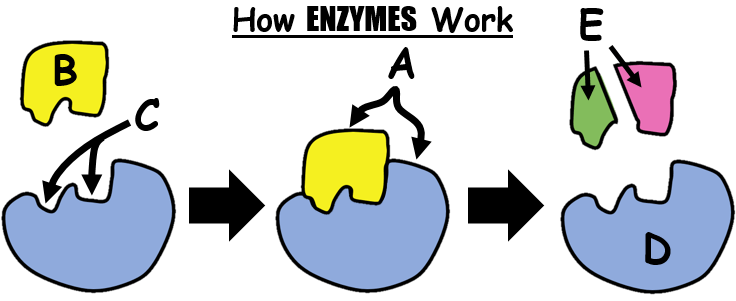

What is structure "A"
an inorganic substance
a chemical
ribosome
a receptor molecule
What is structure "B"
an inorganic substance
a chemical
ribosome
a receptor molecule

