
Font size
 Worksheets
S6E1a Review (C. Smith)
Total questions: 61
Worksheet time: 46mins
What is the Geocentric Model?
The model of the solar system with the Sun in the center.
The model of the solar system with Earth in the center.
What is the Heliocentric Model?
The model of the solar system with the Sun in the center.
The model of the solar system with Earth in the center.
Which scientists believed in the Geocentric Model?
Aristotle
Brahe
Copernicus
Hubble
Ptolemy
Which scientist thought of the Heliocentric Model, and wrote a book about it, but was afraid to publish it until he was dying.
Aristotle
Brahe
Copernicus
Hubble
Ptolemy
Which scientist used the newly invented telescope and found the moons around Jupiter?
Aristotle
Brahe
Copernicus
Galileo
Ptolemy
Galileo found moons orbiting Jupiter, this was evidence that supported which theory?
Geocentric
Heliocentric
What contributions/ discoveries did Tycho Brahe make to the Copernican Revolution?
Comet
Moons Orbiting Jupiter
Planets Orbiting in an Elliptical Path
Gravity
Epicycle
What contributions/ discoveries did Johannes Kepler make to the Copernican Revolution?
Comet
Moons Orbiting Jupiter
Planets Orbiting in an Elliptical Path
Gravity
Epicycle
What was the Big Bang?
model states that the universe began with expansion occurring in all areas of the universe. Over time, the expansion slowed and the matter in the universe contracted. Then the process began again, repeating over and over.
The universe always has been the same as it is now, that it has always existed and always will, and as matter in the universe expands outwards, new matter is created to keep the overall density the same
theory of the universe that states that all matter and energy was once packed in a tiny, dense singularity that then exploded about 14 billion years ago. The universe then began expanding and cooling, and is still doing so today.
What was the Oscillating Model?
model states that the universe began with expansion occurring in all areas of the universe. Over time, the expansion slowed and the matter in the universe contracted. Then the process began again, repeating over and over.
The universe always has been the same as it is now, that it has always existed and always will, and as matter in the universe expands outwards, new matter is created to keep the overall density the same
theory of the universe that states that all matter and energy was once packed in a tiny, dense singularity that then exploded about 14 billion years ago. The universe then began expanding and cooling, and is still doing so today.
What was the Steady State Model?
model states that the universe began with expansion occurring in all areas of the universe. Over time, the expansion slowed and the matter in the universe contracted. Then the process began again, repeating over and over.
The universe always has been the same as it is now, that it has always existed and always will, and as matter in the universe expands outwards, new matter is created to keep the overall density the same
theory of the universe that states that all matter and energy was once packed in a tiny, dense singularity that then exploded about 14 billion years ago. The universe then began expanding and cooling, and is still doing so today.
Which theory or theories are accepted?
Geocentric
Heliocentric
Steady State Model
Oscillating Model
Big Bang Theory
What did Edwin Hubble discover that supports the Big Bang?
Doppler Effect
Blue Shift
Red Shift
Hubble Effect
If galaxies were moving towards us, they would appear to be what color?
Blue
Red
If galaxies were moving away from us, they would appear to be what color?
Blue
Red
Galaxies moving towards us appear to have...
longer wavelengths and lower frequencies
shorter wavelengths and higher frequencies
Galaxies moving away from us appear to have...
longer wavelengths and lower frequencies
shorter wavelengths and higher frequencies
What other evidence did scientists find that supports the Big Bang Theory?
(a)
Why have the models and theories changed over time?
People are getting smarter
People have more chance of going to school
People have better technology
When did the Big Bang happen?
13 Billion Years Ago
14 Billion Years Ago
15 Billion Years Ago
16 Billion Years Ago
What did Hubble discover?
That there are many galaxies beyond the Milky Way.
The phases of Venus.
4 of Jupiter's moons.
The laws of gravitational force.
What was the Ptolemy's theory?
He thought Earth was in the center of the universe.
He discovered galaxies beyond the Milky Way.
He thought the sun was at the center of the universe.
He thought the planets revolved around the sun in elliptical orbits.
What is the difference between a Heliocentric & Geocentric model of the universe?
There is no difference.
One has the sun in the center and one has the earth at the center.
One is a galaxy and one is a solar system.
What is the Heliocentric model?
Earth-centered universe.
Sun-centered universe.
That the planets revolve around the sun in elliptical orbits.
That galaxies exist beyond the Milky Way.
What was Copernicus's theory?
He thought Earth was at the center of the universe.
He thought the planets revolved around the sun in elliptical orbits.
He thought the sun was at the center of the universe.
He discovered galaxies beyond the Milky Way.
What is the Geocentric model?
Sun-centered universe.
Planets revolving around the sun in elliptical orbits.
Galaxies existing beyond the Milky Way.
Earth-centered universe.
What tool did Galileo use to make his discoveries?
Satellite
Telescope
Space Shuttle
Ancient buildings like Chicen Itza in Mexico.
First to record celestial bodies; Believed there were spheres around earth.
Copernicus
Ptolemy
Aristotle
Newton

What is the name of this model?
Heliocentric Model
Geocentric Model
Circle Model
Aristotle Model

What model of the solar system is shown in this picture?
Heliocentric
Geocentric
What was the Big Bang?
model states that the universe began with expansion occurring in all areas of the universe. Over time, the expansion slowed and the matter in the universe contracted. Then the process began again, repeating over and over.
The universe always has been the same as it is now, that it has always existed and always will, and as matter in the universe expands outwards, new matter is created to keep the overall density the same
theory of the universe that states that all matter and energy was once packed in a tiny, dense singularity that then exploded about 14 billion years ago. The universe then began expanding and cooling, and is still doing so today.
Which theory or theories are accepted today?
Geocentric
Heliocentric
Steady State Model
Oscillating Model
Big Bang Theory
What was the Ptolemy's theory?
He thought Earth was in the center of the universe.
He discovered galaxies beyond the Milky Way.
He thought the sun was at the center of the universe.
He thought the planets revolved around the sun in elliptical orbits.
What is at the middle of a Heliocentric system?
Mars
Moon
Sun
Earth
What is at the middle of a Geocentric system?
Sun
Neptune
Earth
The Universe
Who supported the Geocentric system?
Ptolemy
Aristotle
Copernicus
Galileo
Who proposed the Heliocentric system?
Copernicus
Ptolemy
Aristotle
Galileo
What does the Geocentric system look like?
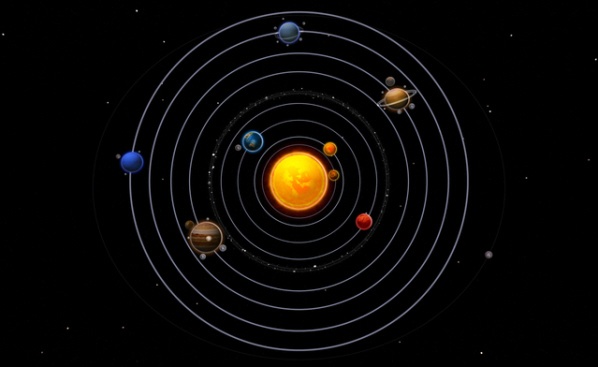
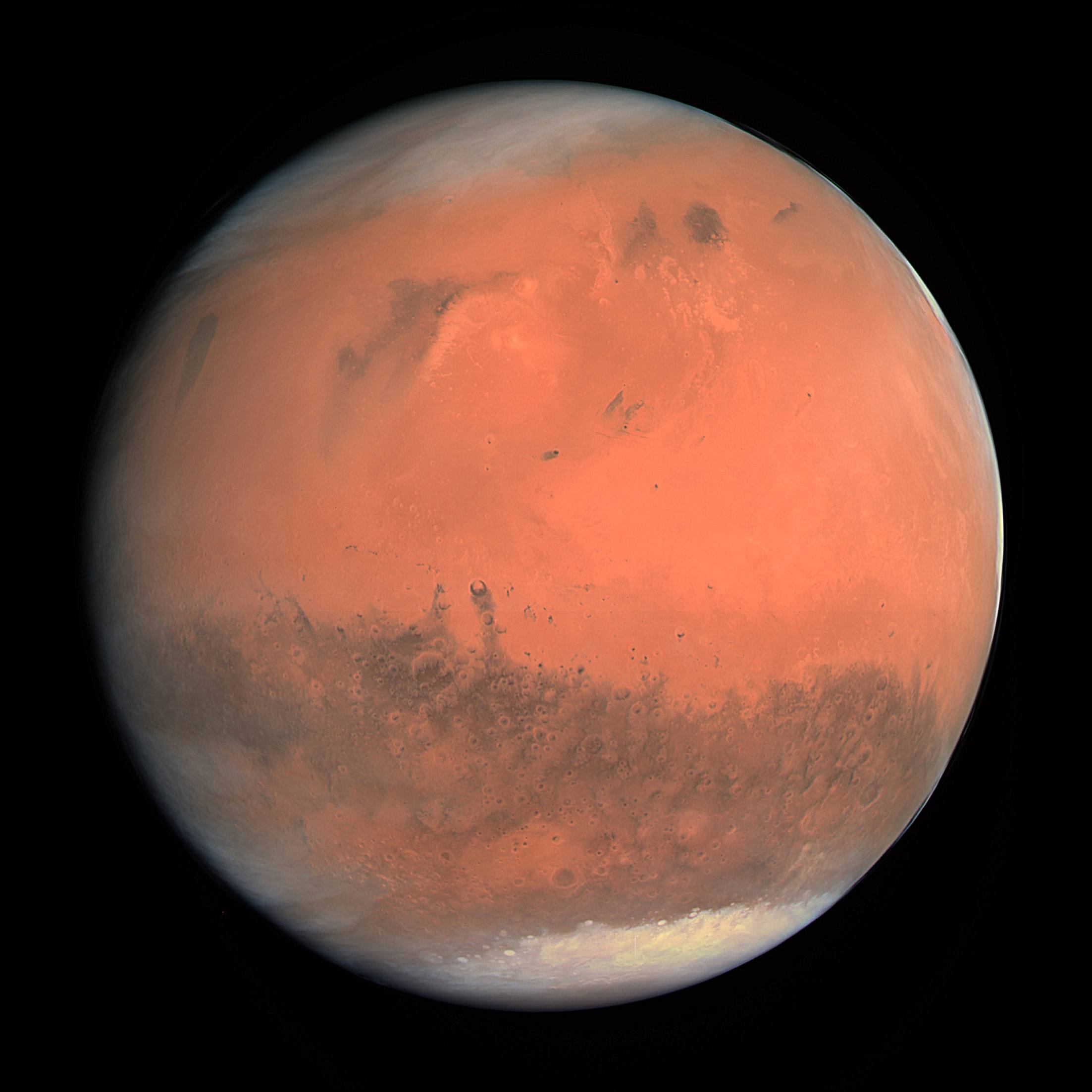
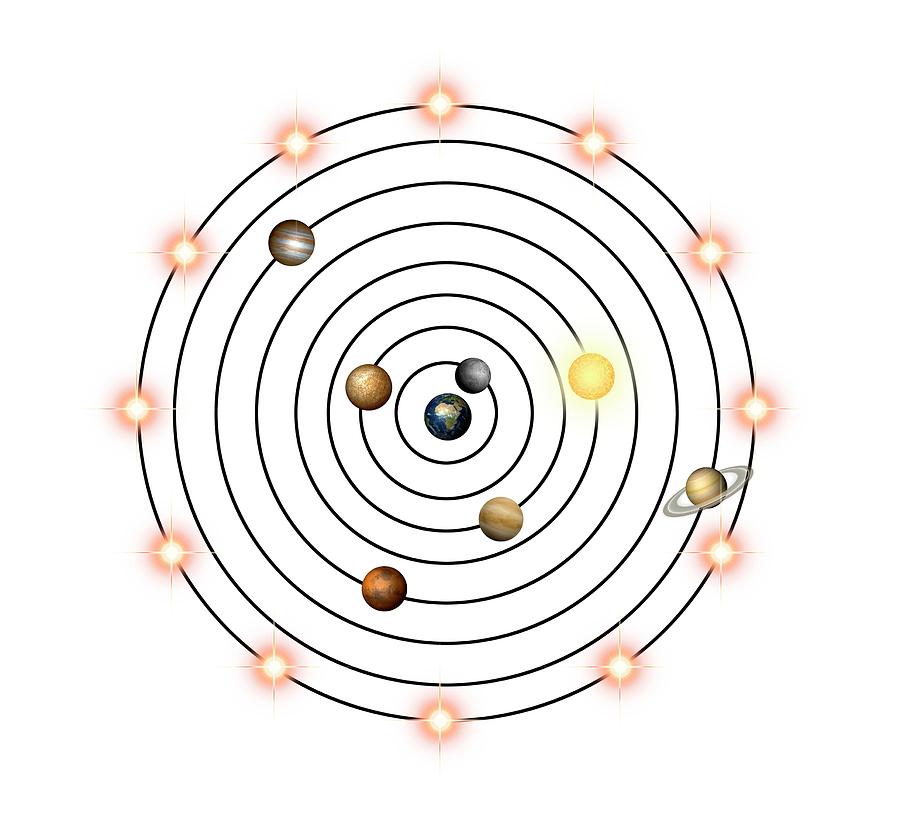
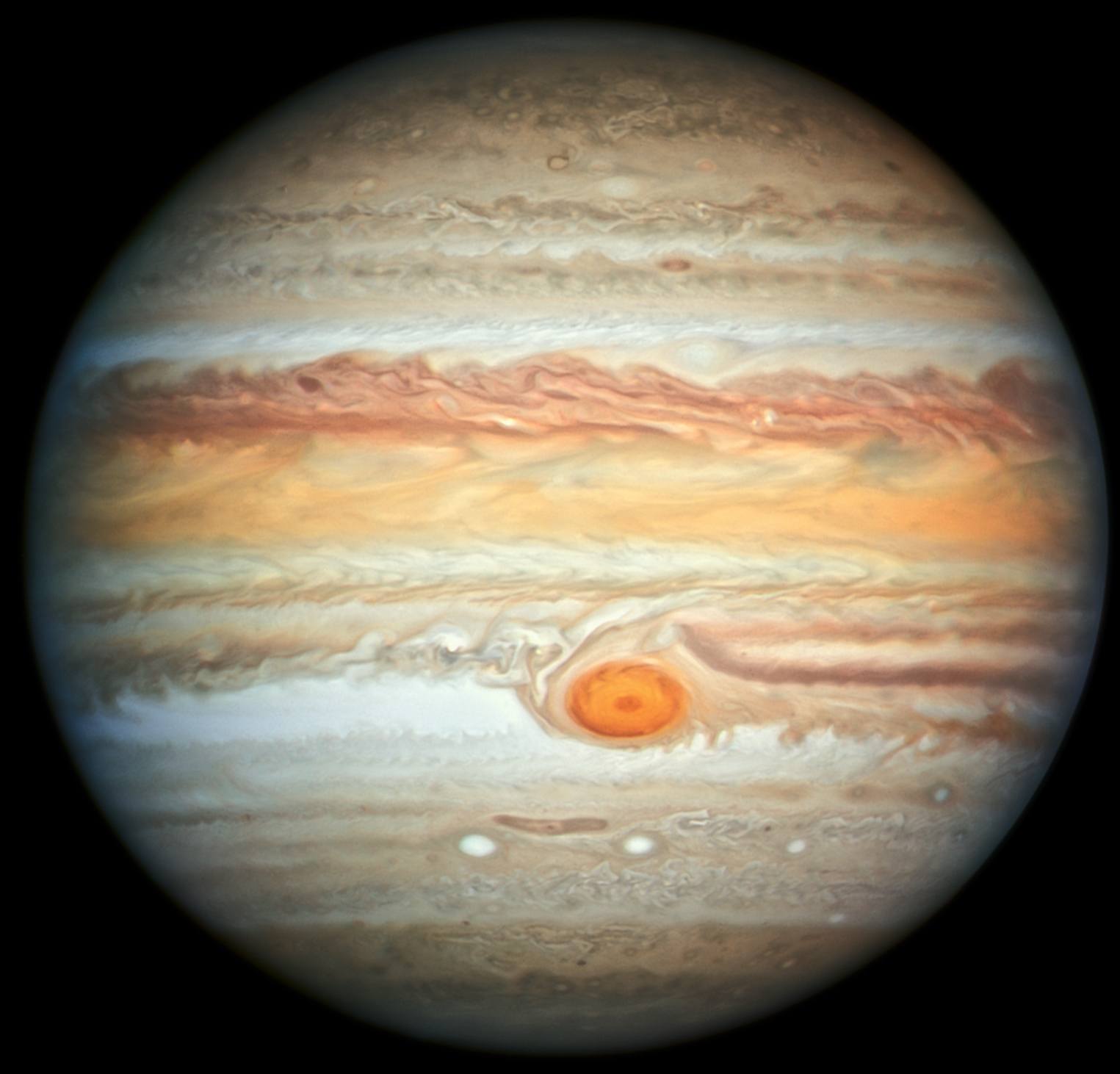
What does the Heliocentric system look like?


What is the biggest difference between the Geocentric Model and the Heliocentric Model?
the shape of the planets' orbits
the movement of the moon
the center of the solar system
Kepler's first law states that the orbits of the planets are in the shape of a/an...
perfect circle
ellipse
spiral

Whose book was published about the heliocentric model of the universe just after he died?
Ptolemy
Copernicus

Who came up with this model?
Copernicus
Kepler
Galileo Galilee
Ptolemy

Which scientific instrument did Galileo use to change the world?
telescope
spyglass
mirror
magnifying glass
Which object is the center of the solar system according to Galileo?
Earth
Moon
Sun
Neptune
Who supported Copernicus's Heliocentric Model
Galileo
Plato
Ptolemy
No one
Which astronomer first observed the phases of Venus and Jupiter's moons with the help of a telescope?
Gailieo
Aristarchus
Kepler
Aristotle
Copernicus
Who discovered the shape of a planet's orbit is actually an ellipse?
Ptolemy
Copernicus
Kepler
Galileo
Who used a telescope to prove that the Earth could not be the center of the universe?
Ptolemy
Copernicus
Kepler
Galileo
Which theory did Galileo believe in?
Heliocentric
Geocentric
Evidence supporting the geocentric model are from
Epicycles
Interstellar medium
Pulsar
Nebula
Evidence supporting the geocentric model are from
Epicycles
Interstellar medium
Pulsar
Nebula
In the Geocentric model the earth moves
True
falseI
These two astronomers confirmed Copernicus's heliocentric theory with calculations.
Galileo and Aristotle
Brahe and Kepler
Ptolemy and Kepler
Aristotle and Ptolemy

