
 Worksheets
Matter and its Interactions - Review
Total questions: 77
Worksheet time: 4hrs 51mins
Which type of change can be easily reversed?
Chemical
Physical
Both
Neither
If components are evenly distributed throughout a mixture, how would you describe it?
Heterogeneous
Homogeneous
Oxygen (O2) is classified as:
An element
A mixture
A compound
A solution
What property tells how much matter is found in a substance?
Volume
Physical
Mass
Chemical
What is the formula for density?
D=VM
D=MV
M=VD
V=DM
When acetic acid comes into contact with sodium bicarbonate a gas is created. Why type of change is this?
Physical
Chemical
Water (H2O) is classified as:
An element
A compound
A mixture
A solution
The transfer of thermal energy from one substance to another is also known as
Physical change
Chemical change
Heat
Which part of an atom floats around the outer shell?
Neutron
Electron
Proton
What property measures how closely together particles are packed into a substance?
Density
Mass
Volume
Freezing Point
What are the two inner parts of an atom?
Proton & Electron
Electron & Neutron
Neutron & Proton
If the components in a mixture are spread out unevenly, how would you describe the mixture?
Homogeneous
Heterogeneous
What kind of change can break and create bonds between atoms?
Physical
Chemical
Phase
I have a measurement of g/mL. What property am I measuring?
Density
Mass
Volume
Weight
What does an element's atomic number tell us?
The number of neutrons
The atomic weight
The number of protons
The number of atoms
What type of measurement is related to thermal energy?
Volume
Density
Mass
Temperature
If you are given 2 unknown samples of gray metals, how can you use physical properties to determine if they are the same?
you can use their masses
compare their densities
compare their ability to react with acid
you can identify the elements that they are made of
How are solids different from liquids?
Solids have a definite mass, liquids do not
Solids have a definite shape but liquids do not
Solids have a lower density than liquids do.
Solids have a greater volume than liquids do.
Which of the following is classified as a compound?
Pb2
CO2
Na
H2
Which of the following is NOT a physical property of matter?
color
density
acidity
solubility
Which is NOT a subatomic particle of an atom?
electron
molecule
proton
neutron
How are elements and compounds related?
Compounds make up elements. An element and its compounds have different properties.
Elements make up compounds. A compound and its elements have different properties.
Compounds make up elements. An element and its compounds have the same properties.
Elements make up compounds. A compound and its elements have the same properties.
A student claims that a rock, a class of juice, and air are made of atoms. Is this student correct?
No, only the rock and glass of juice ore made of atoms. The air is not because it is a gas.
No, only the rock is make of atoms. The glass of juice and air are not made of atoms because they are not solids.
Yes, they are all made of the same type of atom.
Yes, they are all made of different types of atoms.
What happens when a cold drink sits in a hot room?
It remains cold
It gets warmer
It starts boiling
It starts to freeze
When two things are the same temperature:
They have the same number of molecules
Their molecules stop moving
Their molecules move at the same average speed
Heat transfer between the two things stops
When you heat a pot on a stove, the handle gets warm. Which type of heat transfer is responsible?
Conduction
Radiation
Convection
All of the above
List the following particles in size order, from biggest to smallest?
Molecules, electrons, atoms
Atoms, molecules, electrons
Electrons, atoms, molecules
Molecules, atoms, electrons
Heat from the Sun reaches Earth through which type of heat transfer?
Conduction
Radiation
Convection
All of the above
Convection currents occur:
Only in liquids
When a dense substance is warmer than a less dense substance
In both liquids and gases
Weakly in solids


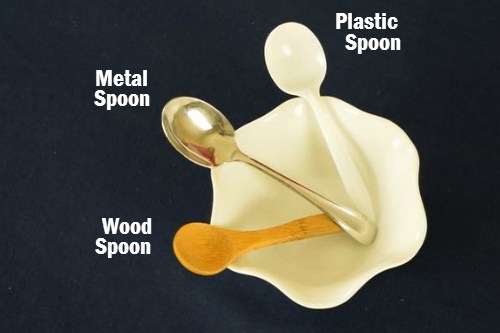
Which material will heat travel through the fastest?
Plastic
Wood
Metal
How does heat move?
From cooler objects to warmer objects.
From warmer objects to cooler objects
From metal objects to nonmetal objects
Very quickly in all directions
Think about a pan of water sitting on an electric stove. The stove is then turned on to high.
What will happen to the movement of the particles in the pan?
They will slow down
They will stay the same speed
They will stop moving
They will speed up
Freddie is drinking a cold glass of Kool-Aid in the sun on a hot day. He puts the glass down in the sun and the glass begins to warm.
What is happening to the small particles that make up Kool Aid? They. . .
contract
slow down
move faster
disappear
Which material would make the best insulator?
rubber
steel
copper
aluminum
Suppose that you are at the beach.
Energy from the Sun reaches you mainly through
conduction
convection
radiation
temperature
Which material would make the best conductor?
rubber
steel
copper
aluminum
What type of energy is heat energy?
potential
kinectic
chemical
mechanical
If you put a glass of water in the freezer, why did the water freeze?
The cold radiation from the freezer made the water colder.
The cold from the freezer flowed into the glass of water.
The heat moved from the glass of water to the freezer.
The cold particles touched the glass and transferred cold to the water.
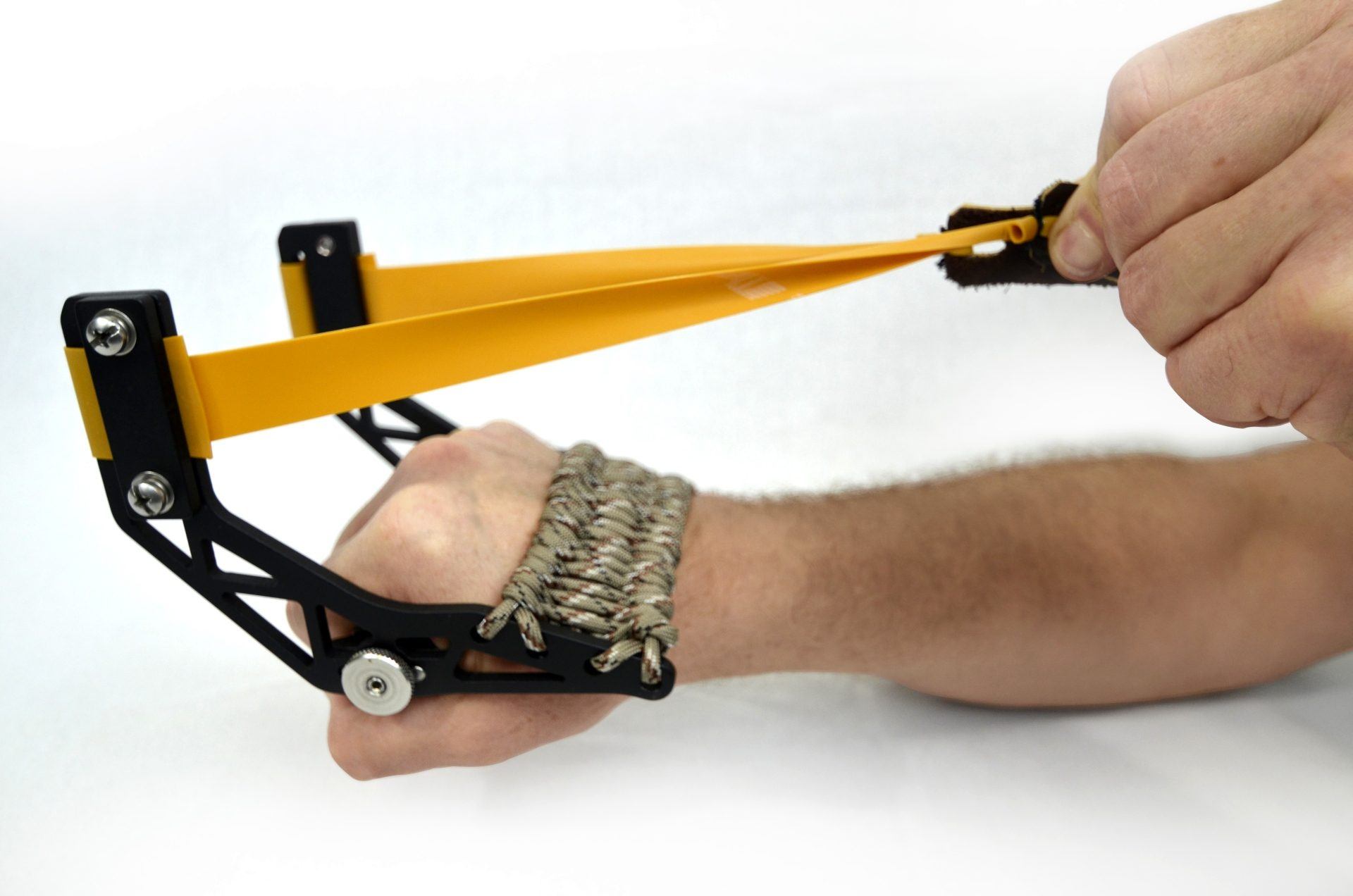

A book falling?
Animals eating food?
Burning coal or carbon-based fuel at a powerplant?
Running?


Which of the following statements is true concerning acids and bases?
acids and bases don't react with each other
acids mixed with bases neutralize each other
acids mixed with bases make stronger bases
acids mixed with bases make stronger acids
True or false: bases are sometimes called alkaline.
True
False
Neutral solutions have a pH of:
0
1
7
14
Which is true?
pH of less than 7 is basic; pH of more than 7 is acidic
pH of less than 7 is acidic; pH of more than 7 is basic

Vinegar, fruit juice, and cola are examples of:
strong acids
strong bases
strong bases
weak acids
NaOH may be found in drain cleaners and as a component of soaps. Is NaOH an acid or a base?
Acid
Base
Neither (Neutral)

Is laundry detergent an acid or a base?
Acid
Base
Neither (Neutral)
Ammonia is found in many household products, including window cleaner. What is the pH of ammonia?
It's acidic.
It's basic.
It's neutral.

Is pure water acidic, basic, or neutral?
Acidic
Basic
Neutral

Vinegar is an example of:
An acid.
A base.
Neither an acid nor a base.

