Wayground logo

Free Printable Worksheets

Font size

S
M
L
XL
Worksheets

Characteristics of Life Review

Total questions: 36

Worksheet time: 17mins

Name
Class
Date
1.

Which of the following is NOT required to be considered a living thing

a)

Reproduction

b)

Movement

c)

Having cells

d)

Responding to stimulus

e)

All are required to be considered a living thing

2.

A caterpillar morphs into a butterfly, this is an example of

a)

Growth and development

b)

Homeostasis

c)

Reproduction

d)

Response to stimulus

3.

You are hot and start to sweat, this is an example of

a)

Reproduction

b)

Homeostasis

c)

Growth and development

d)

Adaptation

4.

You touch a hot stove and pull back your hand from pain, this is an example of

a)

Growth and development

b)

Requiring energy

c)

Response to stimulus

d)

Homeostasis

5.

All living things are made of

a)

Organs

b)

Tissues

c)

Cells

d)

Skin

6.

Over time snakes lost their legs so they could fit into underground spaces, this is an example of

a)

Homeostasis

b)

Reproduction

c)

Evolving and adapting

d)

Response to stimulus

7.

Which of these is NOT an example of an organism

a)

Bird

b)

Fish

c)

Apple Tree

d)

Soil

e)

All of these are organisms

8.

A plant takes in sunlight on its leaves, this is an example of

a)

Homeostasis

b)

Reproduction

c)

Evolving and Adapting

d)

Requiring energy

9.

All living things must have

a)

Legs

b)

Eyes

c)

DNA

d)

Leaves

10.
Green plants produce their own food through the process of photosynthesis.
a)
All living things use energy
b)
All living things contain cells
c)
All living things maintain homeostasis
d)
All living things grow
11.
A camel has eyelashes that work to keep the dust and sand out of its eyes.
a)
All living things adapt to their environment
b)
All living things grow
c)
All living things have cells
d)
All living things use energy
12.
An amoeba is a unicellular organism. Which characteristic of life is this?
a)
All living things use energy
b)
All living things contain cells
c)
All living things respond to their environment
d)
All living things grow
13.
The roots of a plant grow towards a source of ground water.
a)
All living things use energy
b)
All living things reproduce
c)
All living things respond to their environment
d)
All living things grow
14.
What type of organism would this amoeba represent?
a)
Unicellular
b)
Multicellular
c)
Monocellular
d)
Quasicellular
15.
What molecule contains the necessary information for cell reproduction?
a)
RNA
b)
Protein
c)
Carbohydrate
d)
DNA
16.
During ___________ conditions inside our body are kept stable (the same)
a)
homeopathic
b)
Homo sapian
c)
homeostasis
d)
homologous
17.
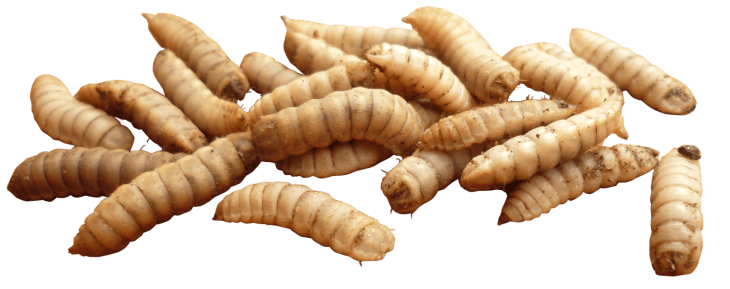
A maggot changing into a fly is an example of 
a)
reproduction.
b)
growth and development.
c)
homeostasis.
d)
evolution.
18.

Your body temperature stays around 98 degrees

a)

homeostasis

b)

DNA

c)

growth

d)

cell theory

19.

Change over time

a)

evolution

b)

DNA

c)

growth

d)

energy

20.

A baby learning to crawl then walk

a)

development

b)

cell theory

c)

growth

d)

DNA

21.

An organism with only one cell is called...

a)

unicellular

b)

multicellular

c)

viral

d)

fergalicious

22.
A _____ is something in the environment that causes an organism to respond.
a)
stimulus
b)
response
c)
cause
d)
effect
23.
Which of these is not true about all organisms?
a)
all living things have many cells
b)
all living things need water
c)
all living things respond to stimuli
d)
all living things reproduce
24.
What is another way of saying organism?
a)
living thing
b)
organ system
c)
tissue team
d)
critter
25.
How can you tell this plant is a living thing?
a)
It doesn't move.
b)
It is made up of different parts.
c)
It responds to a change in its environment.
d)
It needs shelter.
26.

The following list represents characteristics of a living thing :

a)

made of cells, has lungs, can reproduce

b)

grows and develops, responds to surroundings, can move

c)

has similar chemicals, makes noises, made of cells

d)

made of cells, grows and develops, uses energy

27.

Which of these do living things NOT need for a species to survive?

a)

DNA/RNA

b)

ability to respond to change

c)

ability to make a permanent home

d)

ability to reproduce

e)

ability to use energy

28.
Which of the following characteristics of living things best explains why humans sweat when they get hot?
a)
maintaining a stable internal enviornment
b)
growth and development
c)
using energy
d)
ability to reproduce
29.

Which of the following characteristics of living things best explains why birds fly south for the winter?

a)

Living things respond to their environment.

b)

Living things maintain internal balance.

c)

Living things are made up of units called cells.

d)

Living things are based on a universal genetic code.

30.

Which one of the following is a characteristic of life?

a)

Growth

b)

Breathing

c)

Expelling toxins

d)

Photosynthesis

31.

An organism made up of more than one cell would be called:

a)

multicellular

b)

unicellular

c)

heterotroph

d)

autotroph

32.
What process transforms energy into a usable form for biological organisms?
a)
Nutrition
b)
Transport
c)
Synthesis
d)
Metabolism
33.
What is the study of life?
a)
Biology
b)
Animalology
c)
Math II
d)
Lifeology
34.

Viruses are

a)

living

b)

nonliving

35.

Check all that apply. Viruses ...

a)

cannot metabolize

b)

can evolve

c)

can replicate

d)

have cells

e)

cannot respond to stimuli

36.

Check all that apply. Viruses ...

a)

do not contain cells

b)

can obtain energy

c)

require a host to replicate

d)

can respond to their environment

e)

can mutate