
Font size
 Worksheets
Atomic Structure and The Periodic Table
Total questions: 39
Worksheet time: 28mins
Negatively charged subatomic particle.
Proton
Neutron
Electron
Quarks
Positively charged subatomic particle.
Proton
Neutron
Electron
Quarks
Subatomic particle with no charge.
Proton
Neutron
Electron
Quark
Select all that apply for protons
Located in the nucleus of an atom
Located in orbitals surrounding the nucleus
Smallest subatomic particle
Relative mass of 1 AMU
Unique to each element
Select all that apply for electrons
Located in the nucleus of an atom
Located in orbitals surrounding the nucleus
Smallest subatomic particle
Relative mass of 1 AMU
Unique to each element
Select all that apply for neutrons
Located in the nucleus of an atom
Located in orbitals surrounding the nucleus
Smallest subatomic particle
Relative mass of 1 AMU
Unique to each element
In an atomic model that includes a nucleus, the negative charge is
concentrated in the center of the atom.
spread evenly throughout an atom.
concentrated at multiple sites in an atom.
located in the space outside the nucleus.
Which of the subatomic particles will not change for a given element.
Protons
Neutrons
Electrons
Quarks
On the periodic table chlorine and magnesium are in the same...
Period
Group
Which two elements are in the same group?
S and P
Na and Mg
Kr and Ne
Cl and Ar
Valence electrons are located...
In the nucleus of an atom
In orbitals surrounding the nucleus of an atom
In the outermost orbital of an atom
In Group 1 (Alkali Metals) reactivity increases from...
Top to bottom of the group
Bottom to top of the group
Reactivity is random, some elements are more reactive than others
The Alkali metals are unreactive.
What element is most likely to bond with Lithium
Carbon
Nitrogen
Oxygen
Fluorine
Neon
Which subatomic particle is responsible for an elements chemical and physical properties, as well as the overall trends on the periodic table.
Total electrons
Valence electons
Protons
Neutrons
Quarks
What makes the noble gases unreactive?
The number of protons that these elements have
Noble gases have a full outermost energy level.
This is wrong. Noble gases are very reactive.
Noble gases have equal numbers of electrons and protons.
On the periodic table group number will indicate...
Number of electrons
Number of protons
Number of energy levels
Number of valence electrons
Right now, the atomic number indicates which of the following?
Number of protons
Number of electrons
Number of neutrons
Number of valence electrons
An elements protons + neutrons equals the elements...
atomic mass
atomic weight
reactivity
overall charge
How does an isotope of an element differ from other isotopes of the same element
atomic mass
number of neutrons
number of protons
number of electrons
atomic number
Which element will be the most reactive?
Neon (Ne)
Aluminum (Al)
Lithium (Li)
Rubidium (Rb)
Calcium (Ca)
In the modern periodic table elements are arranged in order of increasing
mass number
atomic number
oxidation number
valence electron number
Which of the following is NOT true regarding families (groups) on the periodic table?
they have similar characteristics
they have the same number of valence electrons
the atomic radius increases as you go down
groups are identical to periods on the periodic table
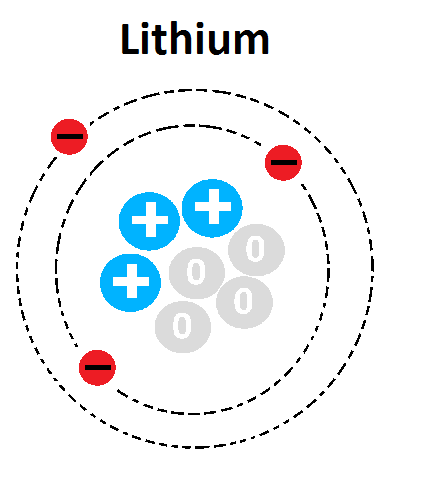
What is the atomic mass of this atom?
1
3
4
7
Atoms are most stable when they have
one valence electron
two valence electrons
four valence electrons
eight valence electrons

If zinc (Zn) were to lose a proton it would become
Copper (Cu)
Gallium (Ga)
Aluminium (Al)
Iron is a good conductor, malleable and magnetic. What class of element is Iron?

How many neutrons does calcium have?
20
40
60
0

How many neutrons does Chlorine have?
18
17
35
52
Which is an alkali metal?
Magnesium (Mg)
Iron (Fe)
Sodium (Na)
Iodine (I)
Which is a halogen?
Helium (He)
Chlorine (Cl)
Oxygen (O)
Magnesium (Mg)
This group contains familiar metals such as gold, iron, and copper.


Locate Lanthanides and Actinides.


Which alkali earth metal would be the most reactive?
Beryllium (Be)
Magnesium (Mg)
Calcium (Ca)
Which of the following halogens would be most reactive?
Chlorine (Cl)
Bromine (Br)
Iodine (I)
How do you think you will do on the quiz tomorrow?
A
B
C
D

