Wayground logo

Free Printable Worksheets

Font size

S
M
L
XL
Worksheets

Unit 1 Summative Assessment

Total questions: 27

Worksheet time: 15mins

Name
Class
Date
1.
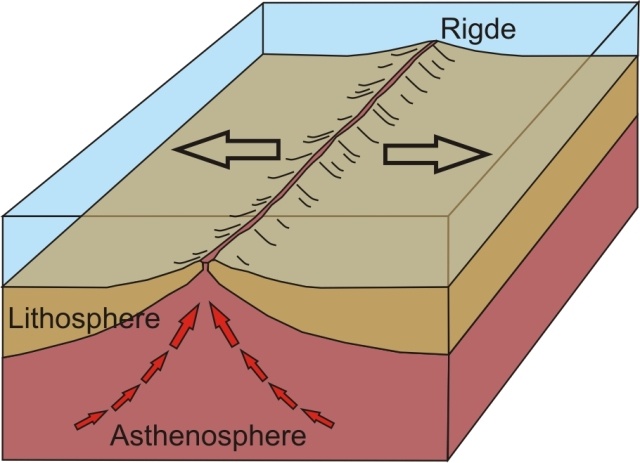
What kind of plate boundary is shown here?
a)
divergent
b)
convergent
c)
transform
d)
submergent
2.
What kind of plate boundary is shown here?
a)
divergent
b)
convergent
c)
transform
d)
subducting
3.
What kind of plate boundary is shown here?
a)
divergent
b)
convergent
c)
transform
d)
strike slip
4.
What geologic feature/event you be most likely to find at a transform boundary?
a)
Earthquakes
b)
Volcanoes
c)
Mountains
d)
Rift Valleys
5.
What geologic feature/event would you most likely to find at a divergent boundary between two pieces of continental crust?
a)
Mid-Ocean Ridge
b)
Mountain
c)
Rift Valley
d)
Island Arc
6.
What geologic feature/event would you most likely to find at a convergent boundary between two pieces of continental crust?
a)
Volcano
b)
Mountain
c)
Rift
d)
Island Arc
7.
A subduction zone is formed...
a)
when one tectonic plate sinks below another
b)
at every type of convergent plate boundary
c)
at every type of divergent plate boundary
d)
at transform boundaries
8.

New oceanic crust (sea floor) is created at this boundary.

a)

Divergent Oceanic

b)

Divergent Continental

c)

Convergent Oceanic

d)

Transform

9.

Oceanic crust (sea floor) is destroyed at this boundary.

a)

Convergent Oceanic

b)

Divergent Oceanic

c)

Convergent Continental-Continental

d)

Divergent Continental

10.

The process where oceanic crust slides under another plate and is melted is called ___________.

a)

seafloor spreading

b)

subduction

c)

continental drift

d)

recycling

11.

A divergent boundary on land creates what feature?

a)

Mid Ocean Ridge

b)

Rift Valley

c)

Subduction Zone

d)

Deep Ocean Trench

12.

When two continental plates converge (collide) what type of crustal feature is formed?

a)

Mid Ocean Ridge

b)

Subduction Zone

c)

Rift Valley

d)

Mountains

13.

The process that occurs at a divergent oceanic boundary that creates new crust (sea floor) is called?

a)

Subduction

b)

Seafloor Spreading

c)

Continental Drift

d)

Volcanism

14.

Why is the Inner Core solid?

a)

Extreme Heat

b)

It's under a lot of pressure

c)

All the layers are solid

d)

It's made of rock

15.

Which layer of the Earth is made of melted metals and is the Earth's magnetic field?

a)

outer core

b)

inner core

c)

mantle

d)

crust

16.

What is the thinnest layer of the earth?

a)

mantle

b)

inner core

c)

crust

d)

outer core

17.

The thickest layer of the earth is the mighty, molten

a)

crust

b)

mantle

c)

inner core

d)

outer core

18.
Temperature _____________________ as you go deeper into the earth.
a)
increases
b)
decreases
c)
goes up and down depending on the layer
d)
stays the same
19.
Which layer of Earth is located above the outer core?
a)
crust
b)
inner core
c)
mantle
d)
lithosphere
20.
What is the correct order (starting from the surface) of Earth's layers?
a)
crust, mantle, inner core, outer core
b)
mantle, outer core, inner core, crust
c)
inner core, outer core, mantle, crust
d)
crust, mantle, outer core, inner core
21.
What are the two types of crust
a)
continental and oceanic
b)
ocean and upper
c)
lower and upper
d)
pizza and subway
22.

The lithosphere combines what two layers?

a)

Athenosphere & Crust

b)

Crust & Upper Mantle

c)

Mantle & Athenosphere

23.

This layer is the MOST dense and under the MOST pressure.

a)

Crust

b)

Mantle

c)

Outer Core

d)

Inner Core

24.

This layer is the LEAST dense!

a)

Crust

b)

Upper Mantle

c)

Outer Core

d)

Inner Core

25.

The Earth's crust is MORE dense than the mantle.

a)

True

b)

False

26.

Which picture shows material that is more dense?

a)

The picture of the left

b)

The picture on the right

27.

This occurs in the mantle and moves Earth's tectonic plates around the globe.

a)

Melted metals

b)

wind

c)

ocean currents

d)

convection currents