
 Worksheets
Topic # 2 Review
Total questions: 16
Worksheet time: 21mins
Name
Class
Date
1.

An organism's _________ is defined as the environment in which it lives.
a)
habitat
b)
niche
c)
social structure
d)
ecosystem
2.
The term for the role an organism has in the community.
a)
niche
b)
habitat
c)
tolerances
d)
competition
3.
A species that can tolerate many different conditions in an ecosystem is considered a
a)
Generalist
b)
Specialist
c)
Competitor
d)
Producer
4.
An organism that is adapted to a narrow range of conditions is considered a
a)
Specialist
b)
Generalist
c)
Competitor
d)
Consumer
5.
Which of the following organisms would be considered a specialist?
a)
rat
b)
pig
c)
panda
d)
human
6.

Which environment are you more likely to find a generalist?
a)
Rainforest
b)
Deciduous Forest
7.

Which species tend to go extinct more frequently?
a)
narrow niche creatures
b)
broad niche creatures
8.

The ecological niches of three bird species are shown in the diagram. What is the advantage of each bird species having a different niche?
a)
As more birds feed higher in the tree, available energy increases.
b)
More abiotic resources are available for each bird.
c)
Predators are less likely to feed on birds in a variety of locations.
d)
There is less competition for food.
9.
The ? part of the environment includes all the physical factors -- such as water, soil, light, temperature -- that affect organisms living in a particular area.
a)
abiotic
b)
biotic
c)
interdependent
d)
community
10.
A tick and a dog have this type of relationship.
a)
mutualism
b)
commensalism
c)
neutralism
d)
parasitism
11.
Two organisms that are so similar they can interbreed in nature and produce fertile offspring.
a)
biotic factor
b)
herbivore
c)
ecosystem
d)
species
12.

a relationship that occurs when two or more organims of the same species need the same resource at the same time
a)
competition
b)
symbiosis
c)
predation
13.
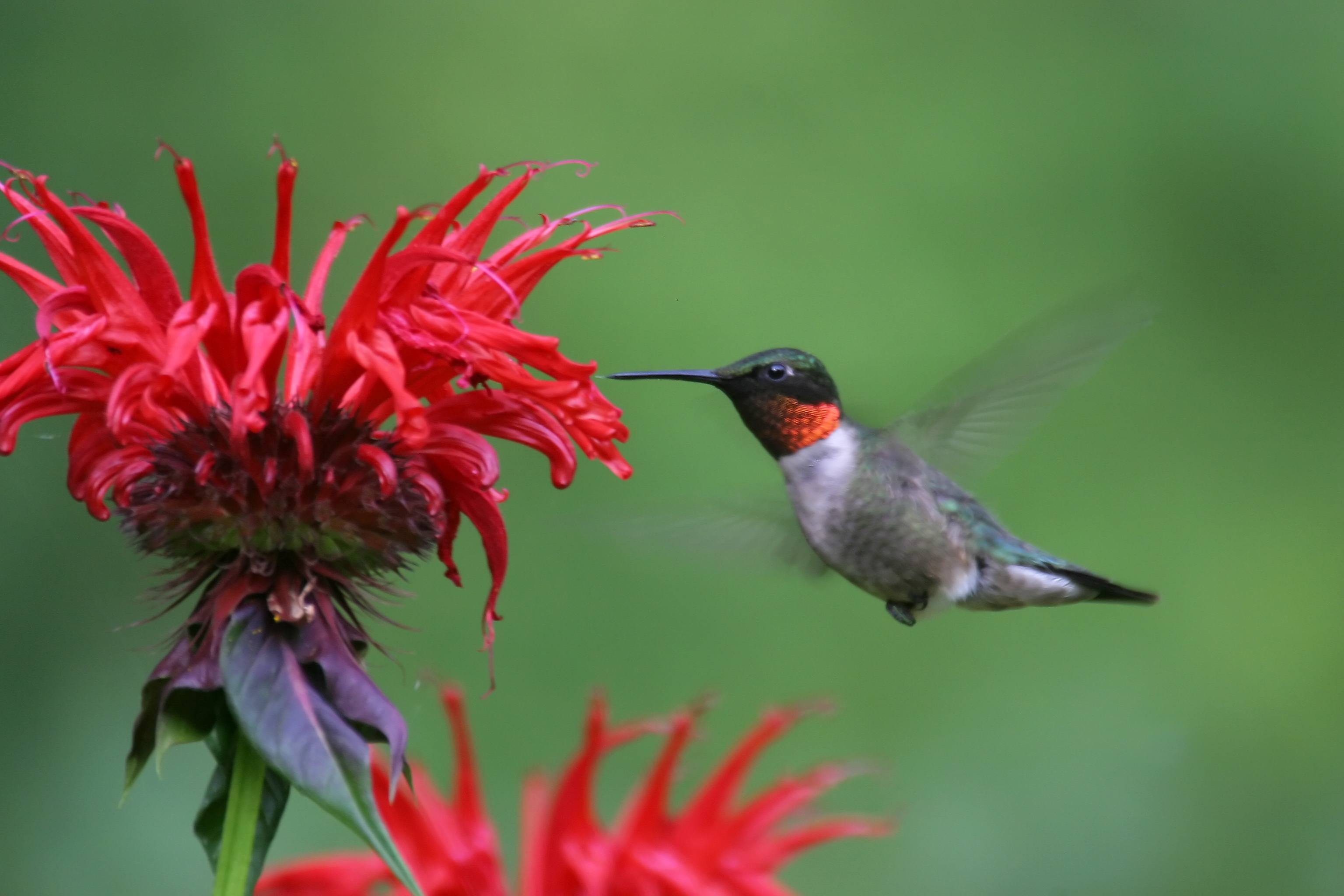
What type of symbiosis? Hummingbirds feed on nectar from flowers. The flowers are pollinated by hummingbirds as they move from flower to flower.
a)
commensalism
b)
mutualism
c)
parasitism
d)
predation
14.

Barnacles create home sites by attaching themselves to whales. This relationship neither harms nor benefits the whales.
a)
parasitism
b)
commensalism
c)
mutualism
15.

Oxpeckers feed on the ticks found on a rhinoceros. The oxpeckers get a meal and the rhinoceros is helped by the removal of the ticks.
a)
parasitism
b)
commensalism
c)
mutualism
16.
A bird that only eats a certain type of berry has a...
a)
Broad niche
b)
Narrow niche
c)
Limiting factors
100 %

