
 Worksheets
reproduction class 8
Total questions: 47
Worksheet time: 39mins
After fertilisation, the ________ divides repeatedly to give rise to a ball of cells.
Ovum
Sperm
Zygote
Embryo
The female gamete produced by the ovary is _____ in nature.
Haploid
Diploid
both a and b
none of the above
Which of the following is the site of fertilisation in humans?
Uterus
Fallopian tube
Ovary
Vagina
Which of the following is NOT a characteristic feature of sexual reproduction?
It involves the fusion of two reproductive cells.
It is common in most organisms.
Fertilization may take place inside or outside the body of the female.
The offspring receives its characteristics from one parent only.
Foetus is the
Well developed embryo
Developing embryo
Developing zygote
none of the above
Budding is found in
Yeast
Hydra and Yeast
Hydra
None
Which organisms reproduce by binary fission where one single cell splits into two identical cells?
starfish and flatworm
giraffe and zebra
bacteria and amoeba
spider plant and strawberry plant


Hydra produce offspring by growing the new individual on the body of the parent. This is an example of...
budding.
fission.
regeneration.
tubers.
Which statement describes why genetic variation is beneficial to populations of organisms?
individuals look different from one another
only one parent is needed to produce offspring
populations of the organism increase more rapidly
species can better survive environmental changes

Amoeba use mitosis and produce two offspring that are identical to the parent. This is an example of...
budding.
binary fission.
regeneration.
parthenogenesis.
Where does an offspring get its DNA in asexual reproduction?
from both parents
from only one parent
from neither parent
Sexual reproduction requires ______ parent(s) and asexual reproduction requires ______ parent(s).
one, one
two, two
two, one
one, two
Which of the following types of reproduction would result in the greatest genetic diversity in the offspring?


What do you call the cell that forms from fertilization?
fertilized egg
sperm cell
zygote
egg cell

We call secondary sexual characteristics...
Physical differences that we have when we are born
The differences between male and female reproductive organs
Physical differences that appear in puberty.
Physical differences like having long hair or blue eyes.

The female reproductive cell is called:
Ovum
Ovary
Sperm
Cervix

How many sperm are needed for fertilisation to occur?
Millions
One
Thousands
Ten

Where does the foetus develop during pregnancy?
In the Uterus
In the vagina
In the tummy
In the falopian tubes
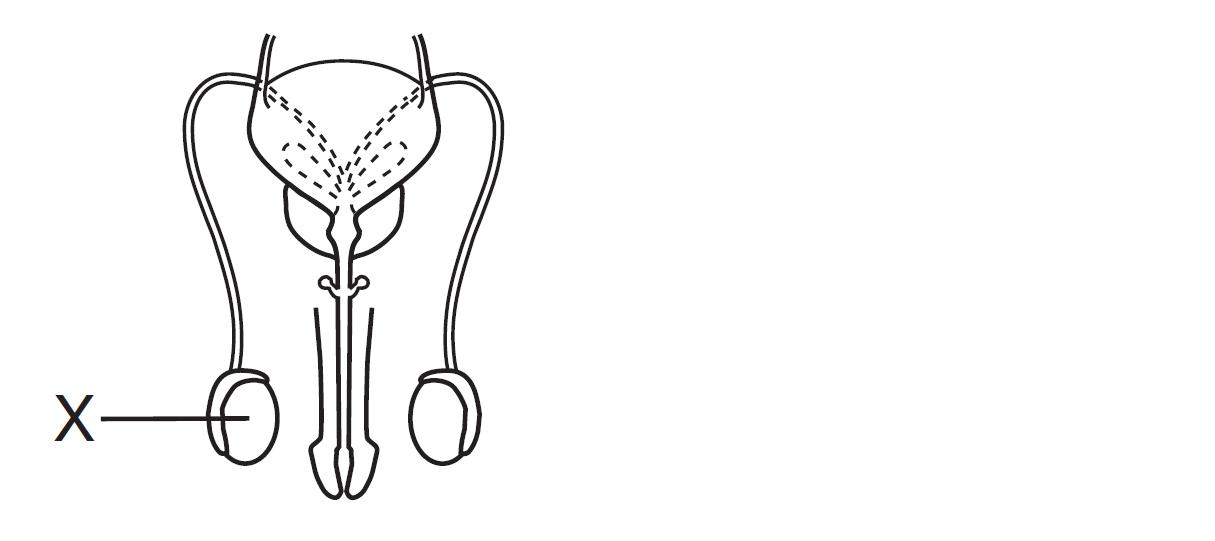
The diagram below represents a system in the human body. The function of structure X is to _____________
produce energy needed for sperm to move
provide food for the sperm to carry to the egg
produce and store urine
produce sperms and male sex hormones
What does IVF stand for?
In vitro fertilisation
Insert viable foetus
Internal variable fertilisation
Internal vitro fertilisation
The animal that produces young ones is called
Oviparous
viviparous
both oviparous and viviparous
none of these
Cloning is a mode of
Sexual reproduction
asexual reproduction
respiration
excretion
The number of eggs produced in internal fertilization is
more than external fertilization
less than external fertilization
more or less than external fertilization depending on the environmental conditions
equal to external fertilization
Reproduction is essential for living organisms in order to:
Continue their species
Maintain growth
Fulfil their energy requirement
Keep the individual organism alive
Which of the following is not a part of the male reproductive system?
Ovary
testis
penis
sperm duct
A Paramecium reproduces by dividing itself into two daughter cells. This process is called
Budding
binary fission
regeneration
sexual reproduction
Which of the following is not an oviparous animal?
silkworm
frog
hen
cow
Name the process in which tadpoles develop into young frogs.
budding
fertilization
metamorphosis
embedding
Female reproductive system in human beings contains __________ .
two pairs of ovaries
single ovary
three ovaries
a pair of ovaries
What is the advantage of sexual reproduction over asexual reproduction?
There is no advantage – asexual reproduction is more advantageous
There are more variations
Less number of offspring are produced
Competition for food is less
In which of the following organisms does metamorphosis take place?
all of these
silkworm
frog
butterfly
Dolly the famous animal was a
donkey
girl
cloned sheep
normal sheep
testes produce the hormone
testosterone
insulin
estrogen
both estrogen and progesterone
The process of releasing an egg from the ovary is called.
menopause
menarche
ovulation
reproduction
Sets of reproductive terms are given below. Choose the set that has an incorrect combination.
Sperm, testis, sperm duct, penis
Menstruation, egg, oviduct, uterus
Sperm, oviduct, egg, uterus
Ovulation, egg, oviduct, uterus
Animals exhibiting external fertilisation produce a large number of gametes. Pick the appropriate reason from the following.
The animals are small in size and want to produce more offsprings
Food is available in plenty in water
To ensure better chance of fertilization
Water promotes production of large number of gametes
In human beings, after fertilisation, the structure which gets embedded in the wall of uterus is
ovum
embryo
foetus
zygote
In human beings, the correct sequence of events during reproduction is
gamete formation, fertilisation, zygote, embryo
embryo, zygote, fertilisation, gamete formation
fertilisation, gamete formation, embryo, zygote
gamete formation, fertilisation, embryo, zygote
Stages in the life cycle of silkworm are given below. Write them in sequential order.
Pupa, Egg, Silk moth, Caterpillar
egg, moth, pupa, caterpillar
caterpillar,egg,moth,pupa
egg, caterpillar, pupa, moth
moth, pupa, egg, caterpillar
If A represents the number of sperms produced by an organism and B represents the number of Ovum, which of the following best describes external fertilization?
a. A = 1, B = millions
b. A = Millions, B = 1
c. A = Millions, B = 2000
d. Both and c are correct

