wayground logo

Free Printable Worksheets

Font size

S
M
L
XL
Worksheets

Unit 1 Test Review

Total questions: 47

Worksheet time: 59mins

Name
Class
Date
1.

Pro- means

a)

No

b)

Do (Yes)

2.

Eu- means

a)

No

b)

Do (Yes)

3.

Choose organisms from the list below that have eukaryotic cells.

a)

Cyanobacteria

b)

Roses

c)

Lions

d)

E. Coli Bacteria

4.
A plant and an animal are both living things. According to the Cell Theory, what can you conclude about these two very different organisms?
a)
Plants have cells but animals do not.
b)
They are both made of one or more cells. 
c)
They both come from the same kind of cell.
d)
They both come from a non-living organism.
5.
 Which of the following is NOT one of the main components of the cell theory?
a)
cells must contain DNA
b)
all living things are made of cells
c)
cells can only come from other cells
d)
cells are the basic unit of life
6.
Unlike eukaryotes, prokaryotes do not have:
a)
DNA
b)
cytoplasm
c)
cell walls
d)
a membrane bound nucleus
7.
The smallest unit that can perform the basic activities of life is
a)
a cell 
b)
a tissue
c)
an organ
d)
an organism
8.

Who coined the term cells after viewing cork under a microscope?

a)

Matthias Schleiden

b)

Robert Hooke

c)

Anton van Leeuwenhoek

d)

Rudolf Virchow

9.

Which cell is more complex, because it has many membrane-bound organelles?

a)

Prokaryote

b)

Eukaryote

10.

Schwann viewed __________ cells under a microscope.

a)

animal

b)

plant

c)

cork

d)

onion

11.

Who determined that all cells come from pre-existing cells?

a)

Robert Hooke

b)

Rudolph Virchow

c)

Anton van Leeuwenhoek

d)

Theodor Schwann

12.
What are the four biological molecules?
a)
proteins, carbohydrates, lipids, nucleic acids
b)
A, T, C, G
c)
water, air, earth, and fire
d)
Joe, Nick, and Kevin Jonas
13.
Which biomolecule is also known as enzymes?
a)
Carbohydrate
b)
Lipid
c)
Nucleic Acid
d)
Protein
14.
Which biomolecule are in starches and fibers?
a)
Lipid
b)
Protein
c)
Nucleic Acid
d)
Carbohydrate
15.
Which biomolecule is made of nucleotides and contain you DNA?
a)
Carbohydrate
b)
Lipids
c)
Protein
d)
Nucleic Acid
16.

Which biomolecule helps form muscles?

a)

Nucleic Acid

b)

Carbohydrate

c)

Protein

d)

Lipids

17.
Which biomolecule is responsible for insulation and energy storage?
a)
Protein
b)
Nucleic Acid
c)
Lipid
d)
Carbohydrate
18.
Which biomolecule is made of amino acids?
a)
Nucleic Acid
b)
Carbohydrate
c)
Protein
d)
Lipid
19.
Which biomolecule is your main source of quick energy?
a)
Nucleic Acid
b)
Protein
c)
Lipid
d)
Carbohydrate
20.
Which biomolecule contains fats and oils?
a)
Proteins
b)
Nucleic Acid
c)
Lipids
d)
Carbohydrate
21.
The conditions for an enzyme to work need to be ____________
a)
specific
b)
normal
c)
variable
d)
don't matter
22.
Which biomolecule contain your genetics?
a)
Carbohydrate
b)
Lipid
c)
Nucleic Acid
d)
Protein
23.
If you want a reaction to speed up you need an _________.
a)
nucleic acid
b)
enzyme
c)
nerve cell
d)
carbohydrate
24.
To control what enters or leaves the cell is a function of _________.
a)
Cell Wall
b)
Cell Membrane
c)
Nucleus
d)
Mitochondria
25.
To convert the energy of glucose into  the  usable form of ATP is a function of _________.
a)
Cell Wall
b)
Cytoplasm
c)
Nucleus
d)
Mitochondria
26.
To convert the radiant energy of the sun into the chemical energy of glucose through the process of photosynthesis is a function of _________.
a)
Cell Wall
b)

Large Central Vacuole

c)
Chloroplast
d)
Mitochondria
27.
To store water, glucose (sugar) materials (building blocks) or wastes is a function of _________.
a)
Cell Wall
b)
Vacuole
c)
Chloroplast
d)
Mitochondria
28.
The clear, jelly-like material in a cell that supports and protects the cell’s organelles.
a)
Cytoplasm
b)
Cell Membrane
c)
Nucleus
d)
Mitochondria
29.
Protects the cell from the outside environment. (Only Plants)
a)
Cell Membrane
b)
Chloroplasts
c)
Cell Wall
d)
Vacuoles
30.
Breaks down food  to release energy. Known as the power plant of the cell.
a)
Endoplasmic Reticulum
b)
Mitochondria
c)
Ribosomes
d)
Cell Wall
31.
The control center of the cell.
a)
Nucleus
b)
Nuclear Membrane
c)
Chloroplasts
d)
Golgi Aparatus
32.
Uses energy from the sun to make food for the plant.
a)
Cell Wall
b)
Cell Membrane
c)
Chloroplasts
d)
Vacuole
33.
What organelle is called the "powerhouse" of a cell?

a)
Endoplasmic Reticulum
b)
Nucleus
c)
Mitochondria
d)
Nucleolus
34.

Enzymes are an example of

a)

Lipids

b)

Carbohydrate

c)

Protein

d)

Nucleic Acid

35.
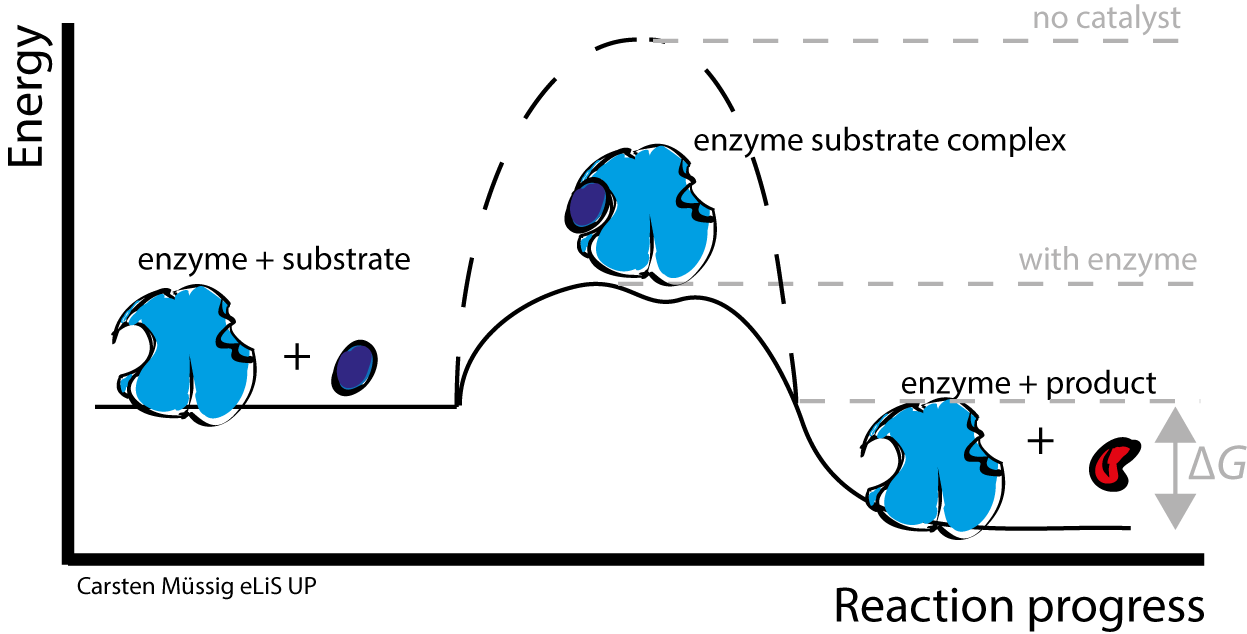
What is the purpose  of an enzyme?
a)
give permission for the reaction
b)
raise activation energy
c)
speed up reactions
d)
control how many reactions occur
36.
Enzymes are capable of increasing the rate of a chemical reaction within a living cell.  Enzymes accomplish this through which of the following means?
a)
reducing the number of products   
b)
reducing the activation energy
c)
increasing the temperature of the cell
d)
increasing the concentration of reactants 
37.
What 3 letters do enzymes typically end in?
a)
-ose
b)
-ase
c)
-ese
d)
-tic
38.
An enzyme speeds up a reaction by
a)
lowering the activation energy.
b)
raising the activation energy.
c)
releasing energy.
d)
absorbing energy.
39.
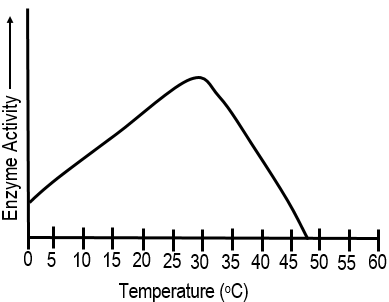
Based on the graph, what is the optimal temperature for this enzyme? 
a)
15oC
b)
40oC
c)
30oC
d)
35oC
40.
An enzyme speeds up a chemical reaction in the cell but can only be used once.  True or False? 
a)
true
b)
false
41.

A living thing that is made up of organ systems.

a)

cell

b)

tissue

c)

organ

d)

organ system

e)

organism

42.

2 or more different kinds of tissues that work together.

a)

cell

b)

tissue

c)

organ

d)

organ system

e)

organism

43.

The smallest unit of a living thing

a)

cell

b)

tissue

c)

organ

d)

organ system

e)

organism

44.

2 or more organs that work together.

a)

cell

b)

tissue

c)

organ

d)

organ system

e)

organism

45.

Groups of similar cells that work together.

a)

cell

b)

tissue

c)

organ

d)

organ system

e)

organism

46.

An organism that is made up of many cells is called:

a)

unicellular

b)

multicellular

c)

pluracellular

47.

Which is the correct order for levels of organization from simple to complex?

a)

cell, organ , tissue, organ system, organism

b)

organism, organ system, tissue, cell, organ

c)

cell, tissue, organ, organ system, organism

d)

organ, tissue, cell, organism, organ system