wayground logo

Free Printable Worksheets

Font size

S
M
L
XL
Worksheets

Atomic Structure

Total questions: 54

Worksheet time: 40mins

Name
Class
Date
1.

Subatomic particles with a negative charge

a)

Electrons

b)

Neutrons

c)

Protons

d)

Quarks

2.
Subatomic particles with a positive charge
a)
neutrons
b)
atomic mass
c)
protons
d)
isotopes
3.

protons + neutrons

a)

Subatomic Particles

b)

Atomic Number

c)

Atomic Mass

d)

Gluons

4.
Value representing the number of protons in an element
a)
Atomic Mass
b)
Mass Number
c)
Valence Electrons
d)
Atomic Number
5.
Subatomic particles that are neutral in charge
a)
Neutrons
b)
Protons
c)
Nucleus 
d)
Electrons
6.
The smallest particle of an element that shows all the properties of that element.
a)
Subatomic Particles
b)
Atom
c)
Quarks
d)
Gluons
7.
Where electrons are likely to be found as they travel around the nucleus
a)
Nucleus
b)
Electron Cloud
c)
Within a Proton
d)
Within a Neutron
8.
A tiny but very dense, positively charged portion of the atom that holds most of the atomic mass
a)
Electron Shells
b)
Orbitals
c)
Electron Cloud
d)
Nucleus
9.
Arrangement of elements organized by atomic number
a)
Electron Cloud 
b)
Periodic Table 
c)
Electron Configuration
d)
None of these
10.
Calculation used to find the number of neutrons in an atom
a)
Atomic Mass - Atomic Number
b)
Atomic Number - Atomic Mass
c)
Atomic Mass - Electrons
d)
none of these
11.
The only element with no neutrons in its nucleus.
a)
Oxygen
b)
Helium 
c)
Hydrogen
d)
Lithium
12.
The nucleus of an atom is made of
a)
electrons and protons
b)
electrons and neutrons
c)
protons and neutrons
d)
empty space
13.

Which subatomic particles are found outside the nucleus of an atom.

a)

protons

b)

neutrons

c)

quarks

d)

electrons

14.

Protons and neutrons are so small, they are assigned a mass of 1 in these units

a)

grams

b)

milligrams

c)

amu (atomic mass unit)

d)

mass number

15.
The atom's mass is determined by the number of 
a)
protons and neutrons
b)
protons and electrons
c)
neutrons and electrons
16.
The number of these determines which element an atom is.
a)
neutrons
b)
electrons
c)
protons
17.

What is one way Neutrons are different from electrons?

a)

they both are negative

b)

neutrons have no charge, while electrons have a negative charge

c)

Both are in the nucleus( center of atom)

d)

Electrons are inside nucleus and neutrons are outside the nucleus.

18.

What is the atomic number?

a)

35

b)

18

c)

17

d)

52

19.

How many protons and electrons does this element have?

a)

35

b)

18

c)

17

d)

52

20.

How many neutrons does Chlorine have?

a)

18

b)

17

c)

35

d)

52

21.

What is the atomic mass of Neon?

a)

10

b)

20

c)

30

22.

How many neutrons does calcium have?

a)

20

b)

40

c)

60

d)

0

23.

What is the atomic mass of Arsenic?

a)

33

b)

107

c)

75

24.

A horizontal row of elements in the periodic table

a)

Molecule

b)

Period

c)

Family

d)

Atom

25.

What is the smallest unit of matter? It is composed of protons and neutrons, held together in the nucleus, and electrons around the nucleus in different electron orbitals, which form an electron cloud.

a)

cell

b)

nucleus

c)

atom

d)

electron

26.

What is the system of electrons surrounding the nucleus of an atom?

a)

valence electrons

b)

nucleus

c)

electrons

d)

electron cloud

27.

What is the center of an atom containing protons and neutrons?

a)

nucleus

b)

neutron

c)

proton

d)

electron cloud

28.

What is the number of protons in the nucleus of an atom that determines the chemical properties of an atom?

a)

mass number

b)

atomic mass

c)

atomic number

d)

atomic symbol

29.

What is the combined mass of all the protons and neutrons of an atom and is approximately equal to the number of protons and neutrons?

a)

atomic mass

b)

atomic number

c)

subatomic particles

d)

nucleus weight

30.

What is material that has mass and takes up space?

a)

volume

b)

mass

c)

matter

d)

density

31.

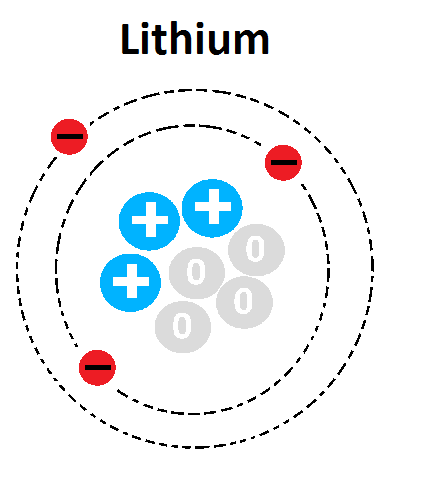
What is the atomic number of this atom?

a)

1

b)

3

c)

4

d)

7

32.

What is the mass number of this atom?

a)

1

b)

3

c)

4

d)

7

33.
In order for an atom to be neutral what has to be true?
a)
The atom has more protons than neutrons
b)
The atom has more neutrons than protons
c)
The atom has the same number of protons and neutrons
d)
The atom has the same number of protons and electrons
34.
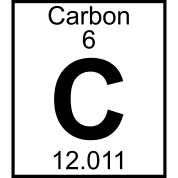
What does the C represent?
a)
atomic mass
b)
atomic number
c)
element name
d)
chemical symbol 
35.

What does the 6 represent?

a)

Atomic mass

b)

atomic number

c)

chemical symbol

d)

element name

36.
If an atom has 12 positively charged subatomic particles, which of the following must it also have to be considered a neutral atom?
a)
12 neutrons
b)
12 electrons
c)
12 protons
d)
24 protons and neutrons
37.

An atom has 10 protons, 15 neutrons and 10 electrons what is its mass number.

a)

20

b)

10

c)

35

d)

25

38.

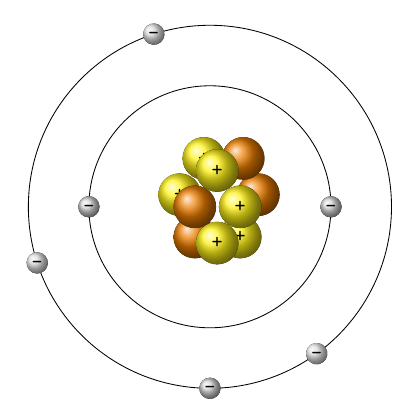
How many electrons does this atom have?

a)

2

b)

4

c)

6

d)

10

39.
The atomic number of an element that has 9 protons, 9 electrons, and 10 neutrons is _____.
a)
9
b)
10
c)
19
d)
28
40.
An element with a mass number of 11 and an atomic number of 5 has how many neutrons?
a)
11
b)
5
c)
6
d)
16
41.
Where is most of the mass in an atom located?
a)
in the nucleus
b)
in the protons
c)
in the neutrons
d)
in the electrons
42.
An atom has an atomic number of 15 and a mass number of 31. How many protons are there in the atom?
a)
15
b)
31
c)
16
d)
47
43.
What is the atomic number of the atom pictured? 
a)
9
b)
10
c)
18
d)
19
44.

Which of the following determines the identity of an element?

a)

number of protons

b)

atomic mass

c)

number of neutrons

d)

number of shells

45.
The electrons that are on the outer most region of the atom
a)
Shell Electrons
b)
Violent Electrons
c)
Valence Electrons
46.
The horizontal rows of the periodic table
a)
Groups
b)
Periods
c)
Families
47.
The vertical rows of the periodic table, also called families
a)
Groups
b)
Periods
c)
Rows
48.
The different energy levels of electrons as they orbit the nucleus
a)
Electron Cloud
b)
Orbitals (Energy Levels)
c)
2, 8, 18, 32
49.
What element does the Bohr Model represent?
a)
Nitrogen
b)
Potassium
c)
Sodium
50.
Which other element has the same number of valence electrons as chlorine?
a)
Sodium
b)
Bromine
c)
Oxygen
51.

How many electrons does sulfur have

a)

16

b)

32

c)

48

d)

12

52.

How many protons does sulfur have?

a)

32

b)

16

c)

48

d)

12

53.
What is true about an atom?
a)
Most of the space in an atom is taken up by the nucleus
b)
Atoms are mostly empty space
c)
Atoms have no mass
d)
Electrons have much more mass that protons or neutrons.
54.
For a given element, the atomic number indicates the number of _____
a)
protons in the nucleus
b)
neutron in the nucleus
c)
electrons in the atom
d)
nucleons in the atom