
Font size
 Worksheets
Biology - Limiting Factors and Carrying Capacity
Total questions: 28
Worksheet time: 19mins
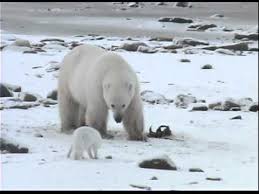
Two arctic fox are fighting with a polar bear for a sea lion carcass. One fox distracts the bear while the other eats. What type of limiting factor is the polar bear?
Predator-Prey Relationships
Competition (density dependent)
Herbivory Effect
Weather (density independent)

A duck population normally begin migrating south right after the last rain of the late summer season. Suddenly, they’re migrating much earlier. The climate has been changing far too often which is altering the effects of their magnetite.
Predator-Prey Relationships
Weather (density independent)
Herbivory Effect
Competition (density dependent)

One of the wolf populations begins to compete with a new bear population for the same herbivores. Over time, bushes, trees and rivers improve in numbers. There is an effect on the producer populations. What is the limiting factor to the herbivore?
Predator-Prey Relationships between predators and herbivores (density dependent)
Herbivory Effect
Competition for sunlight (density dependent)
Weather (density independent)

A honey-badger digs the ground tunnels in search for snakes. In one occasion, the badger finds a snake and competes with it. The badger leaves scratches and bite marks on the snake before it escapes. After twenty-four hours the snake dies. What is the limiting factor to the snake?
Predator-Prey Relationships (density dependent)
Competition for Food (density dependent)
Temperature (density independent)
Weather (density independent)

The wolf population gets reintroduced to the ecosystem. There are enough deer to go around, so they eat comfortably. The wolf population begins to grow out of control with so much food. The different wolf families then begin to compete for the few caves that exist. Not everyone has good shelter so some have to sleep in the forest floors. What is the limiting factor to the wolves?
Overcrowding (density dependent)
Competition (density dependent)
Weather (density independent)
Food (density dependent)

The wolf goes extinct, and the deer population has no predator to worry about. They graze the land. Because there is no more food. Some of the deer begin to bite at each other, while others die of starvation. What is the limiting factor to the deep population?
Natural disaster (density independent)
Overcrowding (density dependent)
Predator-Prey Relationships (density dependent)
Shelter (density dependent)
Which of these factors affects large and small populations in the same ways? (It does not matter what size the population is)
Density Dependent Limiting Factors
Density Independent Limiting Factors
Herbivory Effect
Competition
Which of these limiting factors has an influence on the growth of a population based on its density?
Natural Disasters
Seasonal Changes
Weather
Overcrowding

In the graph to the right, what is the population of deer at the carrying capacity of the environment?
3
7
70
40
When a population grows past the ecosystem's carrying capacity, what happens to the population?
It continues to grow higher and higher.
The population starts to die off and returns to the carrying capacity.
The population will go extinct due to lack of resources.

The graph to the right shows the interaction of the wolf and moose populations on Isle Pekie. If the moose population continues to increase, the wolves' food supply will increase. What will most likely happen to the wolf population as a result?
It will decrease.
It will increase.
It will remain the same.
Due to stress, large numbers of female lemmings miscarry their young and fail to reproduce.
Density-Dependent
Density-Independent
Many fish die due to a drastic change in water temperature.
Density-Dependent
Density-Independent
An extensive drought in the plains threatens wildebeest, giraffe, zebra, and springbok populations.
Density-Dependent
Density-Independent
Which of the following is a density-dependent limiting factor?
human activities
unusual weather
competition
natural disaster
Which of the following are examples of a density independent factors?
forest fire
seasonal weather
storms
disease
Which of the following are density dependent factors?
competition for resources
predation
disease
natural disasters

This graph is showing:
a population reaching carrying capacity
exponential growth
a food web
Limiting Factor refers to
maximum population of a species an environment can support
factor in an ecosystem that limits the growth of a population (ex: lack of food)

What should the label on the x-axis be?
time
population
carrying capacity
dynamic equilibrium
What should the label on the y-axis be?
time
population
carrying capacity
dynamic equilibrium
An environment can support only as many organisms as the available energy, minerals, and oxygen will allow. Which term is best described by this statement?
biological feedback
biological diversity
carrying capacity
homeostatic control
Which statement best describes how birth and death rates compare in a population at a stable carrying capacity?
The birth rate is greater than the death rate
The birth rate is less than the death rate
The birth rate is equal to the death rate
The birth rate and the death rate are at zero
The large amount of salt in the air and water of coastal areas determines which species can exist there. In these areas, the salt functions as a
Source of energy
biotic factor
food source
limiting factor

