wayground logo

Free Printable Worksheets

Font size

S
M
L
XL
Worksheets

Unit 2 Review

Total questions: 46

Worksheet time: 51mins

Name
Class
Date
1.

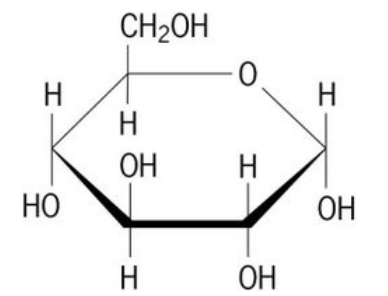
Which of the following is represented in the image?

a)

Nucleotide

b)

Carbohydrate

c)

Lipid

d)

Protein

2.

What is a function of carbohydrates?

a)

To provide energy to living organisms

b)

The provide the structure in muscles

c)

Providing insulation

d)

Storing your genetic information

3.

What biomolecules are NOT used for energy (two answers, choose both before continuing)?

a)

Carbohydrates

b)

Lipids

c)

Proteins

d)

Nucleic acids

4.

What is the best definition of the function of nucleic acids?

a)

They contain defense mechanisms against bacteria

b)

They contain the information that makes you and makes you different from every other living thing

c)

They are used as the structural components of the body (muscles and organs)

d)

They create the cell membrane

5.

What is a function of lipids?

a)

To provide short term energy to living organisms

b)

The provide the structure in muscles

c)

To provide long term storage of energy

d)

Storing your genetic information

6.

What is the function of proteins?

a)

They are used for cell to cell communication

b)

They insulate the body, are used for short term energy and are found in glycogen

c)

They are used as the structural components of the body (muscles and organs)

d)

They create the cell membrane

7.

Which of the following is a carbohydrate?

a)

DNA

b)

Protein

c)

Sugars

d)

Fats

8.
What are the four biological molecules?
a)
proteins, carbohydrates, lipids, nucleic acids
b)
A, T, C, G
c)
water, air, earth, and fire
d)
Joe, Nick, and Kevin Jonas
9.
Which biomolecule is made of nucleotides and contain you DNA?
a)
Carbohydrate
b)
Lipids
c)
Protein
d)
Nucleic Acid
10.
Which biomolecule is made of amino acids?
a)
Nucleic Acid
b)
Carbohydrate
c)
Protein
d)
Lipid
11.
Which biomolecule is your main source of quick energy?
a)
Nucleic Acid
b)
Protein
c)
Lipid
d)
Carbohydrate
12.
Which biomolecule is responsible for insulation and energy storage?
a)
Protein
b)
Nucleic Acid
c)
Lipid
d)
Carbohydrate
13.
Proteins don't have specific shapes.
a)
True
b)
False
14.
The conditions for an enzyme to work need to be ____________
a)
specific
b)
normal
c)
variable
d)
don't matter
15.
Enzymes produce a specific reaction.
a)
True
b)
False
16.
If you want a reaction to speed up you need an _________.
a)
nucleic acid
b)
enzyme
c)
nerve cell
d)
carbohydrate
17.
Which biomolecule is this a picture of?
a)
Protein
b)
Nucleic Acid
c)
Lipid
d)
Carbohydrate
18.
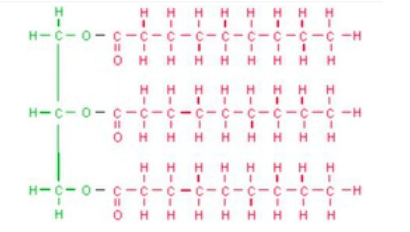
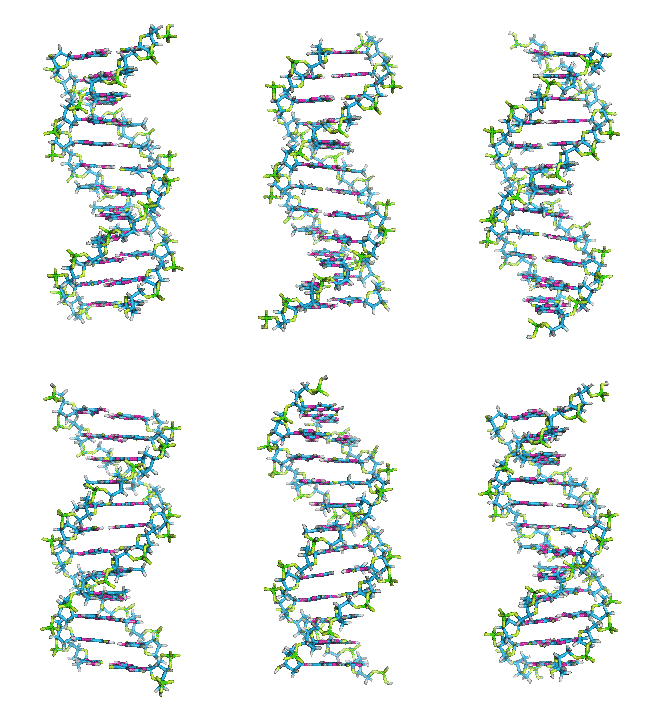
Which biomolecule is this a picture of? (Hint: it is made of amino acids)
a)
Proteins
b)
Nucleic Acids
c)
Lipids
d)
Carbohydrates
19.
Which biomolecule is this a picture of?
a)
Protein
b)
Nucleic Acid
c)
Lipid
d)
Carbohydrate
20.
Which biomolecule is made of nucleotides and include your DNA? (Hint: they carry genetic information)
a)
Carbohydrate
b)
Lipids
c)
Protein
d)
Nucleic Acid
21.

What happens to an enzyme when it denatures?

a)

The activation energy of the reaction is doubled.

b)

The activation energy of the reaction is lowered.

c)

It's optimal conditions for temperature of the enzyme are doubled.

d)

The shape of the enzyme molecule is changed.

22.

One function of lipids is to store energy. What is another function of lipids in the human body?

a)

To form cell membranes

b)

To make energy from the sun.

c)

To control chemical reactions.

d)

To provide energy for the cell.

23.

Organisms living in a bog environment must be able to tolerate nitrogen-poor acidic conditions. Bog plants such as the Venus flytrap and sundew are able to obtain their nitrogen by attacking and consuming insects. These plants produce chemicals that break down the insects into usable compounds.

These chemicals present in the bog plants that break down the insects mentioned in the reading passage are most likely...

a)

hormones

b)

lipids

c)

enzymes

d)

carbohydrates

24.
Where do substrates bind on an enzyme?
a)
voltage-gated channels
b)
surface receptor
c)
calcium channels
d)
active site
25.
What is the purpose  of an enzyme?
a)
give permission for the reaction
b)
raise activation energy
c)
speed up reactions
d)
control how many reactions occur
26.
With what 3 letters do enzymes typically end?
a)
-ose
b)
-ase
c)
-ese
d)
-tic
27.
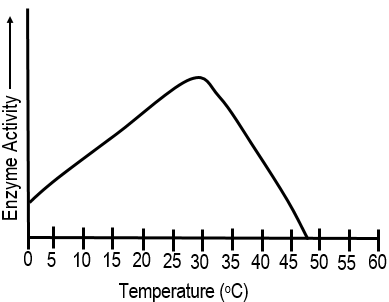
Based on the graph, what is the optimal temperature for this enzyme? 
a)
15oC
b)
40oC
c)
30oC
d)
35oC
28.
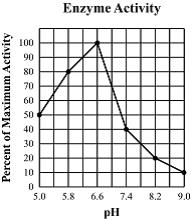
Which of the following conclusions can be drawn from this graph?
a)
The optimum pH of the enzyme is 6.6.
b)
The optimum pH of the enzyme is 5.8
c)
The enzyme’s activity increases as pH increases 5.0 to 9.0
d)
The enzyme’s activity is greater around pH of 8.0 .
29.
Which of the following conclusions can be drawn from this graph?
a)
The optimum pH of the enzyme is 6.6.
b)
The optimum pH of the enzyme is 5.8
c)
The enzyme’s activity increases as pH increases 5.0 to 9.0
d)
The enzyme’s activity is greater around pH of 8.0 .
30.
What does NOT produce carbon dioxide?
a)
Photosynthesis
b)
Burning Fossil Fuels
c)
Animal respiration
d)
Plants decaying
31.
TRUE or FALSE?
All of the carbon in existence is continually recycled in the carbon cycle.
a)
True
b)
False
32.
Organisms that do not decompose can be buried and become what?
a)
water
b)
nutrients
c)
air
d)
fossil fuels
33.
Respiration is the process by which animals take in _____ and release _____. 
a)
photosynthesis, air
b)
carbon, oxygen
c)
oxygen
d)
oxygen, carbon dioxide
34.
When humans burn fossil fuels, most of the carbon quickly enters the                       as carbon dioxide.
a)
Water
b)
Atmosphere
c)
Sun
d)
Air
35.
Which one of these does not add CO2 to the atmosphere?
a)
cooking with gas
b)
planting trees
c)
burning wood
d)
riding in a bus
36.
If the plant population decreased, the amount of carbon would _________.
a)
Stay the same
b)
Increase
c)
Decrease
37.

What converts nitrogen gas into a usable form for plants and animals?

a)

bacteria

b)

rain

c)

fungi

d)

car exhaust

38.

The process in which nitrogen circulates and is recycled is called

a)

The nitrogen cycle

b)

The carbon cycle

c)

The water cycle

d)

The phosphorus cycle

39.

Organisms that need nitrogen to survive.

a)

only plants

b)

only animals

c)

only bacteria

d)

all living things

40.

How is nitrogen "fixed" into a usable form for plants?

a)

Through action of bacteria only

b)

Through lightning only

c)

Through action of bacteria and lightning

d)

Through photosynthesis

41.

How do animals get the nitrogen they need?

a)

From the air they breathe

b)

From the water they drink

c)

From the food they eat

d)

From the sun

42.

Gas that makes up 78% of our atmosphere.

a)

Oxygen

b)

Nitrogen

c)

Hydrogen

d)

Carbon Dioxide

43.

What is the process of combining nitrogen gas with other elements to make nitrogen into usable compounds?

a)

nitrogen composition

b)

nitrogen fixation

c)

ammonia

d)

denitrification

44.

What is the formula for atmospheric nitrogen?

a)

N

b)

N2

c)

NH3

d)

NO3

45.

What process occurs when dead plant and animal matter decomposes and nitrogen is released back into the atmosphere?

a)

Assimilation

b)

Fixation

c)

Ammonification

d)

Denitrification

46.

Plants and animals cannot use nitrogen directly from the air.

a)

True

b)

False