wayground logo

Free Printable Worksheets

Font size

S
M
L
XL
Worksheets

Chemistry of Life

Total questions: 50

Worksheet time: 25mins

Name
Class
Date
1.

What reaction requires you to add water to break chemical bonds?

a)

Hydrolysis

b)

Covalent bond

c)

Ionic bond

d)

Isotope

2.
What is the strongest of all the bonding types?
a)
Covalent
b)
Ionic
c)
Hydrogen
d)
Metallic
3.
What are the four elements that all life is made up of?
a)
Hydrogen, Oxygen, Nitrogen and Carbon
b)
Helium, Oxygen, Neon and Carbon
c)
Hydrogen, Titanium, Carbon, Nitrogen
d)
Oxygen, Chlorine, Iron, Nitrogen
4.

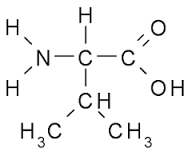
Which section of this amino acid is the carboxyl group?

a)

A

b)

B

c)

C

d)

D

5.
These biomolecules are fats, oils, waxes and steroids. They are also a result if we eat too many carbohydrates and why we don't melt in water.
a)
Carbohydrates
b)
Lipids
c)
Nucleic Acids
d)
Enzymes
6.
Examples of these biomolecules are DNA and RNA...
a)
Nucleic Acids
b)
Carbohydrates
c)
Lipids
d)
Proteins
7.
Nucleic Acids are made up of smaller subunits called....
a)
Nucleotides
b)
Lipids
c)
Monosaccharides
d)
Subunits
8.
How many Amino Acids does our body use to make proteins?
a)
20
b)
10
c)
6
d)
2
9.
Carbohydrates are made up of three of the six major molecules found in living things. The general chemical formula for a carbohydrate is CH2O. Which elements combine to make a carbohydrate?
a)
copper and cobalt
b)
chlorine and oxygen
c)
carbon, helium, and oxygen
d)
carbon, hydrogen, and oxygen
10.
The main types of chemical bonds are:
a)
ionic and subliminal
b)
covalent and hydrogenated
c)
ionic and covalent
d)
ionic and flourite
11.

Which section of this amino acid is the amino group?

a)

A

b)

B

c)

C

d)

D

12.

What would this molecule be called?

a)

monosaccharide

b)

disaccharide

c)

polysaccharide

d)

glyceride

13.
Plants store glucose in the form of
a)
starch
b)
glycogen
c)
cellulose
d)
chitin
14.
The 4 macromolecules are
a)
vitamins, lipids, water, micronutrients
b)
micronutrients, macronutrients, water, vitamins
c)
Lipids, Waxes, Vitamin A, Water
d)
Carbohydrates, Lipids, Proteins, Nucleic Acids
15.

Which section of this amino acid is the variable R-side chain?

a)

A

b)

B

c)

C

d)

D

16.

This molecule is a monomer in which polymer?

a)

amino acid

b)

nucleic acid

c)

carbohydrate

d)

lipid

17.

This is water’s ability to be attracted to other water molecules.

a)

adhesion

b)

capillary action

c)

cohesion

d)

surface tension

18.
Which is NOT a unique property of water?
a)
Frozen water floats on liquid water.
b)
Water covers most of the Earth’s surface and retains a large amount of heat.
c)
Water molecules stick to each other through hydrogen bonds.
d)
Water cools very rapidly.
19.

What property of water helps to moderate earth's temperature?

a)

adhesion

b)

chohesion

c)

Specific high heat

d)

Latent heat of vaporization

20.
Made of monomers of monosaccharides
a)
Carbohydrates
b)
Lipids
c)
Proteins
d)
Nucleic Acids
21.
Made of monomers of amino acids
a)
Carbohydrates 
b)
Lipids
c)
Proteins 
d)
Nucleic Acids
22.
What is the function of nucleic acids?
a)
store genetic information
b)
store energy (long-term)
c)
store energy (short-term)
d)
build skin, hair, nails, muscles
23.

What does C.H.O.N.P.S stand for?

a)

Calcium, Hydrogen, Oxygen, Neon, Platinum, Sodium

b)

Carbon, Hydrogen, Oxygen, Nitrogen, Phosphorus, Sulfur

c)

Can Harrison ford Outrun Normal People Speed

d)

Carbon, Helium, Orange, Nitrogen, Phosphorus, Sulfur

24.

large macromolecule that can be used to store Longterm energy, and they form important parts of cell membranes and waxy waterproof coverings: Fats,Oil, Waxes

a)

Carbohydrates

b)

Lipids

c)

Proteins

d)

Nucleic acids

25.

What is the single unit of a polymer

a)

Monomers

b)

Legos

c)

Polymers

d)

Puzzle Piece

26.

What are the compounds consisting of repeated linked monomers

a)

a stack of legos

b)

Chains

c)

Polymers

d)

Multiple Monomers

27.

A substance that consists of two or more elements and has a unique composition that is always the same is __________________________

a)

a chemical compound

b)

an element

c)

an atom

d)

an argument

28.

Why is carbon so basic to life? (check all that apply)

a)

Forms stable bonds with many elements

b)

Forms bonds with itself in different ways

c)

Makes two covalent bonds

d)

Is found in molecules of water

29.

These organic molecules provide energy to cells, store energy, and form body structures of plants.

a)

Carbohydrates

b)

Fats

c)

Lipids

d)

Nucleic acids

30.
Which of the following is LEAST likely to dissolve in water?
a)
nonpolar fats and oils
b)
polar sugar molecules
c)
salt made of a positive sodium ion and a negative chloride ion
d)
all of the substances will dissolve easily in water
31.

An anion is formed when an atom gains electrons from another atom T/F

a)

False

b)

True

32.
A cation is formed when an atom loses an electron or electrons to another atom creating an overall positive charge. 
a)
True
b)
False
33.
A hydrogen bond is a weak bond between two molecules resulting from an electrostatic attraction between a proton in one molecule and an electronegative atom in the other.
a)
True
b)
False
34.
Which of the following is true of water?
a)
the oxygen end is slightly electropositive
b)
hydrogen bonds hold water molecules together
c)
water molecules are joined through polar covalent bonds
d)
water is a solid at room temperature
35.
Which of the following statements about water is false?
a)
The polar covalent bonds between the hydrogens and oxygen of water molecule is due to the high electronegativity of oxygen
b)
Water is the universal solute
c)
Water has cohesive and adhesive properties
d)
Water has a high specific heat and a high rate of evaporation due to hydrogen bonds
36.

A diagram of an organic molecule is below. Which element is found at the positions marked by the dots (•) in the molecule?

a)

Carbon

b)

Iron

c)

Nickle

d)

Calcium

37.

The diagram above represents a fat molecule.

A fat molecule belongs to which category of organic molecules?

a)

Protein

b)

Nucleic acids

c)

Carbohydrate

d)

Lipid

38.
Attractions between water molecules are called
a)
Covalent bonds
b)
Ionic bonds
c)
Polar bonds
d)
Hydrogen bonds
39.
A molecule with electrically charged areas is called a _______________.
a)
magnet
b)
polar molecule
c)
solution
d)
electrical molecule
40.
Carbon, Hydrogen, Oxygen and Nitrogen are elements in what biomolecule?
a)
Carbohydrate
b)
Lipid
c)
Protein
d)
Nucleic acid
41.

Proteins are composed of which molecules?

a)

Amino acids.

b)

Fatty acids.

c)

Monosaccharides.

d)

Nucleic acids.

42.

What would you describe this picture as?

a)

monosaccharide

b)

disaccharide

c)

polysaccharide

d)

lipid

43.

Which pair of atoms are ions?

a)

Left atoms

b)

Right atoms

44.

Which is the monomer of carbohydrates?

a)

A

b)

B

c)

C

d)

D

e)

E

45.

Which is the monomer of nucleic acid?

a)

A

b)

B

c)

C

d)

D

e)

E

46.

This picture represents what reaction?

a)

Hydrolysis

b)

Decomposition

c)

Dehydration synthesis

d)

Catabolism

47.

Water is the univeral ____.

a)

solute

b)

solvent

c)

solution

48.

solute + solvent =

a)

solution

b)

equation

49.
What word describes when water is attracted to other substances?
a)
cohesion
b)
adhesion
c)
capillary action
d)
surface tension
50.

In which macromolecule will you always find phosphate?

a)

carbohydrates

b)

lipids

c)

proteins

d)

nucleic acids