
 Worksheets
WHI.3 Western River Valleys
Total questions: 60
Worksheet time: 2hrs 1mins

Which ancient writing system is illustrated in this picture?
Chinese characters
Phoenician Alphabet
Sumerian Cuneiform
Egyptian hieroglyphics
The early Hebrew people trace the beginning of their history back to which important individual?
Moses
Soloman
Abraham
King David


What type of government did ancient Egypt have?
Dictatorship
Monarchy
Theocracy
Democracy
What is the name of the region formed by the Nile Delta?
Lower Egypt
Nubia
The Red Land
Upper Egypt
Who was the first pharaoh, who united the Upper and Lower Egypt? He signified this by wearing the double crown.
Hatshepsut
Menes
Ramses II
Seth

Who is the famed Egyptian boy king? He was known for his pure gold mask and he is supposed to have a curse protecting his tomb?
Ramses II
Hatshepsut
King Tut
Menes

What was the purpose of Egyptian mummification?
So that their bodies would rule earth.
So that their Ka would re-enter the body in the afterlife.
So that they had more help building pyramids.
So that their bodies would be pretty.

This object was discovered by Napoleonic archaeologists. It contained three ancient writing systems: Greek, Demotic, and Hieroglyphics.
pyramid
Rosetta Stone
sphinx
mummy's sarchopahgus
Why was Lower Egypt a prime location for the capital of Egypt and home to the majority of ancient Egyptians?
Lower Egypt is where most people lived.
It's where the Nile Delta is located and is very fertile.
It has the best trade routes.
Most money was produced in Lower Egyptian villages.
Which of these is the correct order of Egyptian Society from highest to lowest?
farmers, artisans, priests, scribes
priests scribes artisans farmers
scribes, priests, artisans farmers
artisans, priests, farmers scribes
Ramses the Great ruled Egypt as a Pharaoh and accomplished many great things. Two of things he is known for is
long reign as Pharaoh and building great monuments, cities and temples
building great monuments and temples and shrinking Egyptian Empire
allowing the Hittites to take control of Egypt and the love his wife Nefertari
having the shortest reign as pharaoh and making a peace treaty with the Hittites
The majority of the Egyptians live along the Nile River and Nile River Delta because
land is inexpensive there
arable land is located there.
the pyramids are located there
important archaeological sites are there.
Which pharaoh of Egypt defied traditions and ruled as a women for over 20 years in the 1400s bce?
Cleopatra
Hatshepsut
Thutmose
Ramses III

This picture shows an area known as the..
Persian Gulf
Fertile Crescent
Promised Land
Mesopotamian Delta

Babylonian leader who created the first written code, based on the concept of an eye for an eye. It was 282 laws that dealt with almost every part of daily life
Menes
Moses
Hammurabi
Abraham

The earliest form of writing in which pictures represented word or ideas
Cave Paintings
Pictograms
Alphabet
Sumerian
Where did God tell Abraham to take his people because it was the "promised land"?
Egypt
Ur
Canaan
the Desert
After the Hebrews escaped Egyptian slavery, who did God give the Ten Commandments to?
Abraham
Joseph
Moses
Isaac
The departure of the Hebrews out of slavery in Egypt is known as the __________
Exodus
Passover
Sabbath
Diaspora
Jewish people scattered outside their homeland
covenent
Torah
exodus
Diaspora
Jewish holy book; contains the Ten Commandments and Mosaic Law
covenent
Torah
exodus
Issac
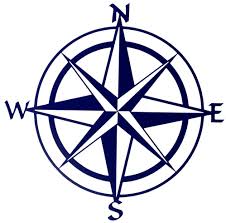
Which way does the Nile flow?
North to South
South to North
East to West
West to East
In 1922, Howard Carter discovered this mysterious boy king's tomb. Who was it?
King Tut Ankh Amun
King Menes
Ramses
Queen Hatsheput
The new metal that transformed ancient warfare after 1200 B.C.E. was
iron.
bronze.
steel.
copper.
The word "Mesopotamia" means
middle of the fertile crescent
land in the middle of the desert
land between the rivers
land along the side of rivers
A Sumerian temple to honor their chief god was called a
Citadel
Pyramid
Temple
Ziggurat.
Civilization in Mesopotamia developed between which two rivers?
the Mesotarian and the Tazmanian
the Tigris and the Nile
the Nile and the Euphrates
the Euphrates and the Tigris

The Sumerian wedge shaped writing system is called
Cuneiform
Hieroglyphs
Pictographic
Sumergylphics
The most famous Chaldean (Neo Babylonian) king
Sargon
Kassites
Nebuchadnezzar
Gilgamesh
Which group from the Fertile Crescent were known as savage warriors?
Assyrians
Sumerians
Egyptians
Chaldeans
This group of seafaring people from the Fertile Crescent, created colonies through the Mediterranean. They are known for purple dye, alphabet, and sailing.
Assyrians
Phoenicians
Babylonians
Kassites

Who was the great king of the Akkadians
Hammurabi
Moses
Sargon
Xerxes

Which Empire had the capital city of Nineveh?
Akkadians
Hyksos
Assyrians
Persians

They came from present day Turkey ( Asia Minor) from the north swept into the Tigris -Euphrates Valley around 1600 BCE capital was Hattusa, Fierce warriors, first smelt iron, great with a chariot
Babylonians
Akkadians
Hittites
Chaldeans
What was the new invention that the ancient Lydian empire created?
Coinage
Shipment
Painting
Mailing
Which Egyptian pharaoh attempted to turn Egypt from polytheistic to monotheistic?
Akhenaten
Ramses
Thutmoses III
Tutankhamun

Who leads the Hebrews out of Egyptian slavery? He was the "brother" of Ramses II.
Abraham
Aaron
Joshua
Moses
King of the Persians that allowed the Jews to return to Judah after the Babylonian Captivity.
Xerzez
Nebuchadnezzar
Cyrus
Ramses II
Which Babylonian king is responsible for the capturing of Hebrews in 586 B.C.E.
Hammurabi
Nebuchadnezzar
Sargon
Sennacherib
After the Battle of Kadesh, Ramses entered in the world's first peace treaty with which group of iron people?
Assyrians
Babylonians
Hittites
Hyskos
Which Nubian King conquered Egypt?
Axumite
Kush
Menes
Piankhi
Put these events in correct chronological order.
Abraham makes a covenant with Yahweh
Famine hits Canaan and forces Hebrews out
Hebrews are enslaved in Egypt
Hebrews escapes Egyptian slavery, with the aid of Moses
Moses receives the Ten Commandments
Put these events in the correct order
Cuneiform is invented
Hammurabi's Code
Assyria conquers Israel
Babylonian Captivity
Jewish Diaspora
First Written Law Code of The Fertile Crescent
Hammurabi's Code
Second Written Law Code of the Fertile Crescent
Ten Commandments
Epic Poem of Mesopotamia
Gilgamesh
One of 7 Ancient Wonders, built for a homesick wife
Hanging Gardens of Babylon
Using the color green, indicate where the Fertile Crescent is.

Using the color blue, indicate where the Lower Egypt is.
Using the color dark blue, indicate where the Upper Egypt is.
Circle the Nile Delta
Circle the Red Sea
Reorder the following steps to proper mummification
Bathe body in the River Nile
Remove organs, including the brain through the nostrils
Put organs in Canopic Jars
Cover body in Natron to dry it out
Wrap body in linens and read from Book of the Dead
Put the orders in the order from which they ruled, starting with the earliest.
Sargon
Hammurabi
Ramses II
Ashurbanipal
Nebuchadnezzar

